
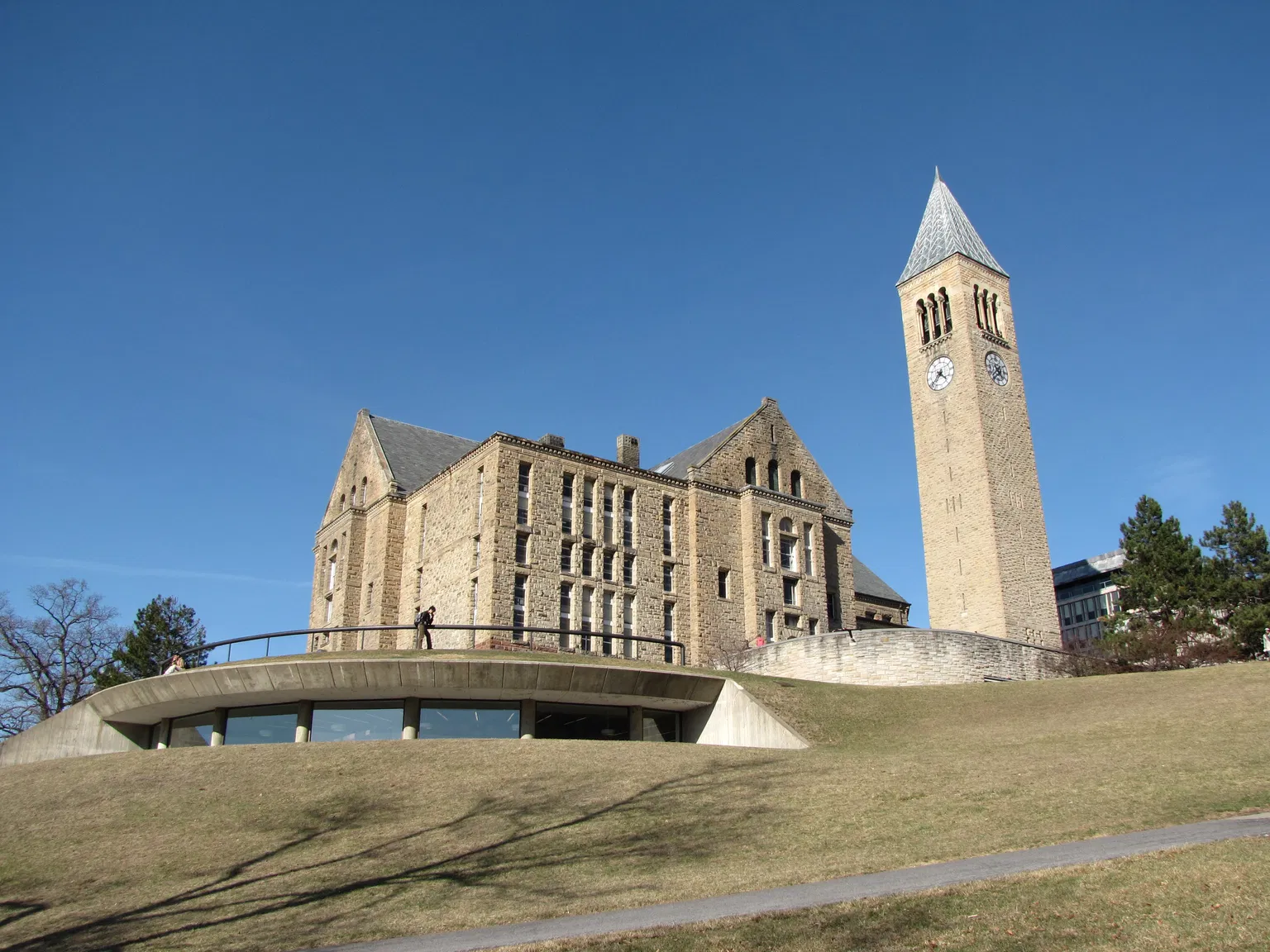
Cornell University is a private Ivy League research university in Ithaca, New York, and it holds a distinction no other Ivy League school can claim: it is also New York State's federal land-grant institution. Founded in 1865 by Ezra Cornell and Andrew Dickson White, the university was built on the then-radical idea that it should educate "any person" in "any study," admitting women and students of all backgrounds from its very first day—decades before many elite institutions followed. Today, roughly 26,000 students study across some 20 colleges and schools, from a globally ranked hotel school to one of the largest engineering colleges in the Ivy League. Whether you are a prospective student weighing an application or simply curious about how one of America's most unusual universities works, this guide explains Cornell's history, structure, admissions process, and standout programs.
How Cornell University Was Founded: A Bold Experiment in Higher Education
Cornell University was chartered on April 27, 1865, by New York State senator and businessman Ezra Cornell and educator-diplomat Andrew Dickson White. The founding was made possible by the Morrill Land-Grant Act of 1862, which gave states federal land to sell in order to fund colleges focused on agriculture and the "mechanic arts"—practical fields that traditional universities largely ignored. Ezra Cornell donated $500,000 of his own fortune and his Ithaca farm as the campus site, while White became the university's first president.
Cornell's founding vision is summed up in Ezra Cornell's famous line, echoed in the university's unofficial motto: "I would found an institution where any person can find instruction in any study." That promise made Cornell unusually open for its era—it was coeducational from the start and non-sectarian, admitting students regardless of gender, race, or religion. Cornell is also the youngest member of the Ivy League, and its unusual mix of private colleges and state-supported "contract colleges" (such as agriculture and industrial and labor relations) reflects its dual identity as both an elite private university and a public-minded land-grant school.

Inside Cornell's Structure: Seven Undergraduate Colleges and 20 Schools
One of the most distinctive things about Cornell is its structure. Instead of a single undergraduate division, Cornell splits its undergraduates across seven colleges (plus the Nolan School of Hotel Administration, which is part of the business college), each with its own admissions process, requirements, and culture. In total, the university lists about 20 colleges and schools, including graduate and professional schools such as the Law School, the College of Veterinary Medicine, and the Johnson Graduate School of Management.
The undergraduate colleges are:
- College of Agriculture and Life Sciences (CALS) — the largest of the state-supported "contract colleges," focused on food, farming, environment, and applied science.
- College of Architecture, Art, and Planning (AAP) — a top-ranked school for architecture, art, and urban planning.
- College of Arts and Sciences — Cornell's largest college and the heart of its liberal arts and sciences curriculum.
- Cornell SC Johnson College of Business — home to the Dyson School of Applied Economics and Management, the Nolan School of Hotel Administration, and the Johnson School.
- College of Engineering — the largest and one of the most selective engineering schools in the Ivy League.
- College of Human Ecology — focused on human development, design, nutrition, and public policy.
- School of Industrial and Labor Relations (ILR) — the nation's leading program for labor relations, human resources, and workplace studies.
Because Cornell houses both privately endowed colleges and New York State contract colleges, in-state students pay lower tuition in the contract colleges—a feature unique among the Ivies.
How Cornell Admissions Works: Rates, Tests, and Deadlines
Getting into Cornell is highly competitive. According to university data, the overall acceptance rate has hovered around 8.4 percent in recent years, and for the most recent entering classes it has slipped below 7 percent. For every 100 applicants, only about eight are admitted. The average admitted student's GPA is around 4.17 (weighted), and the middle 50 percent of admitted students score between 1500 and 1570 on the SAT.
Cornell requires standardized test scores (SAT or ACT), and it offers two application rounds: Early Decision and Regular Decision. Applying Early Decision can be a meaningful advantage—some admissions guides estimate that Cornell has filled close to half of its entering class through the early decision pool in recent years. A key structural difference from other Ivy League schools is that applicants apply directly to a specific undergraduate college, so your intended major and the college you choose matter a great deal. Competitive applicants far exceed the university's stated 3.0 GPA baseline, and strong essays and recommendations are essential.
What Is Cornell Known For? Signature Programs and Strengths
Cornell is perhaps best known for a few fields where it is a genuine global leader. The Nolan School of Hotel Administration is widely regarded as the world's first—and best—four-year hospitality management program, having pioneered hospitality business education. Cornell's College of Engineering is the largest in the Ivy League and especially strong in computer science, electrical and mechanical engineering, and operations research. The university is also a powerhouse in agriculture and the life sciences, architecture, applied economics and management, human ecology, and industrial and labor relations.
That breadth reflects the land-grant mission: Cornell pairs elite liberal arts and engineering with applied, career-oriented programs—a combination few other Ivy League schools offer. The university supports more than 100 graduate and professional degree programs and has produced 52 Nobel laureates among its faculty and alumni. Cornell also operates Weill Cornell Medicine in New York City and Cornell Tech, a graduate technology campus on Roosevelt Island in Manhattan, extending its reach well beyond Ithaca.
Campus Life and Famous Alumni: The People of Cornell
Cornell's main campus sits on a 745-acre site overlooking Cayuga Lake in the Finger Lakes region of upstate New York, a setting the university describes as rural yet richly connected. As of fall 2025, Cornell enrolls about 16,138 undergraduates and 10,423 graduate and professional students, supported by roughly 3,025 faculty members, with students coming from all 50 U.S. states and more than 100 countries. The university provides more than $425 million in undergraduate grant aid each year.
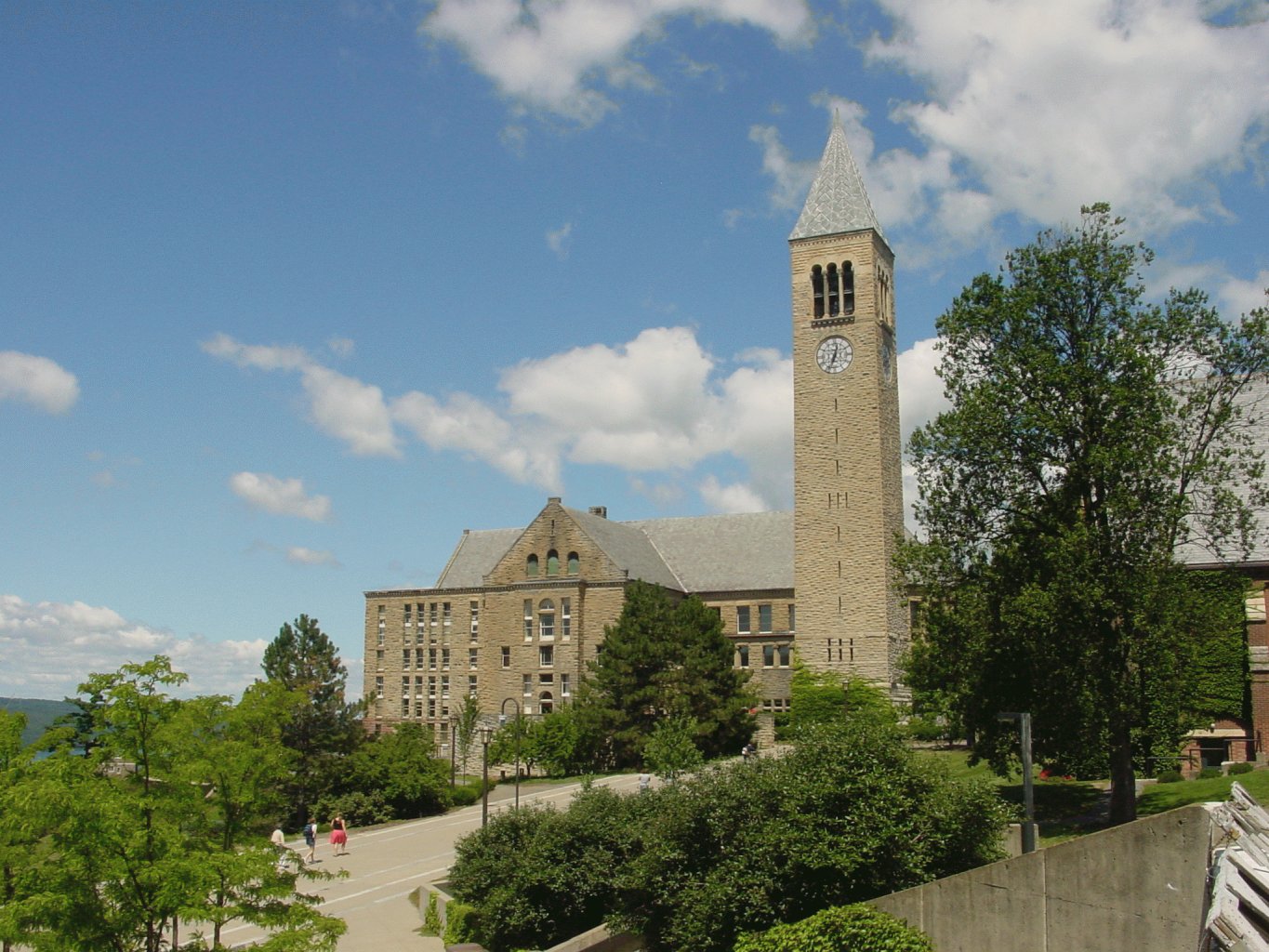
Cornell's alumni roll call reads like a who's who of American achievement. Ruth Bader Ginsburg, the late U.S. Supreme Court justice, graduated in 1954, and Nobel Prize-winning author Toni Morrison earned her master's degree at Cornell in 1955. Other notable Cornellians include science educator Bill Nye, immunologist and former NIAID director Anthony Fauci, actor Christopher Reeve, actress Jane Lynch, author E.B. White, inventor Willis Carrier, industrialist Ratan Tata, and former Taiwanese president Tsai Ing-wen.
Cornell University at a Glance: Key Facts to Remember
Here are the essentials to know about Cornell University:
- Type: Private Ivy League research university and New York's federal land-grant institution.
- Founded: April 27, 1865, by Ezra Cornell and Andrew Dickson White; classes began in 1868.
- Location: Ithaca, New York (main campus, 745 acres), plus campuses in New York City.
- Enrollment: About 16,138 undergraduates and 10,423 graduate and professional students.
- Structure: Seven undergraduate colleges within roughly 20 colleges and schools.
- Admissions: Acceptance rate around 8.4 percent; SAT/ACT required; average admitted GPA about 4.17.
- Known for: Hotel administration, engineering, computer science, agriculture and life sciences, architecture, and applied economics.
- Notable alumni: Ruth Bader Ginsburg, Toni Morrison, Bill Nye, Anthony Fauci, and more than 50 Nobel laureates overall.
Cornell's founding promise—"any person, any study"—still defines the university more than a century and a half later. Its blend of elite private education and public land-grant responsibility makes it a genuinely one-of-a-kind institution in the Ivy League.

.jpg?ref=cdn.posts.market)
