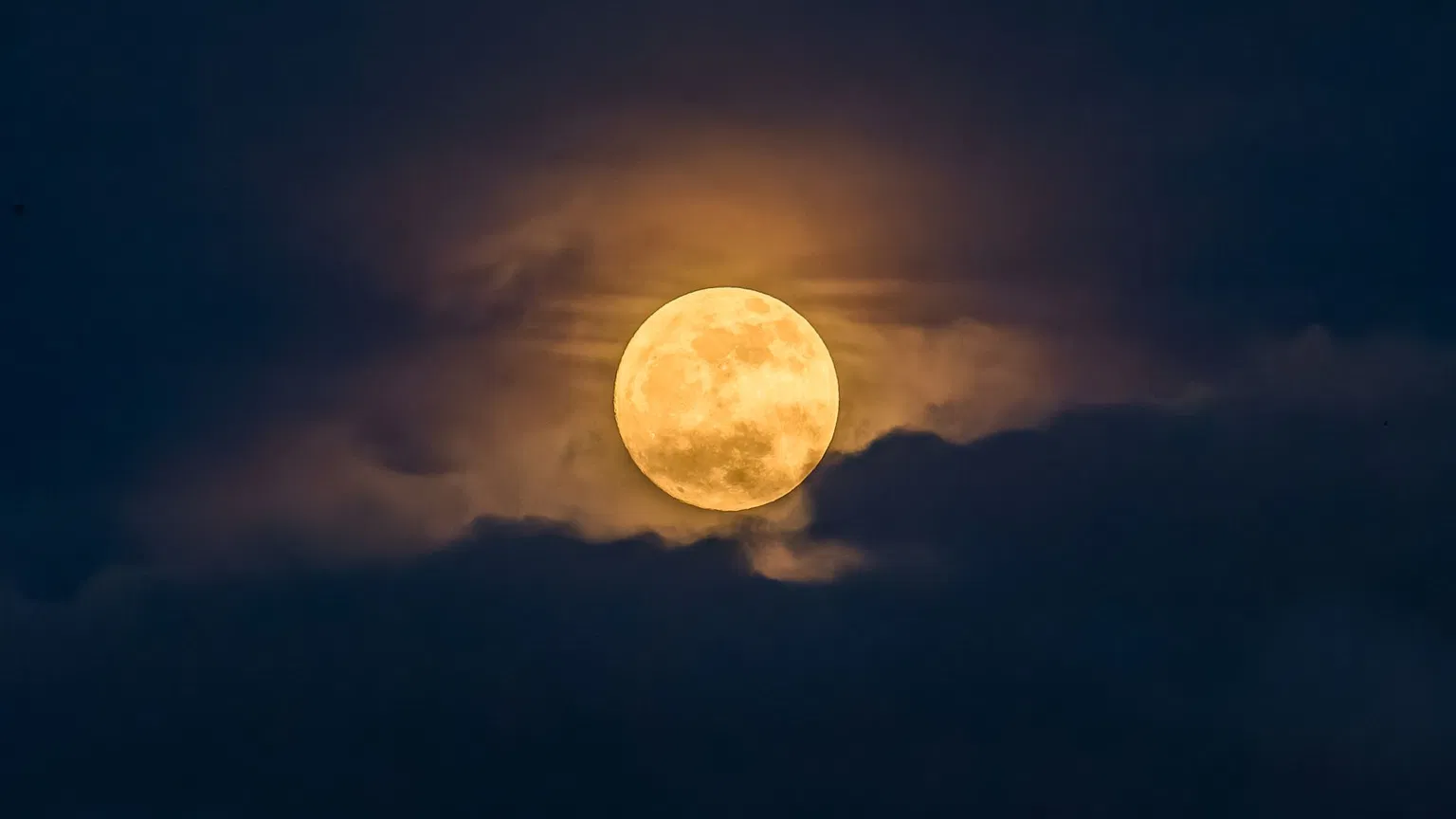
May 2026 is a blockbuster month for skywatchers. Not only will May feature two full moons, but the first one — the Flower Moon — arrives right on May Day, making for a perfect natural celebration. The Flower Moon reaches peak illumination at 1:23 p.m. EDT (17:23 UTC) on Friday, May 1, according to The Old Farmer's Almanac. And if you miss it, don't worry: the month closes with a rare Blue Micromoon on May 31. Here's everything you need to know about May's double lunar feature.
When to See the Flower Moon: Peak Timing and Visibility
The Flower Moon's exact full phase occurs during daylight hours for much of North America — at 1:23 p.m. EDT on May 1. While that means you won't see it at its precise peak, the moon will still appear 99% illuminated on the nights of both May 1 and May 2, making either evening an excellent time for viewing.
"The best time to watch is after moonrise in your area on those nights," astronomer Catherine Pilachowski told TODAY.com. Cloud coverage and local weather conditions will also affect visibility, so check your local forecast before heading out. For the best experience, find a location with an unobstructed view of the eastern horizon where the moon will rise.
Why Is It Called the Flower Moon?
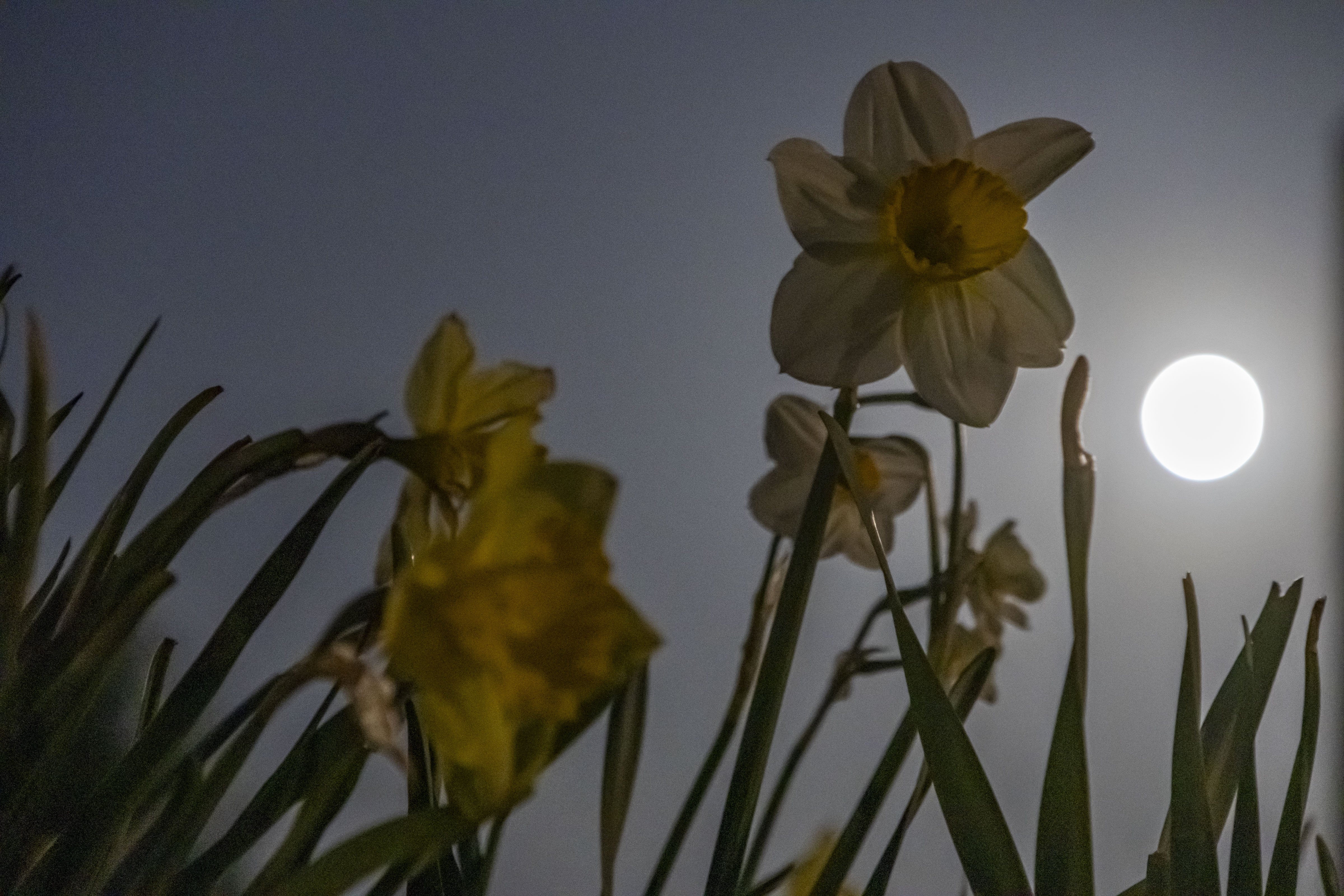
The name "Flower Moon" has deep roots in North American tradition. According to The Old Farmer's Almanac, the name has been attributed to Algonquin peoples, as confirmed by Christina Ruddy of The Algonquin Way Cultural Centre in Pikwakanagan, Ontario. It reflects the simple fact that May is when flowers burst into bloom across the continent, carpeting fields and forests with color.
This naming tradition dates back centuries. Explorer Jonathan Carver referenced the "Month of Flowers" in his 1798 publication Travels Through the Interior Parts of North America, recording what was likely a Dakota name for the month. Even Henry David Thoreau later wrote about the Flower Moon in his observations of Native American culture.
Indigenous communities across North America had many other names for May's full moon, each reflecting local signs of spring. The Cree called it the Budding Moon, Leaf Budding Moon, Egg Laying Moon, and Frog Moon — all signaling that warmer weather had arrived. The Dakota and Lakota peoples called it the Planting Moon, marking the time to start seeds, while the Oglala used the name Moon of the Shedding Ponies.
The Timing Behind the Flower Moon: A Daytime Peak Explained
It might seem odd for a full moon to peak during the afternoon, but astronomically, the definition has nothing to do with when we can see it. A full moon occurs at the precise moment the moon is directly opposite the Sun relative to Earth. That instant can happen at any time of day or night — and this May, it falls during daylight hours for the Americas.
This year, the Flower Moon also coincides with May Day (May 1), a traditional celebration marking the halfway point between the spring equinox and summer solstice. Historically, May Day has been observed with rituals tied to fertility and abundance, from dancing around maypoles to sharing baskets of flowers. The alignment of the Flower Moon with May Day adds an extra layer of seasonal significance.
A Rare Month With Two Full Moons: The Blue Micromoon
May 2026 doesn't stop at one full moon. A second full moon will occur on Sunday, May 31 at 4:45 a.m. EDT (08:45 UTC), making this a rare calendar month with two full moons. The second full moon in a single month is commonly called a Blue Moon — a phenomenon that happens roughly every two to three years, hence the phrase "once in a blue moon."
But there's more: this Blue Moon is also a micromoon, the lesser-known opposite of a supermoon. The May 31 full moon occurs just before the moon reaches apogee — the farthest point in its elliptical orbit around Earth. At that time, the moon will be 252,360 miles from Earth, compared to the average distance of 238,855 miles. This makes it appear about 6% to 7% smaller than an average full moon and 12% to 14% smaller than a supermoon, according to Pilachowski.
"The difference is too subtle to notice with the naked eye," the Almanac notes. What often makes the moon appear larger is the "moon illusion" — an optical effect that occurs when the moon is near the horizon. Since this micromoon will be high in the sky, it likely won't appear as large or imposing as a full moon closer to the horizon.
The last blue moon was a blue supermoon in August 2024 — a rare event that happens only about once every 10 years.
How to View Both Full Moons: Tips for May 2026
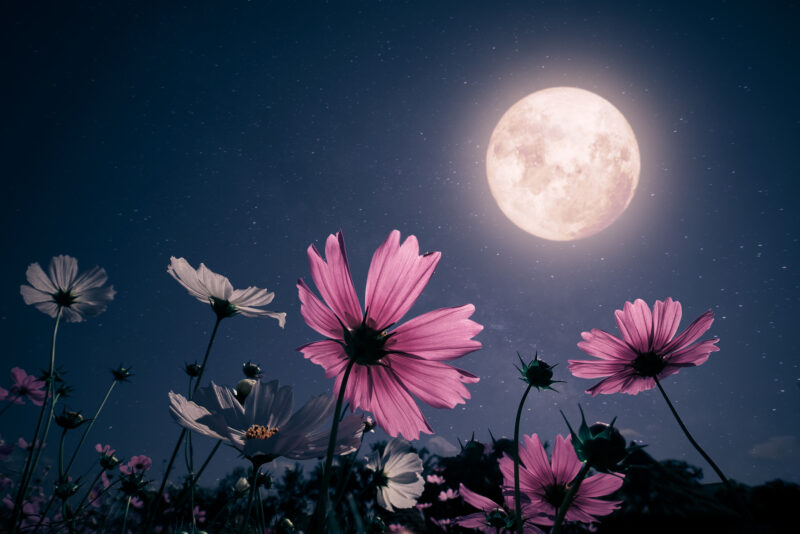
For the Flower Moon (May 1-2): Go outside after sunset on either May 1 or May 2 and look for the moon rising in the east. Even though the exact peak occurs during the day, the moon will appear virtually full on both nights. A location away from city lights with a clear eastern horizon will offer the best view.
For the Blue Micromoon (May 30-31): Look late on the night of May 30 or in the early morning hours of May 31. The peak occurs at 4:45 a.m. EDT, so setting an alarm might be worthwhile for dedicated skywatchers. The micromoon will appear slightly smaller and dimmer than usual, but it will still be a striking sight.
Use a moonrise and moonset calculator for your specific location to get exact timings. Binoculars or a small telescope can enhance the view, revealing craters and lunar maria (the dark plains on the moon's surface).
The Complete May 2026 Moon Phase Calendar
Here are all the key moon phases for May 2026 (times in EDT):
- Full Flower Moon: May 1 at 1:23 p.m. EDT
- Last Quarter: May 9 at 5:10 p.m. EDT
- New Moon: May 16 at 4:01 p.m. EDT
- First Quarter: May 23 at 7:11 a.m. EDT
- Full Blue Micromoon: May 31 at 4:45 a.m. EDT
Folklore and Traditions of the Flower Moon
The Old Farmer's Almanac records a number of folk beliefs associated with May's full moon. One old saying goes: "Clothes washed for the first time in the Full Moon will not last long." Another tradition holds that "the Full Moon is an ideal time to accept a proposal of marriage."
Beyond superstition, the Flower Moon has practical significance for gardeners. The Almanac's Best Days calendar suggests May 1-2 and May 29-30 as favorable dates for planting aboveground crops, based on the moon's sign and phase.
The Bottom Line: Key Points to Remember
- First full moon: Flower Moon on Friday, May 1 at 1:23 p.m. EDT — visible on the nights of May 1 and 2
- Second full moon: Blue Micromoon on Sunday, May 31 at 4:45 a.m. EDT
- Why "Flower Moon": Named by Algonquin peoples for the spring bloom of flowers across North America
- Blue Moon: The second full moon in a calendar month, occurring every 2-3 years
- Micromoon: The May 31 full moon occurs near apogee, appearing slightly smaller than average
- Best viewing: After moonrise on clear nights, away from city lights, with an unobstructed eastern horizon