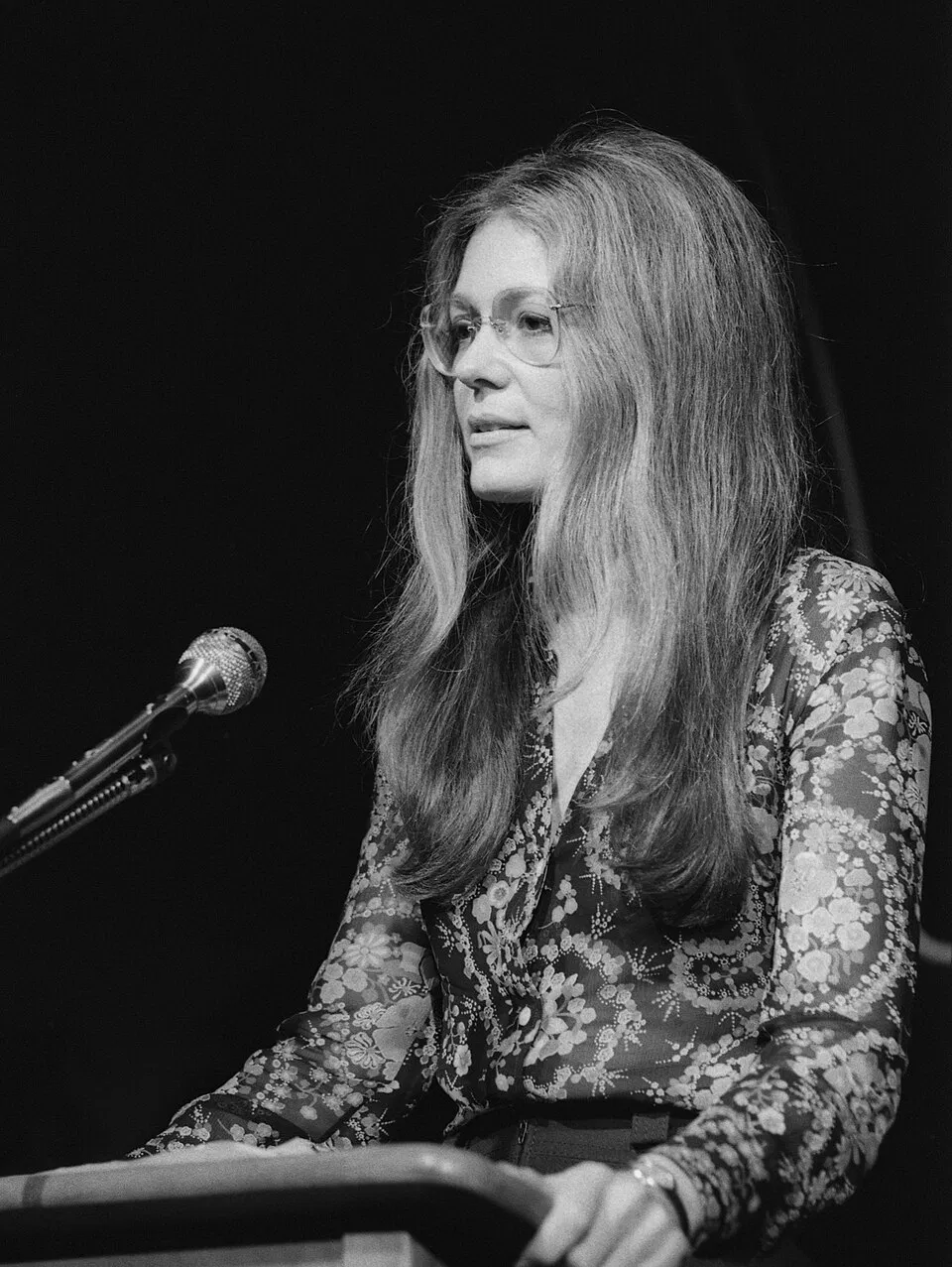
Gloria Steinem was one of the most recognizable figures in the American women's movement — a journalist, author, and activist who helped turn second-wave feminism into a national political force in the late 1960s and early 1970s. As a co-founder of Ms. magazine, the National Women's Political Caucus, and the Women's Media Center, she spent more than five decades campaigning for reproductive freedom, workplace equality, and women's representation in politics and media. Steinem died at her home in Manhattan, New York City, on September 2, 2026, at the age of 92, prompting tributes from presidents, first ladies, and fellow activists who credited her with opening doors for millions of women.
The Associated Press called her one of the most visible symbols and potent voices of the U.S. women's movement, while The New York Times described her as the "personification of the women's movement." Here is how Gloria Steinem's life unfolded — from an unconventional childhood in Ohio to becoming a global feminist icon.
From a Trailer in Ohio to Smith College: Steinem's Early Life
Gloria Marie Steinem was born on March 25, 1934, in Toledo, Ohio, to Ruth Nuneviller, a Presbyterian of German and Scottish descent, and Leo Steinem, the Jewish son of immigrants from Germany and Poland. The family spent much of the year traveling the country in a house trailer while her father worked as a roaming antiques dealer, which meant Steinem did not attend school regularly until around age 12.
Her childhood was shaped by hardship. Her mother, Ruth, suffered from severe mental illness that left her unable to hold a job or, for long stretches, to care for herself. When Steinem was ten, her parents separated, and she remained in Toledo to help care for her mother. Steinem later said that witnessing her mother's struggles — and society's dismissive treatment of her — planted the seeds of her understanding of injustice against women.
Steinem graduated from high school in Washington, D.C., in 1952 and attended Smith College in Massachusetts, where she majored in government and graduated magna cum laude, Phi Beta Kappa, in 1956. A fellowship then took her to India for two years, where she was deeply influenced by Mahatma Gandhi's grassroots organizing — an approach she later applied to her own activism.
Going Undercover as a Playboy Bunny and Founding Ms.
Steinem began her journalism career in New York City in the late 1950s, where she fought to write about politics rather than the fashion and lifestyle topics often assigned to women reporters. Her breakthrough came in 1963, when Show magazine sent her undercover as a Playboy Bunny at Hugh Hefner's New York Playboy Club. The resulting article, "A Bunny's Tale," exposed the exploitative working conditions and sexual demands placed on the women who worked there. After it ran, Hefner announced he would drop requirements for Bunnies to undergo gynecological exams and STD testing.
The article brought Steinem fame — though, as she later recalled, it also cost her assignments, because she had "now become a Bunny — and it didn't matter why." In 1968, she joined the newly founded New York magazine as a columnist. A year later, while covering an abortion speak-out in a Greenwich Village church basement, she experienced what she called a "big click" and publicly shared that she had had an abortion in London at age 22. She later said she did not "begin my life as an active feminist" until that day.
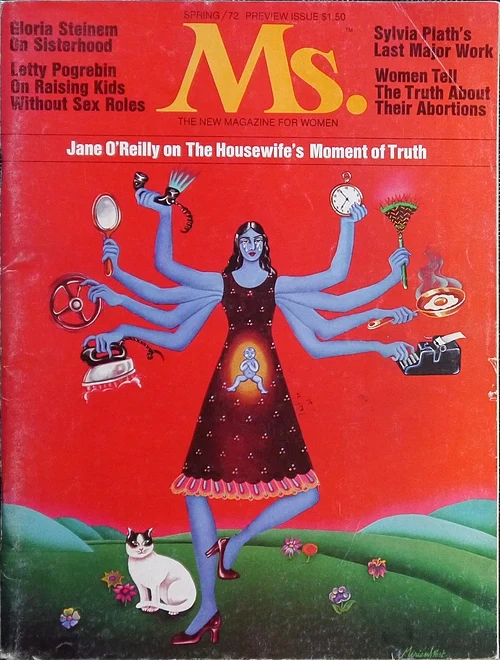
In 1972, Steinem co-founded Ms. magazine with a group of journalists including Letty Cottin Pogrebin and Pat Carbine. The first issue — which began as an insert in New York magazine — sold out its 300,000 test copies nationwide in eight days and drew 26,000 subscription orders within weeks. Ms. became the first national magazine to cover issues such as abortion rights, domestic violence, and sexual harassment from an explicitly feminist perspective.
Building the Modern Women's Movement: Steinem's Activism
Steinem's influence extended far beyond journalism. In 1969, her essay "After Black Power, Women's Liberation" brought her national recognition as a feminist leader, and she campaigned for the Equal Rights Amendment, testifying before the Senate Judiciary Committee in 1970. That same year, her Time magazine essay "What It Would Be Like If Women Win" imagined a future of genuine gender equality.
In 1971, Steinem helped found the National Women's Political Caucus alongside Bella Abzug, Shirley Chisholm, and Betty Friedan to train and elect pro-equality women to public office. She also co-founded the Women's Action Alliance and later helped establish Voters for Choice and the Ms. Foundation for Women. In 1972, she became the first woman to speak at the National Press Club.
Her writing and speeches produced some of the movement's most enduring ideas. Her 1978 essay "If Men Could Menstruate" imagined a world in which menstruation would be a badge of honor rather than a source of shame, and she is credited with popularizing the phrase "reproductive freedom" to describe the right to have or not have children. In the 1990s, she helped launch Take Our Daughters to Work Day, and in 2005 she co-founded the Women's Media Center with Jane Fonda and Robin Morgan.
Her Marriage to Christian Bale's Father and Personal Milestones
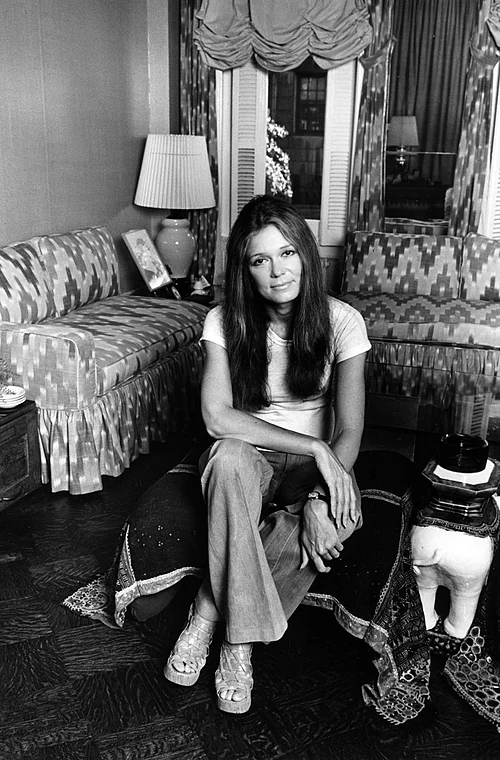
Steinem was famously private about her personal life, and she long argued that marriage was not necessary for a fulfilling life. So it came as a surprise when, on September 3, 2000, at age 66, she married David Bale, an entrepreneur and activist who was the father of actor Christian Bale. The wedding was held at the home of her friend Wilma Mankiller, the first female Principal Chief of the Cherokee Nation. Steinem became stepmother to Bale's four adult children but had no biological children of her own.
At the time, Steinem said: "Though I've worked many years to make marriage more equal, I never expected to take advantage of it myself. I hope this proves what feminists have always said — that feminism is about the ability to choose what's right at each time of our lives." David Bale died of brain lymphoma in December 2003, three years after their wedding.
Steinem was diagnosed with breast cancer in 1986 and underwent successful treatment through surgery and radiation. She lived for decades in a brownstone on Manhattan's Upper East Side, where she had resided since 1966.
Awards, Tributes, and How the World Remembers Gloria Steinem
Over her lifetime, Steinem received the nation's highest civilian honor — the Presidential Medal of Freedom, presented by President Barack Obama in 2013 — as well as the Princess of Asturias Award for Communication and Humanities in 2021 and honorary degrees from institutions including Yale University. She remained politically active into her 80s and 90s, joining the outcry when the Supreme Court overturned Roe v. Wade in 2022. "Obviously, without the right of women and men to make decisions about our own bodies, there is no democracy," she told the Associated Press at the time.
In August 2020, Steinem held a widely covered backyard conversation with Meghan, the Duchess of Sussex, for MAKERS Women, in which the two discussed the importance of voting and civic participation — one of many moments in which Steinem connected with a younger generation of activists. Her life has also been dramatized on screen, including the 2020 film The Glorias, starring Julianne Moore and Alicia Vikander, and the FX series Mrs. America, in which Rose Byrne portrayed her.
Following her death on September 2, 2026, former Secretary of State Hillary Clinton said Steinem "pushed open doors not just for herself, but for literally millions of women behind her." First Lady Jill Biden said Steinem had fought for decades to make "freedom real for generations of women and girls." CNN described her as the "face" of second-wave feminism, and the BBC called her the leader of the women's liberation movement in the United States.
Gloria Steinem's Legacy: Key Takeaways
Steinem's influence can be summed up in a handful of milestones that continue to shape American life:
- She co-founded Ms. magazine in 1972, the first major publication to cover women's issues from a feminist perspective.
- She helped found the National Women's Political Caucus in 1971 to get pro-equality women elected to office.
- Her 1963 undercover exposé "A Bunny's Tale" drew national attention to workplace exploitation.
- She popularized the concept of "reproductive freedom" and campaigned for abortion rights for decades.
- She co-founded the Women's Media Center in 2005 to make women "visible and powerful" in media.
- She received the Presidential Medal of Freedom in 2013 for her civil-rights and women's-rights work.
Steinem once said she hoped her work might help people "become more the unique, valuable, loved and lovable person that they want to be." More than half a century after she first stepped onto the national stage, her legacy as a defining voice of modern feminism endures.