When the Federal Reserve announces a "rate hike," it is raising the federal funds rate — the benchmark interest rate that ripples through nearly every loan, mortgage, and savings account in the United States. The Fed's latest such move came on September 17, 2026, when policymakers lifted their target range by a quarter of a percentage point, or 25 basis points, to 3.75%–4.00%. It was the central bank's first increase since July 2023 and a clear signal that the era of falling interest rates that defined 2024 and 2025 has come to an end. Understanding how a Fed rate hike works — and how it reaches your wallet — can help you make smarter decisions about borrowing, saving, and investing.
What a Fed Rate Hike Actually Is
A Fed rate hike is a decision by the Federal Open Market Committee (FOMC) to raise its target for the federal funds rate. That rate is the interest rate banks charge one another to borrow reserve balances overnight. The FOMC is the Fed's policy-making body, made up of the seven members of the Board of Governors, the president of the Federal Reserve Bank of New York, and four of the remaining 11 regional Reserve Bank presidents, who vote on a rotating basis.
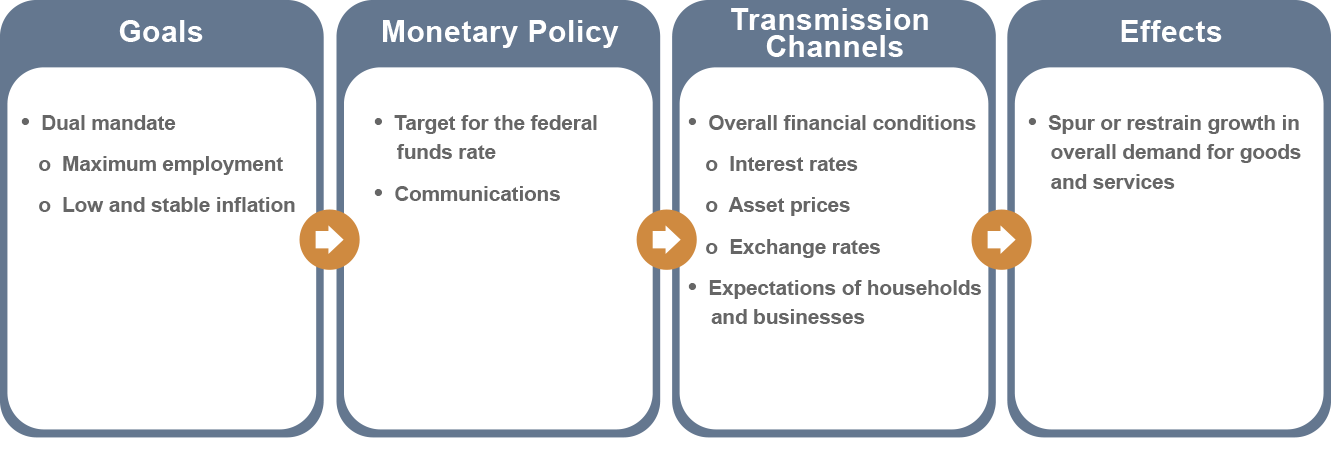
The Fed is guided by a "dual mandate" written into the Federal Reserve Act: to promote maximum employment and stable prices. On the inflation side, the FOMC has set a formal target of 2 percent per year, measured by the personal consumption expenditures (PCE) price index. When inflation runs too hot or the economy overheats, the Fed raises rates to cool demand; when the economy weakens, it cuts rates to spur growth and hiring.
How the Federal Reserve Raises Interest Rates
The Fed does not set the rate on your credit card or mortgage directly. Instead, it moves the entire market by adjusting a single lever: the interest rate it pays banks on the reserve balances they hold at the Fed. Because a bank has little incentive to lend to another bank — or to its own customers — at a rate below what it can earn risk-free at the Fed, this "interest on reserve balances" acts as a floor that anchors the federal funds rate. When the Fed raises this rate, the federal funds rate rises in tandem, and the increase spreads through the financial system.
According to the Federal Reserve, changes in the federal funds rate reach the broader economy through several channels. Short-term rates — including Treasury bills and commercial paper — move almost immediately. Floating-rate loans, such as adjustable-rate mortgages and many personal and business credit lines, quickly follow. Longer-term rates, like those on 30-year mortgages, respond to expectations about where short-term rates are headed. Rate changes also ripple through stock prices, home prices, and even the value of the dollar, since higher U.S. rates can make American assets more attractive to global investors.
A Timeline of Recent Fed Rate Moves
The Federal Reserve's rate decisions since 2022 tell a clear story of tightening, then easing, then tightening again. During 2022, the Fed raised rates aggressively to fight the highest inflation in decades, hiking by as much as 75 basis points at a single meeting. Those increases continued into 2023, when the target range peaked at 5.25%–5.50% in July.
By late 2024, with inflation cooling, the Fed reversed course. It cut rates by 50 basis points that September, followed by smaller cuts in November and December. The easing continued through 2025, with three more quarter-point cuts that brought the target range down to 3.50%–3.75% by December 11, 2025. Then, on September 17, 2026, the FOMC shifted direction once more, raising its target by 25 basis points to 3.75%–4.00%.
How a Rate Hike Affects Your Wallet and the Economy
The most direct effect of a Fed rate hike is on borrowing costs. Most credit cards carry variable interest rates tied to the "prime rate," which moves closely with the federal funds rate. That means a rate hike can raise your credit card's annual percentage rate (APR) within a billing cycle or two. Adjustable-rate mortgages and home equity lines of credit (HELOCs) also track the prime rate, so existing borrowers can see their monthly payments rise.
Savers, by contrast, often benefit — though usually with a lag. Banks tend to raise the yields on high-yield savings accounts, money market funds, and certificates of deposit (CDs) when the Fed hikes, because they can earn more on their own reserve balances. Fixed-rate mortgages and auto loans respond more to longer-term bond yields than to the federal funds rate itself, but a hike that signals tighter policy ahead can still push those rates up over time.
Rate hikes also weigh on the stock market. Higher interest rates make the future earnings of companies less valuable in today's dollars and give investors a more attractive risk-free alternative in bonds, which can pressure equity valuations. They can also cool the housing market by making mortgages more expensive. The overarching goal, however, is to slow overall demand for goods and services, which relieves pressure on prices and brings inflation back toward the Fed's 2 percent target.
Where Interest Rates Stand Today
Following the September 2026 decision, the federal funds rate target range stands at 3.75%–4.00%. The rate of interest the Fed pays on reserve balances sits just below the top of that range, and the Fed's discount rate — the rate it charges banks for direct borrowing at the discount window — moves alongside it. For context, the target range remains well below the 5.25%–5.50% peak reached in mid-2023, but the direction of travel has clearly turned higher.
What Happens Next for Interest Rates
Economists and market participants watch a handful of signals to predict the Fed's next move: inflation readings against the 2 percent target, the strength of the labor market, and consumer spending. If inflation proves stubborn or the economy keeps running hot, further hikes are possible. If the labor market softens, the Fed could pause or even reverse course again. The FOMC meets eight times a year, and each decision is accompanied by a statement and a press conference that markets scrutinize for clues about the path ahead.
The Bottom Line: Key Takeaways
- A Fed rate hike raises the federal funds rate, the overnight rate banks charge each other to borrow reserves.
- The Fed raises rates to cool an overheating economy and keep inflation near its 2 percent target; it cuts them to support growth and jobs.
- The most recent hike — 25 basis points on September 17, 2026 — lifted the target range to 3.75%–4.00%, the first increase since 2023.
- Consumers feel hikes through higher credit card and variable-loan rates, higher savings yields, and pressure on stocks and home affordability.
- The Fed's future path depends on inflation, employment, and the broader economy.