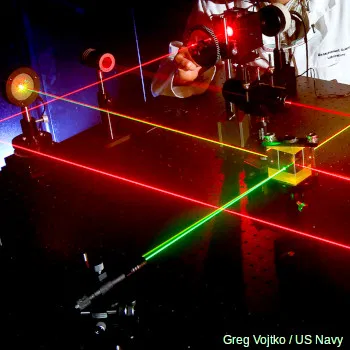
Lasers have transformed from a scientific curiosity into a technology that touches nearly every aspect of modern life, from the barcode scanners at grocery stores to the fiber-optic cables that power the internet. But what exactly is a laser, and how does this remarkable device produce such powerful, precise beams of light? The answer lies in a quantum mechanical process called stimulated emission, first theorized by Albert Einstein in 1917 and brought to practical reality by Theodore Maiman in 1960. Today, lasers are essential tools in medicine, manufacturing, communications, and defense, with continuous innovations pushing the boundaries of what's possible.
How Lasers Create Light: The Science of Stimulated Emission
At its core, a laser is a device that amplifies light through stimulated emission of radiation—hence the acronym LASER. Unlike ordinary light sources like light bulbs or candles that emit photons in random directions and wavelengths, lasers produce coherent, monochromatic light where all photons travel in phase with identical wavelengths. This unique property allows laser beams to remain tightly focused over long distances, making them incredibly powerful and precise.
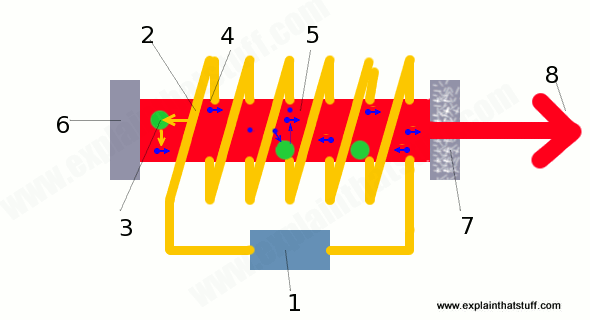
The process begins with a gain medium—such as a ruby crystal, gas mixture, or semiconductor—that contains atoms with electrons in specific energy levels. When energy is "pumped" into this medium using a flash tube or electrical discharge, electrons absorb this energy and jump to higher, excited states. As these excited electrons return to their ground state, they emit photons through spontaneous emission. However, the magic happens when these photons interact with other excited atoms, triggering them to release additional photons that are identical in wavelength, phase, and direction—a process called stimulated emission. With mirrors at both ends of the laser cavity reflecting photons back and forth, this cascade effect amplifies the light exponentially until a portion escapes through a partially reflective mirror as a coherent laser beam.
From Masers to Modern Lasers: A 60-Year Journey
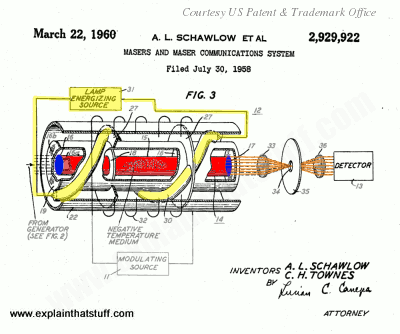
The development of lasers traces back to earlier work on masers (Microwave Amplification by Stimulated Emission of Radiation) in the 1950s. Physicists Charles Townes and Arthur Schawlow patented the maser concept in 1958 and later theorized how to extend the principle to visible light. Meanwhile, graduate student Gordon Gould independently sketched designs for a visible light maser in 1957, coining the term "laser" in his notebook. However, it was Theodore Maiman who successfully constructed the first working laser on May 16, 1960, using a synthetic ruby rod pumped by a xenon flash lamp.
Maiman's achievement was initially met with skepticism—his paper was rejected by Physical Review Letters—but the technology quickly proved its value. By the mid-1960s, lasers were being described as "a solution looking for a problem," yet within decades they became indispensable across numerous fields. The 1964 James Bond film Goldfinger famously depicted a industrial laser capable of cutting through metal, showcasing the public's fascination with this emerging technology while hinting at its future applications.
The Five Main Types of Lasers and How They Work
Lasers are categorized by their gain medium, which determines their properties and applications. Solid-state lasers, like Maiman's original ruby laser, use crystalline or glass materials doped with ions to produce high-powered pulses ideal for cutting and welding. Gas lasers, including carbon dioxide (CO2) and helium-neon varieties, generate continuous beams through electrical discharge in gas mixtures and are widely used in industrial cutting and medical procedures.
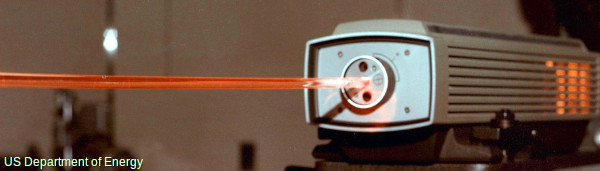
Liquid dye lasers employ organic dye solutions that can be tuned to produce different wavelengths, making them valuable in spectroscopy and research. Semiconductor lasers, also known as laser diodes, are compact, efficient devices found in CD/DVD players, laser printers, and fiber-optic communication systems. Finally, fiber lasers use doped optical fibers as their gain medium, offering exceptional efficiency and reliability for industrial marking, cutting, and medical applications.
Lasers Today: Transforming Medicine, Manufacturing, and Defense
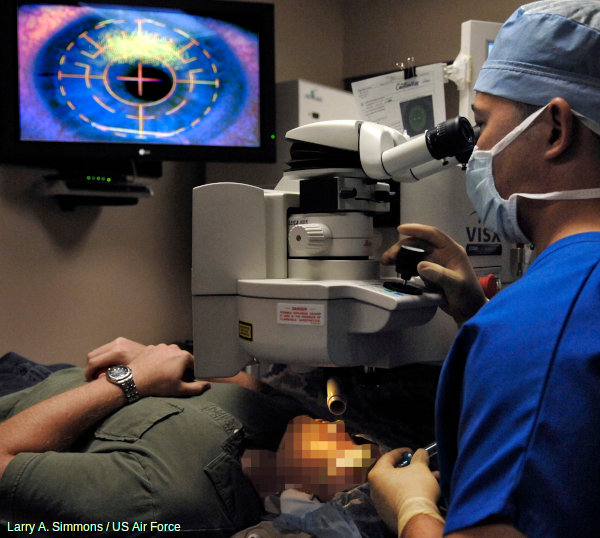
Contemporary laser applications demonstrate the technology's remarkable versatility. In medicine, lasers enable minimally invasive procedures like LASIK eye surgery, cancer tumor ablation, and precise tissue cutting with minimal collateral damage. According to Stanford's Emerging Technology Review, robot-guided lasers now perform bone surgery with greater precision than traditional tools, reducing recovery time and improving outcomes.
Manufacturing has been revolutionized by laser precision, with CO2 lasers cutting fabrics for clothing production and fiber lasers welding automotive components with micron-level accuracy. Communications infrastructure relies heavily on lasers, with fiber-optic cables transmitting data as pulses of laser light across continents and satellite laser links enabling high-speed space-based internet. In defense, laser weapon systems like the US Navy's LaWS (Laser Weapon System) offer cost-effective defense against drones and missiles, using concentrated light energy rather than expensive ammunition.
The Future of Laser Technology: Quantum Lasers and AI Integration
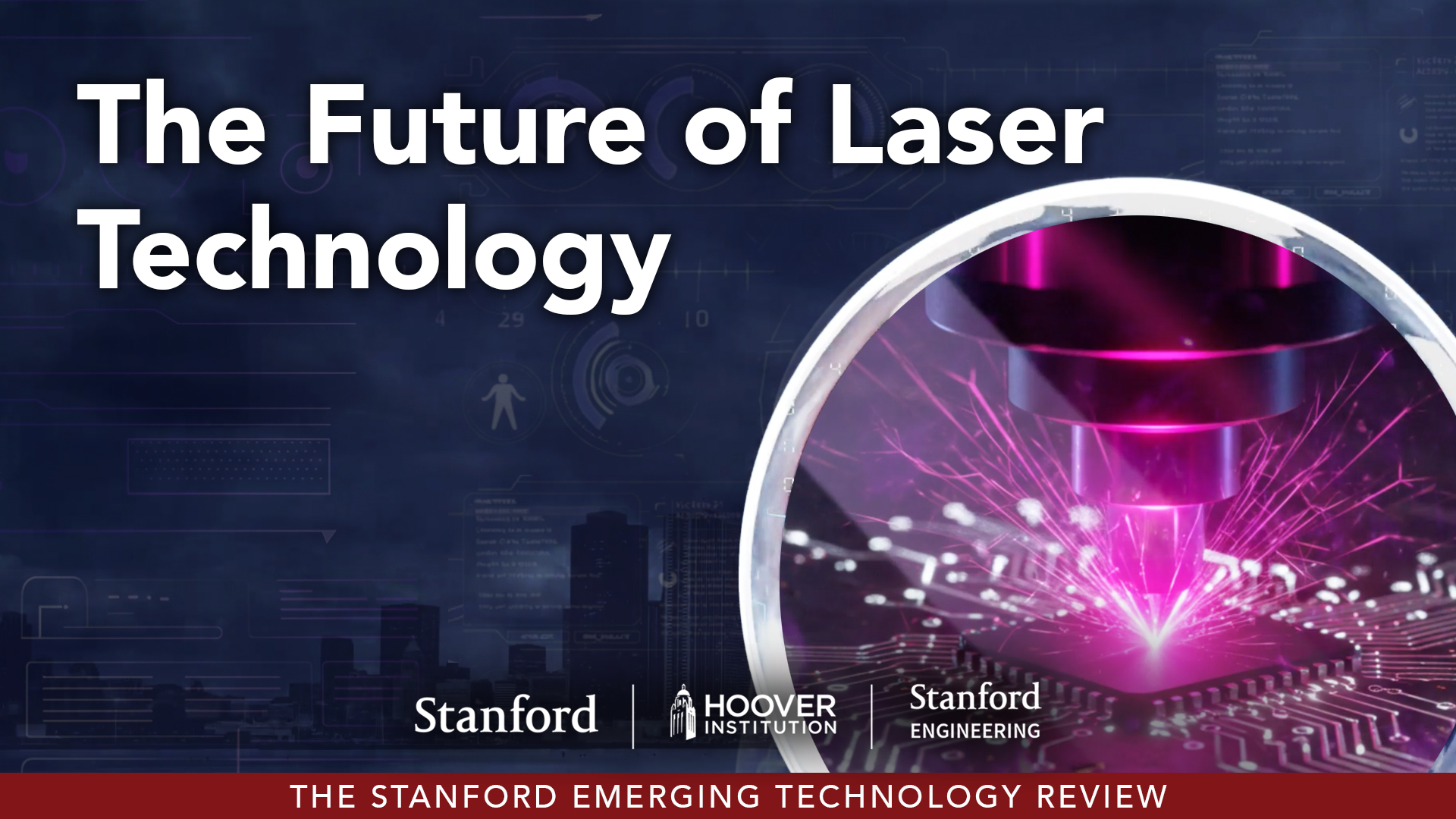
Emerging trends point toward even more sophisticated laser applications. Quantum lasers harnessing quantum entanglement principles promise unprecedented precision for measurements and computing. Artificial intelligence integration enables smarter laser systems that can adapt cutting paths in real-time or optimize medical treatments based on patient-specific data. Researchers are also developing ultra-high-power lasers like the National Ignition Facility's system, which can deliver 500 trillion watts of power for nuclear fusion research.
Environmental applications are also expanding, with lasers being used to measure atmospheric pollution, monitor climate change, and develop more efficient solar cells. As laser technology continues to evolve, balancing innovation with responsible use—particularly regarding dual-use military applications and environmental safety—remains a critical consideration for policymakers and researchers alike.
Key Takeaways: Why Lasers Matter
From their theoretical beginnings in Einstein's equations to their ubiquitous presence in modern technology, lasers represent one of the most transformative inventions of the 20th century. Their unique ability to produce coherent, focused light enables applications ranging from life-saving medical procedures to global communications infrastructure. Understanding how lasers work—through stimulated emission and precise engineering—reveals why this technology has evolved from "a solution looking for a problem" to an essential tool shaping our technological future. As research continues into quantum lasers, AI integration, and sustainable applications, lasers will undoubtedly play an increasingly vital role in addressing global challenges and advancing human capability.