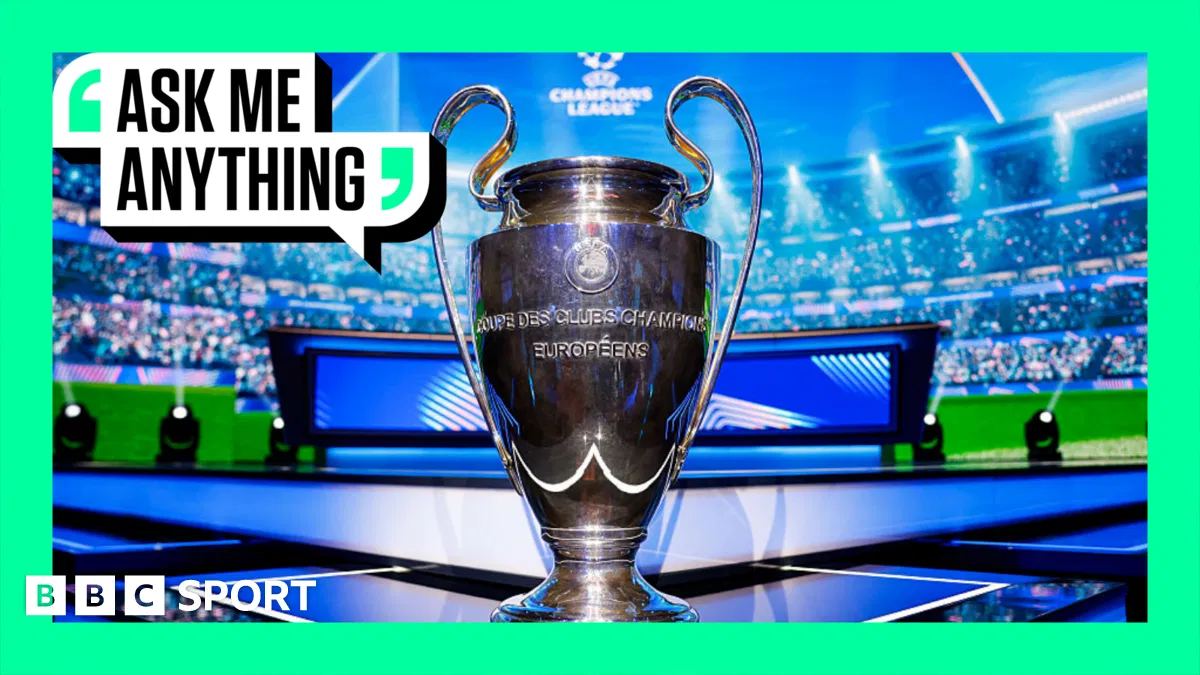
European club football's premier competition, the UEFA Champions League, represents the pinnacle of continental football where the best clubs compete for the most prestigious trophy in European football. Since its inception in 1955 as the European Champion Clubs' Cup and its rebranding in 1992, the tournament has undergone significant evolution, with the most substantial changes arriving for the 2024/25 season. Understanding how this competition works involves exploring its new format, qualification process, and knockout structure that together create what many consider the world's most exciting club tournament.
The New Champions League Format: A Complete Overhaul
The 2024/25 season marked the most significant format change to the Champions League since 2003/04, transforming the competition from a 32-team tournament with eight groups into a 36-team competition with a single league phase. Gone are the traditional groups of four teams where clubs played home and away matches against three opponents. Instead, all 36 teams now compete in one large league table using what's often called the "Swiss system." Each club plays eight matches—four at home and four away—against eight different opponents, carefully selected through a draw that considers seeding pots based on UEFA coefficients.
How Teams Qualify for the Champions League
Qualification for the Champions League combines domestic league performance with UEFA's coefficient system, which ranks associations based on their clubs' historical European performance. The top five leagues—currently England, Spain, Germany, Italy, and France—each receive four automatic qualification spots for their top finishers. Beyond these 20 teams, additional spots are allocated through several pathways: one place goes to the fifth-ranked association's third-placed team, another to an additional domestic champion through the champions' qualification path, and two coveted "European Performance Spots" to associations whose clubs performed best collectively in the previous season's European competitions.
The League Phase: Where Every Match Matters
In the new league phase, all 36 teams are ranked together in one table, with each team playing eight matches between September and January. Unlike the old group stage where some matches could become meaningless after early qualification, the new format ensures every game counts until the final matchday. Teams earn three points for a win and one for a draw, with tie-breakers including goal difference, goals scored, and away goals scored. The final matchday sees all 18 matches played simultaneously, creating dramatic scenarios where single goals can determine whether teams qualify directly for the round of 16, enter the play-offs, or face elimination.
From League to Knockouts: The Path to the Final
The league phase determines which teams advance to the knockout stages and what path they'll take. The top eight teams qualify directly for the round of 16, while those finishing 9th through 24th enter a two-legged knockout phase play-off. In these play-offs, teams ranked 9th-16th are seeded and face unseeded opponents (17th-24th), with the seeded teams playing the second leg at home. The eight play-off winners then join the top eight in the round of 16, where the league phase's top finishers are seeded against the play-off winners. From there, the competition follows traditional two-legged knockout rounds through quarter-finals and semi-finals, culminating in a single-leg final at a neutral venue selected by UEFA.
Historical Evolution: From European Cup to Global Phenomenon
The Champions League began in 1955 as a straightforward knockout tournament for only domestic champions, originally called the European Champion Clubs' Cup. Real Madrid won the first five editions, establishing the competition's prestige early. The tournament expanded gradually, adding runners-up from stronger leagues and introducing a group stage in 1991 before rebranding as the UEFA Champions League in 1992. The most recent changes continue this evolution, addressing concerns about competitive balance while expanding opportunities for more clubs to participate in Europe's elite competition.
Key Changes and Their Impact on European Football
The 2024/25 format changes introduce several significant developments: the elimination of the Europa League drop-down (teams finishing 25th or lower are now completely eliminated), the abolition of the away goals rule across all knockout stages, and the creation of more meaningful matches throughout the league phase. The expansion to 36 teams increases the total number of matches from 125 to 189, providing more revenue while giving fans more opportunities to see top European matchups. Crucially, the new format maintains sporting merit as its foundation, with UEFA President Aleksander Čeferin emphasizing the commitment to "open competitions, with qualification based on sporting merit, fully in line with the values and solidarity-based European sports model."
What You Need to Remember About the Champions League
The UEFA Champions League represents the highest level of club football in Europe, combining domestic excellence with continental competition. Its new format ensures more teams participate in more competitive matches throughout the season, while maintaining the drama and prestige that have made the tournament legendary. From the league phase's simultaneous final matchday to the knockout stages' high-stakes drama, every element is designed to crown Europe's best club team through a process that values sporting achievement above all else. Whether you're a casual fan or a football enthusiast, understanding this format reveals why the Champions League remains football's most captivating club competition.