
Every day, billions of people turn to Google Search to find answers, discover information, and navigate the digital world. But have you ever wondered how Google manages to sort through hundreds of billions of webpages and deliver relevant results in just milliseconds? The process involves a sophisticated three-stage system of crawling, indexing, and ranking that works seamlessly behind the scenes.
How Google Discovers the Web: The Crawling Process
Google's journey to answer your query begins long before you even type it. The search engine uses automated software called crawlers (also known as spiders or Googlebot) that constantly explore the web. These crawlers visit publicly accessible webpages, follow links from page to page, and organize information about what they find. According to Google's official documentation, most of the Search index is built through this crawling process, which runs continuously to keep up with the constantly changing web.

When crawlers find a webpage, Google's systems render the content just as a browser would, taking note of key signals from keywords to website freshness. Importantly, Google never accepts payment to crawl a site more frequently—the company provides the same tools to all websites to ensure fair and unbiased results for users.
From Query to Results: The Journey of a Google Search
Once Google has discovered and indexed content, the real magic happens when you submit a search query. The process from your keystroke to results involves several critical steps that happen in fractions of a second. First, Google's systems must understand what you're looking for—the intent behind your query. This involves sophisticated language models that can decipher how the relatively few words you enter match up to the most useful content available.
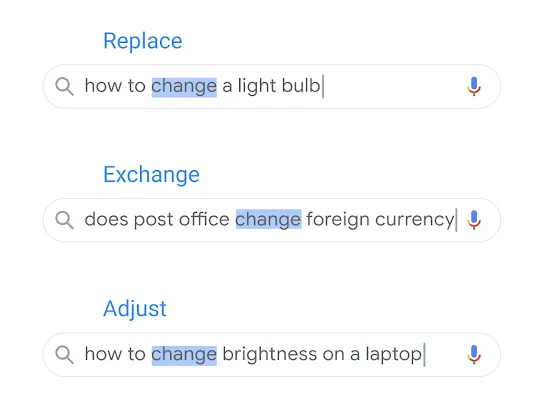
This system took over five years to develop and significantly improves results in over 30% of searches across languages. It handles everything from recognizing and correcting spelling mistakes to understanding synonyms—so when you search for "change laptop brightness," Google can find pages that say "adjust laptop brightness" instead.
Understanding Google's Ranking Factors: What Really Matters
Google's ranking systems are designed to sort through hundreds of billions of webpages and other digital content to present the most relevant, useful results on the first page. The algorithms look at many factors and signals, including the words of your query, relevance and usability of pages, expertise of sources, and your location and settings.

The weight applied to each factor varies depending on the nature of your query. For example, when searching for current news topics, content freshness plays a bigger role than dictionary definitions. Google identifies five key search signals that determine rankings:
- Meaning: Understanding the intent behind your query through language models and context analysis
- Relevance: Assessing whether content contains information relevant to what you're looking for
- Quality: Prioritizing content that demonstrates expertise, authoritativeness, and trustworthiness
- Usability: Considering mobile-friendly design, fast loading times, and accessibility
- Context: Incorporating location, language, and current events to personalize results

Google emphasizes that political leanings do not influence how search results are ranked. The company states: "We never manipulate search results, modify our products or enforce our policies to promote or disadvantage any particular political ideology, viewpoint or candidate." Independent studies from Stanford and The Economist have found no evidence of political bias in Search results.
Google Search Today: AI and Continuous Improvement
The Google Search of today looks quite different from its early versions, with artificial intelligence playing an increasingly central role. Features like AI Overviews, which provide summarized answers to complex questions, and generative AI capabilities are transforming how information is delivered. These advancements build upon the existing ranking systems while introducing new ways to understand and respond to user queries.

Google conducts hundreds of thousands of experiments every year to improve Search, with any increase in latency (the time between entering a search and seeing results) from new features requiring optimization elsewhere to maintain speed. This drive for efficiency has collectively saved people millions of hours each day. The company also maintains strict separation between organic results and advertising—all ads are clearly labeled with "Sponsored" or "Ad" and shown separately from search results.
The Future of Search: Where Google is Heading
As technology evolves, Google Search continues to adapt and innovate. The integration of more advanced AI capabilities, improved understanding of complex queries, and better personalization while maintaining privacy are key areas of focus. Google is also expanding its index beyond traditional webpages to include more diverse content types, from books and scholarly articles to real-time data from public sources.
The company's commitment to providing helpful, reliable, people-first content remains central to its approach. As the web continues to grow and change, Google's systems will need to become even more sophisticated at identifying high-quality information while filtering out spam and low-quality content. The future of Search likely involves more proactive assistance—anticipating user needs before they're explicitly stated and providing more contextual, conversational interactions.
Key Points to Remember About How Google Works
Understanding how Google Search operates can help you use it more effectively and appreciate the complex technology behind those simple search boxes. Here are the essential takeaways:
- Crawling comes first: Google discovers webpages through automated crawlers that follow links across the internet
- The index is massive: Google's Search index contains hundreds of billions of webpages and exceeds 100,000,000 gigabytes
- Ranking is multi-faceted: Algorithms consider meaning, relevance, quality, usability, and context to determine what appears first
- Speed is non-negotiable: Google constantly optimizes to deliver results in milliseconds, saving users millions of hours daily
- Ads are separate: All advertising is clearly labeled and doesn't influence organic ranking algorithms
- Improvement is continuous: Hundreds of thousands of experiments and AI advancements keep Search getting better
While the technology behind Google Search is incredibly complex, the goal remains simple: to organize the world's information and make it universally accessible and useful. As search technology continues to evolve, this core mission drives the innovations that help billions of people find what they're looking for every day.