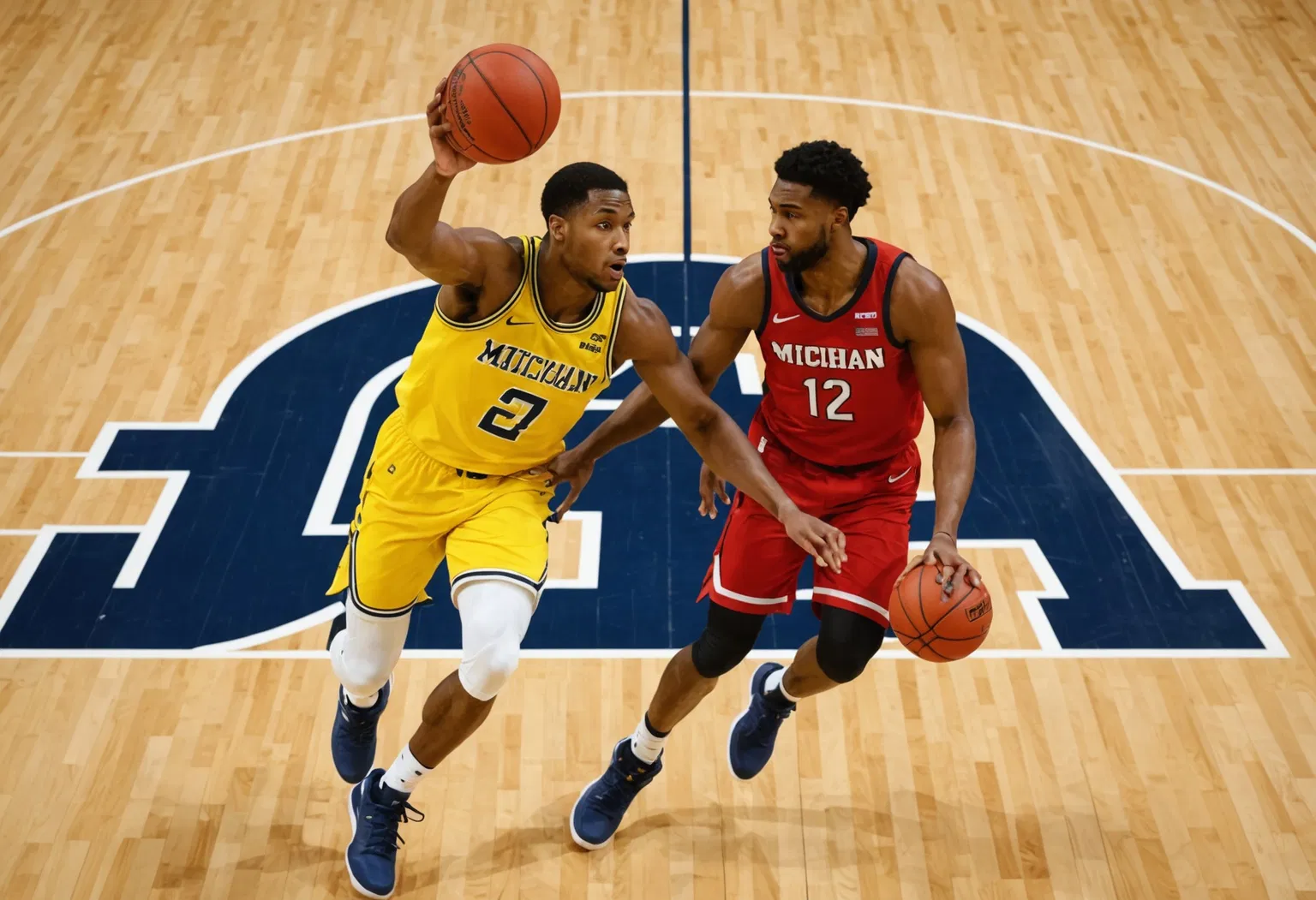
The annual NCAA March Madness tournament captivates millions of basketball fans, but behind the thrilling upsets and buzzer-beaters lies a sophisticated world of data science and predictive modeling. Recent simulations for the 2026 tournament have generated significant buzz by projecting a Final Four showdown between the Michigan Wolverines and Arizona Wildcats, showcasing how advanced algorithms and machine learning are revolutionizing how we forecast sports outcomes. This matchup isn't just speculation—it's the result of thousands of computational simulations that analyze team performance, historical trends, and statistical probabilities to predict tournament results with increasing accuracy.
How Simulations Predict Future March Madness Matchups
Modern March Madness predictions have evolved far beyond simple guesswork or expert intuition. Data scientists and sports analysts now employ complex algorithms that simulate the entire tournament thousands—sometimes millions—of times to identify the most probable outcomes. According to research from analytics firms like Analytics8, these models ingest vast amounts of historical data including team statistics, player performance metrics, strength of schedule, and even situational factors like injuries and home-court advantages. Each simulation runs through every possible tournament scenario, tracking which teams advance through each round based on calculated probabilities rather than predetermined outcomes.
The Michigan vs Arizona projection for the 2026 Final Four emerges from these repeated simulations where both teams consistently demonstrate championship-caliber profiles. Michigan's projected 36-3 record and Arizona's matching 36-3 record in simulations reflect teams with balanced offensive and defensive capabilities, experienced rosters, and favorable tournament paths. As noted in bracket simulations from Covers.com, when models run 10,000 tournament iterations, certain matchups appear with statistical frequency that transcends random chance, giving analysts confidence in their projections.
The Mathematics Behind Perfect Bracket Predictions
Creating a perfect March Madness bracket represents one of sports' most daunting statistical challenges. The NCAA tournament's single-elimination format with 68 teams creates 9.2 quintillion possible bracket combinations—a number so large that if every person on Earth filled out one bracket per second, it would take approximately 292 years to cover all possibilities. This astronomical figure, cited by Olympics.com and NCAA.com, explains why even the most sophisticated prediction models focus on probability rather than certainty.
Mathematical approaches to bracket prediction typically fall into several categories. Monte Carlo simulations, discussed in resources from COMAP's math modeling blog, use random sampling to estimate probabilities by running thousands of tournament simulations. Statistical models incorporate factors like team efficiency ratings, scoring margins, and performance trends. Machine learning models, as explored in Medium articles on the subject, can identify complex patterns in historical data that human analysts might miss. These approaches don't guarantee perfect predictions but significantly improve upon random guessing, with the best models historically predicting about 75-80% of tournament games correctly.
From Data to Brackets: The Prediction Process Explained
The journey from raw data to bracket predictions follows a systematic process that combines sports analytics with computational power. First, data collection gathers season-long statistics for all Division I teams, including offensive and defensive efficiency ratings, shooting percentages, rebounding margins, turnover rates, and strength of schedule metrics. Advanced models also incorporate player-specific data, coaching histories, and even travel schedules that might affect performance.
Next, probability models assign win likelihoods for potential matchups based on historical comparisons. As FiveThirtyEight's prediction methodology explains, these models don't simply declare winners and losers but assign percentage probabilities to each possible outcome. A model might determine that Michigan has a 68% chance of beating Arizona in a hypothetical Final Four matchup, reflecting the uncertainty inherent in single-game basketball outcomes.
Finally, simulation engines run countless tournament iterations, each following different paths based on random number generation weighted by the calculated probabilities. The most frequent outcomes across all simulations represent the most likely tournament scenarios. This approach explains why Michigan vs Arizona appears prominently in 2026 projections—across thousands of simulations, these two teams emerge as Final Four participants more often than other potential matchups.
Why Michigan and Arizona Dominate 2026 Projections
The specific projection of Michigan facing Arizona in the 2026 Final Four reflects particular strengths identified by prediction models. Michigan's simulation profile shows a team that excels in multiple statistical categories crucial for tournament success. The Wolverines project as an elite offensive team with efficient shooting, strong ball movement, and experienced guard play—all factors that historically correlate with deep tournament runs. Their projected 91-73 victory over Arizona in simulation results demonstrates how models weight Michigan's balanced attack against Arizona's defensive strengths.
Arizona's projection as a championship contender stems from different but equally compelling factors. The Wildcats show as a dominant defensive team with size, athleticism, and shot-blocking capability that can disrupt opposing offenses. In simulations, Arizona's path to the Final Four often involves defeating teams that rely heavily on perimeter shooting, leveraging their interior defense to control games. The projected 73 points scored against Michigan in simulations reflects Arizona's offensive limitations compared to their defensive prowess, a trade-off that models suggest might prove decisive in a high-stakes Final Four matchup.
The Evolution of Bracket Prediction Technology
March Madness prediction methodologies have undergone dramatic transformation in recent years. Early bracket prediction relied primarily on human expertise, with sports analysts using their knowledge of teams, players, and coaching styles to make informed guesses. The introduction of computer models in the 1990s brought statistical analysis to the forefront, incorporating factors like scoring margins, strength of schedule, and performance trends.
The current era represents a convergence of multiple advanced technologies. Machine learning algorithms can process years of historical data to identify patterns invisible to human analysts. Cloud computing enables the massive parallel processing required for millions of tournament simulations. Real-time data integration allows models to incorporate late-season performances and injury updates up to the tournament's start. This technological evolution has made predictions increasingly sophisticated, though the inherent randomness of single-elimination basketball ensures surprises will always occur.
What Current Predictions Mean for Future Tournaments
The prominence of Michigan vs Arizona in 2026 projections offers insights into how prediction models view the evolving landscape of college basketball. These projections suggest that both programs have built sustainable success models that should keep them competitive for years to come. Michigan's combination of offensive efficiency and tournament experience creates a profile that models favor, while Arizona's defensive identity and recruiting success position them as perennial contenders.
Beyond specific team projections, the accuracy of current prediction models continues to improve each year. As noted in analyses from data science publications, the best prediction models now achieve accuracy rates that significantly outperform both casual fans and many sports experts. This doesn't mean models can predict upsets with perfect accuracy—the "madness" element remains—but they can identify which potential upsets have higher probabilities based on statistical profiles.
The Human Element in Algorithmic Predictions
Despite the sophistication of prediction algorithms, human judgment remains essential in the bracket prediction process. Data scientists must decide which factors to include in their models, how to weight different statistics, and how to interpret simulation results. The Michigan vs Arizona projection, for instance, might be adjusted based on roster changes, coaching decisions, or preseason developments that occur between now and 2026.
Additionally, prediction models serve as tools for human decision-makers rather than replacements for them. Coaches use similar analytical approaches to develop game strategies, while tournament selection committees consider predictive metrics when evaluating team resumes. For fans, prediction models provide a starting point for bracket decisions rather than definitive answers, blending data-driven insights with personal knowledge and preferences.
Key Takeaways for Understanding March Madness Predictions
Several essential principles emerge from examining how prediction models forecast tournaments and specific matchups like Michigan vs Arizona. First, all predictions represent probabilities rather than certainties—even the strongest favorites have significant chances of losing in single-elimination formats. Second, prediction accuracy improves with sample size, which is why models run thousands of simulations rather than relying on single outcomes. Third, the most successful prediction approaches combine multiple methodologies, using statistical models, machine learning, and simulation techniques to cross-validate results.
Finally, the continuing evolution of prediction technology ensures that future March Madness forecasts will become increasingly sophisticated. As data collection improves and computational power grows, models will incorporate more nuanced factors and produce more reliable projections. The Michigan vs Arizona simulation for 2026 represents just one example of how these advanced analytical approaches are transforming our understanding of sports probabilities and tournament dynamics.