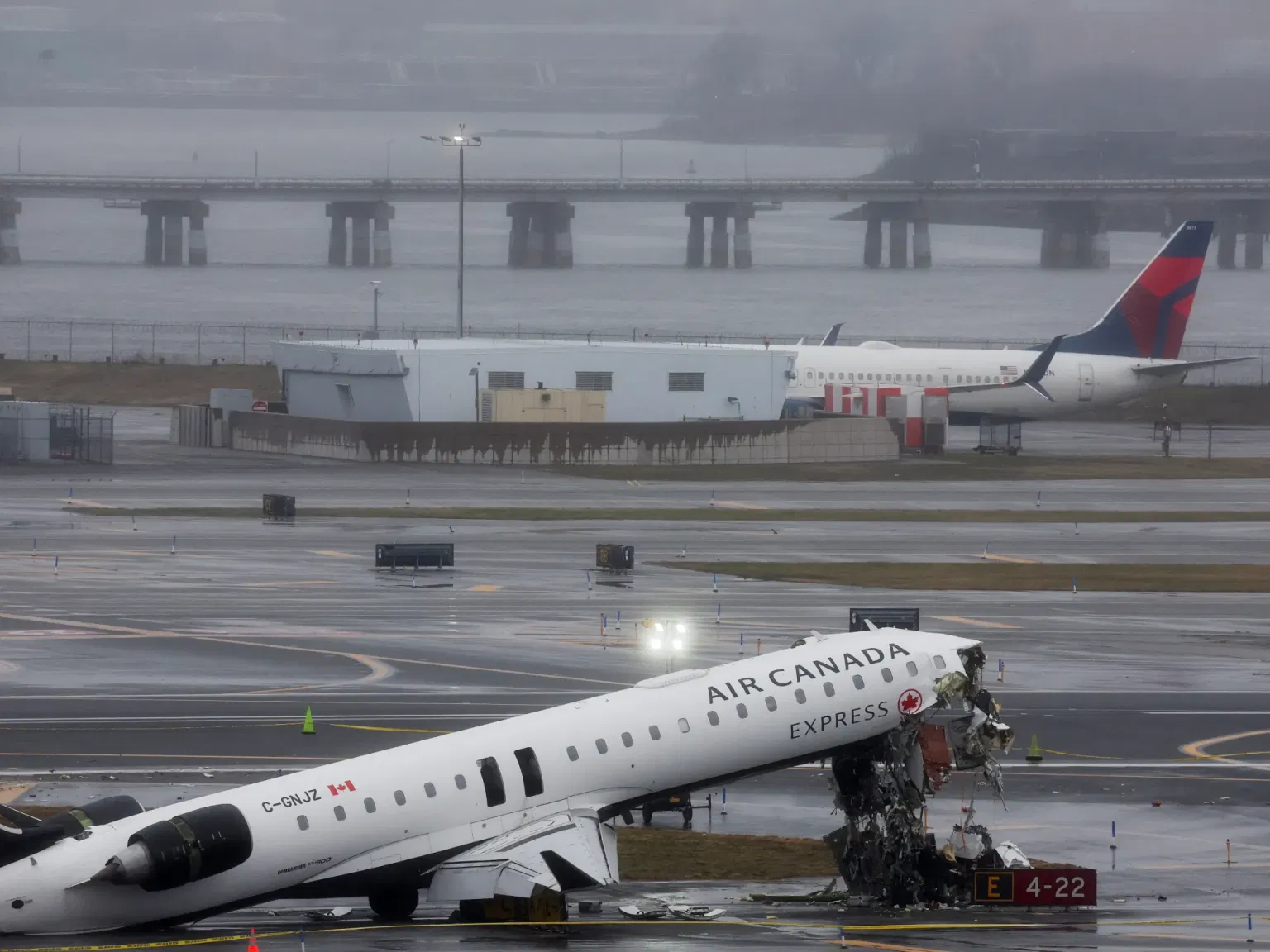
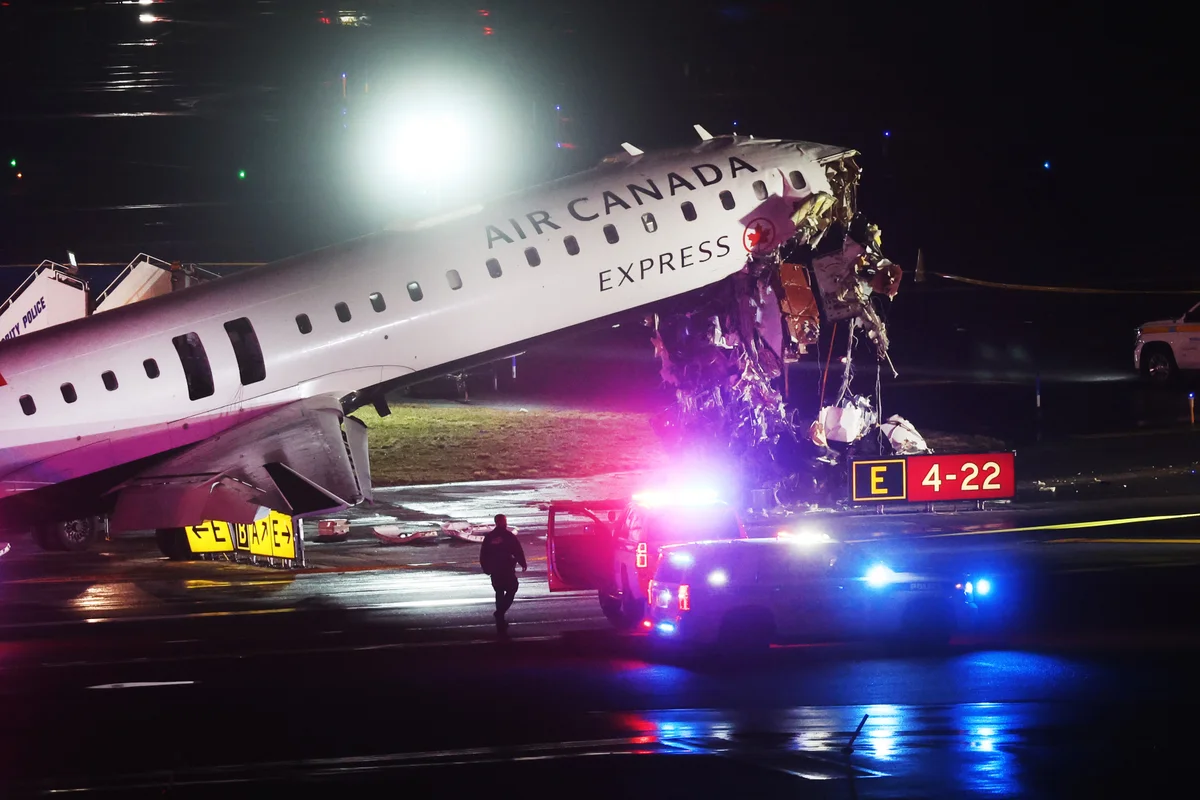
The recent collision between an Air Canada Express jet and a fire truck at New York's LaGuardia Airport has raised urgent questions about aviation safety. On March 22, 2026, Flight AC8646 from Montreal was landing when it struck a Port Authority fire vehicle on the runway, killing both pilots and injuring dozens. This tragic event provides a sobering case study in understanding how plane crashes happen—particularly the phenomenon known as runway incursions.
How the LaGuardia Collision Unfolded: A Timeline of Critical Failures
The Air Canada Express CRJ-900 was on final approach to Runway 4 at LaGuardia Airport around 11:30 p.m. when air traffic control cleared a fire truck to cross the same runway. Just 12 seconds later, the regional jet traveling at 93-105 mph collided with the emergency vehicle. Investigators from the National Transportation Safety Board (NTSB) later revealed that the fire truck lacked a transponder that would have triggered the airport's runway warning system. With only two controllers on duty that night—both handling multiple positions—the system failed to alert them to the impending disaster.
Understanding Runway Incursions: When Airport Safety Breaks Down
Runway incursions occur when an aircraft, vehicle, or person is incorrectly present on a runway designated for landing and takeoff. According to the Federal Aviation Administration, these incidents represent one of the most serious threats to aviation safety. The LaGuardia collision exemplifies a "Category A" incursion—the most severe classification—where a collision was only avoided through extreme maneuver or resulted in an actual collision.
Common causes of runway incursions include:
- Communication failures between pilots and air traffic control
- Controller workload and staffing shortages
- Inadequate airport signage and lighting
- Vehicles entering runways without proper clearance
- Technology failures in warning and detection systems
Aviation Safety Systems: What's Designed to Prevent These Accidents
Modern airports deploy multiple layers of safety technology to prevent runway incursions. The Airport Surface Detection Equipment (ASDE) uses radar to track aircraft and vehicle movements, while the Runway Status Light System provides direct warnings to pilots. Advanced systems like ASDE-X integrate data from multiple sources including transponders on vehicles and aircraft.
In the LaGuardia incident, investigators found that the fire truck wasn't equipped with the necessary transponder to activate these protections. This gap in the safety net allowed the vehicle to enter the runway without triggering automated alerts. The NTSB's preliminary report notes that even if the system had been fully functional, controller staffing levels may have prevented effective response.
Human Factors in Aviation Safety: When Procedures Fail
Beyond technology, human factors play a critical role in aviation safety. The LaGuardia controllers were operating under what the NTSB describes as "chronic staffing shortages"—a problem that has plagued many U.S. airports. With only two controllers managing all tower positions, the margin for error narrowed significantly.
Aviation safety experts point to several human factor issues in this incident:
- Controller fatigue from extended shifts and understaffing
- Split attention between multiple operational positions
- Procedural shortcuts developed under pressure
- Inadequate supervision and quality assurance
- Communication breakdowns during emergency responses
Current Safety Improvements: What's Changing After LaGuardia
In response to the LaGuardia collision, the NTSB has issued urgent safety recommendations including mandatory transponders on all airport vehicles, minimum staffing requirements for air traffic control towers, and enhanced training for runway incursion prevention. The FAA has accelerated deployment of newer surface surveillance technology at major airports, while airlines are reviewing their safety protocols for ground operations.
Industry groups are also advocating for better reporting systems that allow pilots and controllers to anonymously report safety concerns before they lead to accidents. These "safety reporting systems" have proven effective in identifying potential hazards in other high-risk industries.
Key Takeaways: What We've Learned About Plane Crash Prevention
The LaGuardia Airport collision demonstrates how multiple system failures can converge to create catastrophic outcomes. While aviation remains one of the safest modes of transportation, this incident reveals vulnerabilities that require attention:
- Runway incursions represent a persistent threat that requires both technological and human solutions
- Safety systems are only effective when all components—including vehicle transponders—are properly maintained and utilized
- Adequate staffing and controller workload management are essential for maintaining safety margins
- Continuous improvement in reporting, training, and technology implementation can prevent future accidents
- Public awareness of aviation safety mechanisms helps maintain pressure for necessary improvements
As investigations continue and safety improvements are implemented, the lessons from LaGuardia will shape aviation safety for years to come. Understanding how these accidents happen is the first step toward preventing them in the future.