A product recall is one of the most important consumer protection mechanisms in place today. When a manufacturer discovers—or is notified—that one of its products poses a safety risk, a recall is the process used to remove that product from the market and prevent harm to consumers. From contaminated food and defective car parts to hazardous children's toys and faulty medical devices, recalls touch nearly every aspect of modern life. But how exactly do product recalls work, who oversees them, and what should you do if you own a recalled product?
What Is a Product Recall and Why Does It Matter?
A product recall is a corrective action taken by a company to remove or fix a product after a safety issue or defect is discovered. According to the U.S. Food and Drug Administration (FDA), a recall is "an action taken by a company to correct or remove from the market an FDA regulated product that violates U.S. laws and regulations." The goal is simple: protect the public from products that may cause injury, illness, or even death.
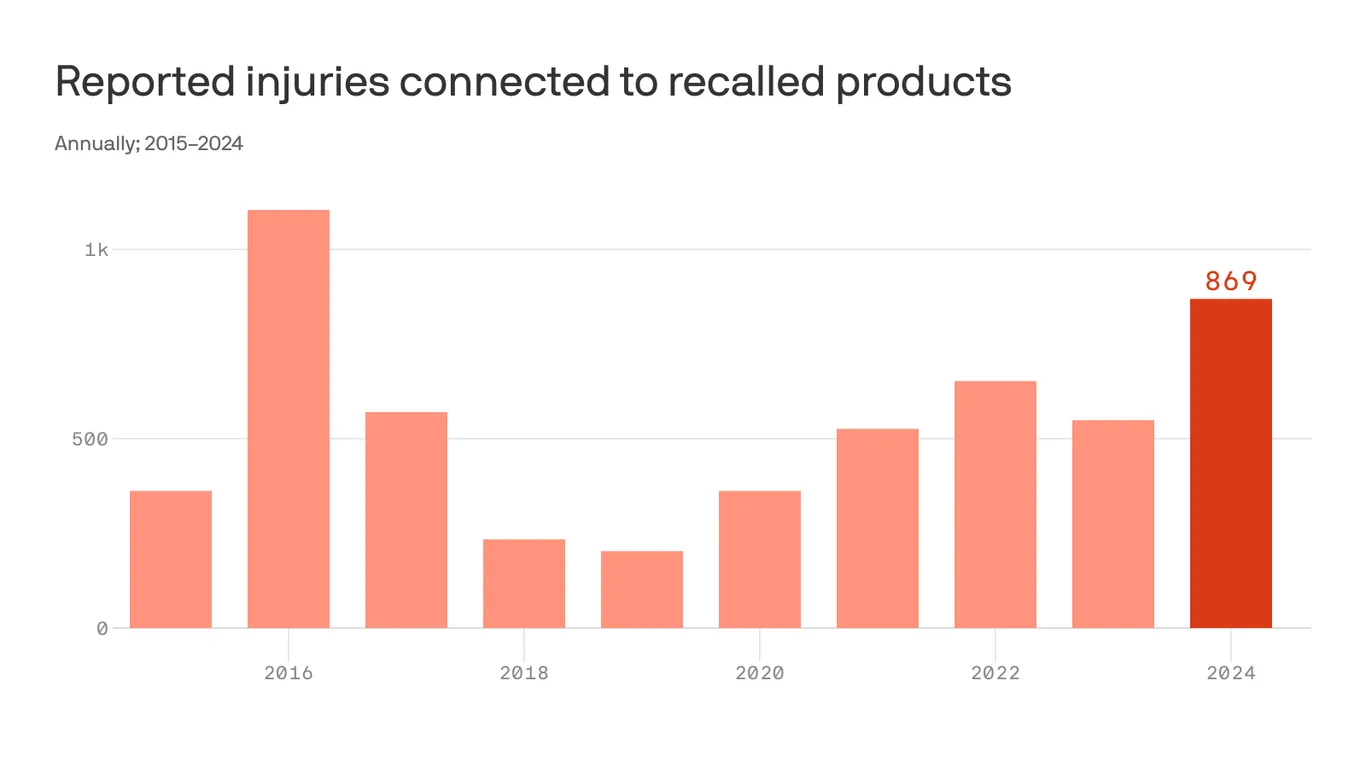
The numbers are staggering. Between 2014 and 2024, more than 83,000 FDA-regulated products were recalled in the United States alone. In 2024, injuries from recalled consumer products hit an eight-year high, according to an Axios analysis of Consumer Product Safety Commission (CPSC) data. Food and beverage recalls are rising globally as well—Canada and the U.S. saw recalls hit a record high of 300 in 2024, costing the industry billions.
Recalls can apply to an enormous range of products: human and animal food, drugs, medical devices, cosmetics, tobacco products, vehicles, children's products, electronics, and more. The most common reasons for a recall include manufacturing defects, contamination with harmful bacteria like Salmonella or E. coli, the presence of foreign objects (broken glass, metal fragments), failure to list major allergens, and design flaws that create safety hazards.
Voluntary vs. Mandatory: Two Paths to a Recall
Not all recalls happen the same way. In fact, the vast majority of recalls in the United States are voluntary—meaning the company itself decides to initiate the recall, often before regulators even get involved. A voluntary recall can be prompted by consumer complaints, internal quality testing, or reports of injuries. According to the FDA, "recalls are typically voluntary actions taken by a company to remove or correct products on the market that violate U.S. laws and regulations."
However, if a company refuses to act, regulators have the authority to step in. The FDA can order a mandatory recall for certain products, and the CPSC has similar authority for consumer goods. In rare cases, like the 2024 CPSC action against an uncooperative smoke detector retailer, regulators will unilaterally issue a recall press release. Mandatory recalls are less common but carry significant legal and financial consequences for manufacturers who fail to comply.
Understanding Recall Classifications: Class I, II, and III
Not all recalls carry the same level of urgency. The FDA and other regulatory bodies classify recalls into three tiers based on the severity of the health risk involved:
Class I Recall — This is the most serious type. It involves a situation where there is a reasonable probability that using or being exposed to the product will cause serious adverse health consequences or death. Examples include contaminated food with pathogens like Listeria or Salmonella, defective medical devices that could fail during use, and medications with dangerous contaminants.
Class II Recall — This classification applies when use of the product may cause temporary or medically reversible adverse health effects, or where the probability of serious harm is remote. Many food recalls for undeclared allergens fall into this category, as do some medical device corrections.
Class III Recall — The least severe classification. These are situations where the product violates regulations but is not likely to cause adverse health consequences. A minor labeling error that doesn't affect safety might result in a Class III recall. As the FDA explains, this covers situations where "use of or exposure to a violative product is not likely to cause adverse health consequences."
The Product Recall Process: Step by Step
When a potential safety issue is identified, manufacturers must move quickly. Here is how the typical recall process unfolds, whether overseen by the FDA or the CPSC:
Step 1: Investigation — Upon receiving reportable information—anything indicating a product defect that could create a substantial hazard—manufacturers generally have a limited window (10 days under CPSC rules) to investigate and determine if the information requires action.
Step 2: Reporting to Regulators — If the investigation confirms a reportable issue, the company must notify the appropriate regulatory agency. Under CPSC rules, this initial report must be made within 24 hours. The report should include the product description, nature of the defect, extent of the risk, and details about any injuries that have occurred.
Step 3: Implementing the Recall — Companies can choose to immediately implement a recall. The CPSC offers a Fast Track Recall Program that streamlines the process for companies willing to act quickly, stopping sales and distribution immediately. The benefit: the CPSC agrees not to make a preliminary hazard determination, which can help limit reputational damage.
Step 4: Notification — Once the recall plan is approved, the company must notify its entire supply chain—distributors, retailers, and direct customers—as well as the general public. The recall notice includes detailed information to help consumers identify affected products: brand names, packaging sizes, lot codes, UPC numbers, sell-by dates, and photos of the packaging. Under CPSC rules, all recall messaging must be approved by the agency before release.
Step 5: Monitoring and Reporting — After the recall is underway, companies must submit regular progress reports to regulators, tracking how many units have been returned or corrected. This continues until the recall is deemed complete.
Three of the Biggest Recalls in History
Some recalls are so massive they reshape entire industries. Understanding these landmark cases helps illustrate why the recall system matters.
The Takata Airbag Recall (2013–present) — Widely considered the largest and most complex recall in automotive history, the Takata airbag recall affected 67 million vehicles from multiple manufacturers. The root cause: a chemical propellant (ammonium nitrate) that becomes unstable in high humidity, causing airbags to explode and send shrapnel into vehicles. At least 36 deaths have been linked to the defect. The recall sent Takata into bankruptcy and led to major reforms in automotive supplier quality oversight.
The Samsung Galaxy Note 7 Recall (2016) — After reports of phones catching fire, Samsung recalled 3 million Galaxy Note 7 devices. The problem was traced to battery design and manufacturing defects that caused short circuits. Samsung's response became a case study in crisis management: within two weeks they announced an exchange program, halted production within two months, and deployed 700 engineers to investigate the failure across 200,000 phones.
The Peanut Corporation of America Recall (2008–2009) — A multi-state Salmonella outbreak linked to contaminated peanut products triggered a recall affecting thousands of products. The root cause was gross negligence: unsanitary conditions including mold, dead insects, and rodent infestations. The company's leadership knowingly shipped contaminated products. Uniquely, this recall led to criminal fraud and conspiracy charges against company executives, resulting in prison time.
What to Do If You Have a Recalled Product
If you discover you own a product that has been recalled, here are the steps to follow based on FDA and CPSC guidance:
Read the recall notice carefully. Verify that your product matches the description, brand name, packaging size, and codes (like expiration dates or lot numbers) listed in the recall.
Follow the instructions. Most recalls will tell you exactly what to do. Often, recalled products can be returned to the store for a refund or exchange. In some cases—particularly with medical devices—a recall may mean the device needs to be checked or adjusted rather than returned.
Dispose of the product properly. If you cannot return the product, dispose of it in a secure container placed in a covered trash can so no people or animals can access it. For contaminated food, clean the area where the product was stored thoroughly.
Stay informed. You can sign up for recall alerts through the FDA's subscription service, check the CPSC website at www.cpsc.gov, or visit www.recalls.gov for a consolidated list of recalls from six federal agencies.
Never use a product that has been recalled for a safety hazard. As the experts at SafetyCulture note, "according to the CPSC, a product may need to be recalled if it has a defect that causes a substantial risk of injury." Taking recalls seriously—whether it's a food product, a car part, or a household appliance—is one of the simplest ways to protect yourself and your family.
Key Takeaways: How Product Recalls Work
- A product recall is a corrective action to remove or fix unsafe products from the market, either voluntarily by the manufacturer or ordered by a regulatory agency
- Recalls are classified into three levels: Class I (serious risk of death), Class II (temporary or reversible effects), and Class III (unlikely to cause harm)
- The recall process involves investigation, reporting to regulators, implementing corrective actions, notifying the public, and ongoing monitoring
- Over 83,000 FDA-regulated products were recalled between 2014 and 2024, and recall-related injuries hit an eight-year high in 2024
- Consumers should carefully read recall notices, follow instructions for return or disposal, and stay informed through official recall databases