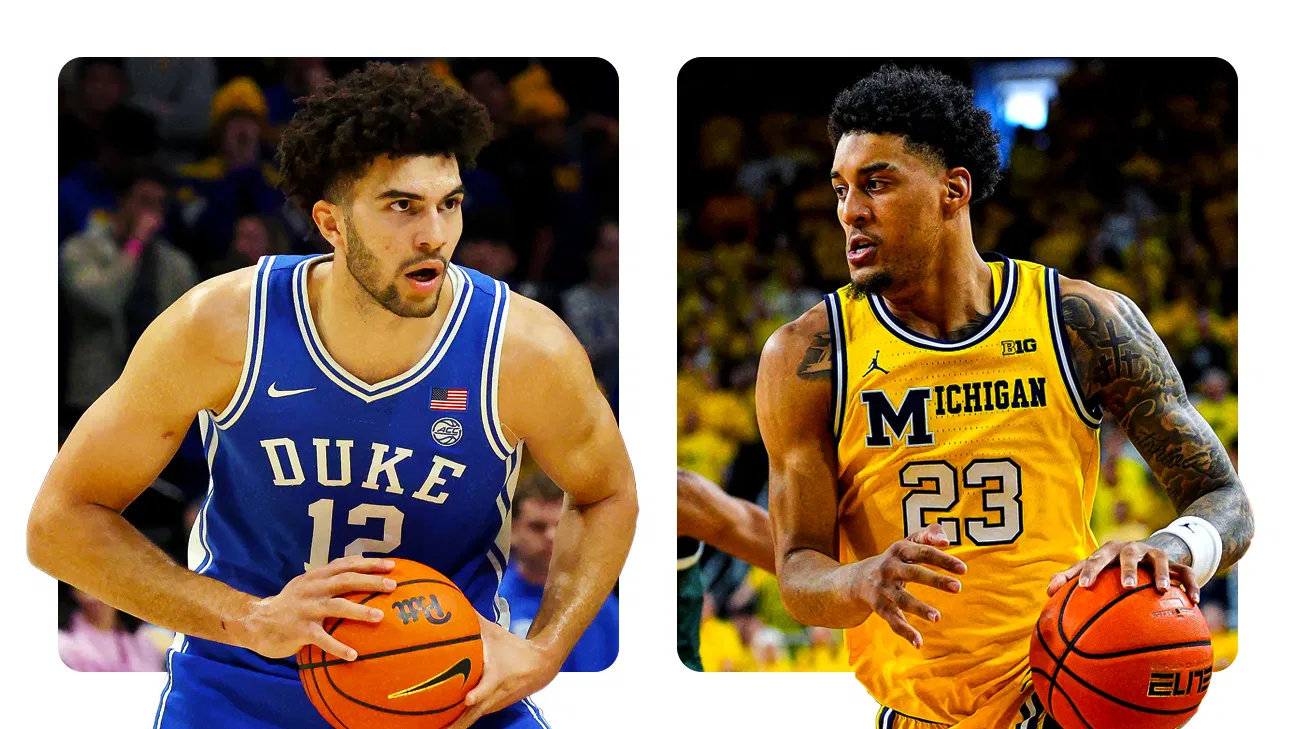
Every March, college basketball fans across the United States become captivated by one of the most exciting sporting events of the year: March Madness. At the heart of this tournament lies the "Sweet 16" bracket—a critical juncture where only 16 teams remain in contention for the national championship. Understanding how this bracket works, from team selection to tournament progression, reveals the fascinating structure behind one of sports' most unpredictable competitions.
Understanding the NCAA Tournament Structure
The NCAA Division I Men's Basketball Tournament, commonly known as March Madness, features 68 teams competing in a single-elimination format. The tournament bracket is divided into four regions: South, East, West, and Midwest. Each region contains 16 teams seeded from 1 to 16, with the number 1 seed being the highest-ranked team in that region and the number 16 seed being the lowest. This seeding system creates matchups where the highest seeds face the lowest seeds in the early rounds, theoretically giving the best teams an easier path to advance.
How Teams Earn Their Spot in the Tournament
The process of selecting which 68 teams make the tournament is both rigorous and systematic. There are two primary ways teams qualify:
- Automatic Qualifiers: 32 teams earn automatic bids by winning their respective conference tournaments. Every Division I conference, from the powerhouse ACC to smaller conferences like the Ivy League, receives one automatic bid for its conference champion.
- At-Large Bids: The remaining 36 spots are filled through at-large selections determined by the NCAA Division I Men's Basketball Committee, a group of 10-12 individuals who evaluate teams throughout the season.
The selection committee uses a comprehensive evaluation process that considers numerous factors including win-loss records, strength of schedule, performance against ranked opponents, road and neutral site victories, and various analytical metrics. This process ensures that the most deserving teams, not just those with the best records, earn invitations to the tournament.
The Selection Sunday Revelation
One of the most anticipated moments in college basketball occurs on "Selection Sunday," typically the Sunday before the tournament begins. This is when the selection committee reveals the complete bracket, including all 68 teams, their seeds, and their regional placements. The bracket reveal follows a specific format:
- The top four overall teams are designated as number 1 seeds, each placed in a different region
- Teams are then placed in the bracket following an "S-curve" system that attempts to balance competitive equity across regions
- The committee must adhere to specific bracketing principles, including keeping teams from the same conference separated until certain rounds when possible
- Geographic considerations are factored in to minimize travel for teams and fans
Tournament Progression: From First Four to Sweet 16
The tournament begins with the "First Four"—four play-in games contested between the eight lowest-seeded teams (typically the four lowest-seeded automatic qualifiers and the four lowest-seeded at-large teams). These games, played in Dayton, Ohio, reduce the field from 68 to 64 teams for the first round proper.
The tournament then progresses through several distinct rounds:
- First Round: 64 teams compete in 32 games spread across Thursday and Friday of tournament week
- Second Round: The 32 winners advance to play 16 games on Saturday and Sunday
- Sweet 16: The 16 remaining teams compete in regional semifinals, typically played on Thursday and Friday of the following week
- Elite Eight: The 8 winners from the Sweet 16 advance to regional finals
- Final Four: The 4 regional champions meet in the national semifinals
- National Championship: The two Final Four winners compete for the national title
What Makes the Sweet 16 So Special
The Sweet 16 represents a critical threshold in the tournament for several reasons. First, it's the point where teams have survived two rounds of single-elimination pressure, demonstrating both skill and resilience. Second, Sweet 16 teams are typically guaranteed placement in the NCAA record books and receive special recognition from their schools and conferences. Third, from a competitive standpoint, reaching the Sweet 16 often means a team has overcome its initial seeding and proven it can compete with the nation's best programs.
Historically, the Sweet 16 has produced some of March Madness's most memorable moments. Lower-seeded teams that reach this round become "Cinderella stories," capturing the imagination of casual fans and creating the tournament's legendary unpredictability. Since the tournament expanded to 64 teams in 1985 (and later to 68), numerous double-digit seeds have reached the Sweet 16, including memorable runs by teams like 2021 UCLA (a First Four team that reached the Final Four) and 2018 Loyola-Chicago.
Sweet 16 Scheduling and Locations
The Sweet 16 games are typically played on the Thursday and Friday of the tournament's second week. In recent years, the schedule has followed this pattern:
- Thursday: Four Sweet 16 games, two from two different regions
- Friday: Four Sweet 16 games from the remaining two regions
Games are played at predetermined regional sites, which rotate annually among major arenas across the country. Recent Sweet 16 locations have included Crypto.com Arena in Los Angeles, TD Garden in Boston, AT&T Center in San Antonio, and other NBA-sized venues capable of accommodating the increased fan interest that accompanies this stage of the tournament.
The Mathematics of Bracket Perfection
The unpredictability of the NCAA tournament creates fascinating mathematical probabilities. The chances of filling out a perfect bracket—correctly predicting the winner of all 63 tournament games—are astronomically small. Even with expert knowledge, the odds are estimated at 1 in 9.2 quintillion if picking randomly, or about 1 in 120 billion with educated selections. This uncertainty is what makes the Sweet 16 particularly compelling: by this stage, most casual brackets have been "busted," while serious contenders for bracket challenge prizes see their predictions tested against reality.
How to Follow and Understand the Bracket
For those new to March Madness, following the bracket progression to the Sweet 16 involves several key concepts:
- Seed Numbers Matter: Lower seed numbers indicate better teams. A 1-seed beating a 16-seed is expected; a 16-seed beating a 1-seed is historic (and has only happened once, when UMBC defeated Virginia in 2018).
- Upsets Create Bracket Chaos: When lower-seeded teams defeat higher-seeded opponents, they create "upsets" that dramatically alter bracket predictions.
- Regional Champions Advance: The winner of each regional semifinal (Sweet 16 game) advances to the regional final (Elite Eight), with the four regional champions advancing to the Final Four.
- Bracket Resets After Sweet 16: Once the Sweet 16 concludes, the remaining eight teams are re-bracketed based on their original seeds and regions to determine Elite Eight matchups.
The Business and Cultural Impact
The Sweet 16 represents more than just a basketball milestone—it's a significant economic and cultural event. Schools that reach the Sweet 16 typically see increased applications (the "Flutie Effect"), enhanced visibility for their academic programs, and substantial financial rewards from the NCAA's tournament revenue distribution system. For television networks, Sweet 16 games deliver some of the highest ratings of the tournament outside the Final Four, with advertising slots commanding premium prices.
Culturally, the Sweet 16 has become embedded in American sports tradition. Office pools reach their critical juncture during this round, with surviving brackets becoming topics of workplace conversation. The term "Sweet 16" itself has entered the broader sports lexicon, representing achievement and survival in high-stakes competition.
Historical Evolution of the Tournament Format
The NCAA tournament has evolved significantly since its inception in 1939 when only 8 teams participated. The field expanded to 16 teams in 1951, 32 in 1975, 64 in 1985, and 68 in 2011. The "Sweet 16" terminology gained popularity as the tournament grew, with the round of 16 becoming a clear demarcation between teams that had simply won a game or two and those that had genuinely advanced deep into the tournament.
The current 68-team format, with its First Four play-in games, ensures that every Division I conference champion gets an opportunity to compete while still allowing room for deserving teams that didn't win their conference tournaments. This balance between automatic qualification and merit-based selection has helped maintain the tournament's unique character while accommodating the growth of college basketball.
Conclusion: The Sweet Science of March Madness
The Sweet 16 bracket represents the perfect intersection of competition, drama, and mathematics that defines March Madness. From the meticulous selection process that begins months before the tournament to the single-elimination games that determine which 16 teams survive to this stage, every aspect of the system contributes to what has become one of America's most beloved sporting traditions.
Understanding how the bracket works—from Selection Sunday through the Sweet 16—enhances appreciation for both the strategic elements behind team placement and the sheer unpredictability that makes each game must-see television. Whether you're a casual fan filling out your first bracket or a seasoned observer tracking every upset, the journey to the Sweet 16 encapsulates why March truly earns its "madness" designation.