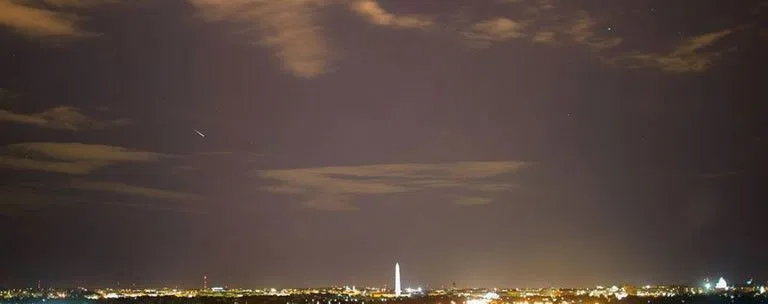
Every August, the night sky stages one of its most dependable and beloved performances: the Perseid meteor shower. Peaking around August 12, the Perseids are widely considered the best meteor shower of the year for observers in the Northern Hemisphere, producing bright, colorful shooting stars against comfortably warm summer skies. If you have ever wondered what a meteor shower actually is, why it returns on nearly the same date each year, and how to catch the most meteors, this guide explains everything you need to know about the August 12 meteor shower.
What Exactly Is a Meteor Shower?
A meteor shower happens when Earth, on its annual trip around the sun, passes through a stream of dusty debris left behind by a comet. Each particle in that stream, many of them no larger than a grain of sand, slams into our atmosphere at extremely high speed. The friction heats the particle so intensely that it vaporizes, producing a glowing streak of light we call a meteor, or more casually, a shooting star.
What makes meteor showers predictable is that the debris stream sits in a fixed path through space. Earth crosses that same path at roughly the same point in its orbit every year, which is why the Perseids return like clockwork in mid-August and why the peak dates shift only slightly from year to year.
Why the Perseids Peak on August 12
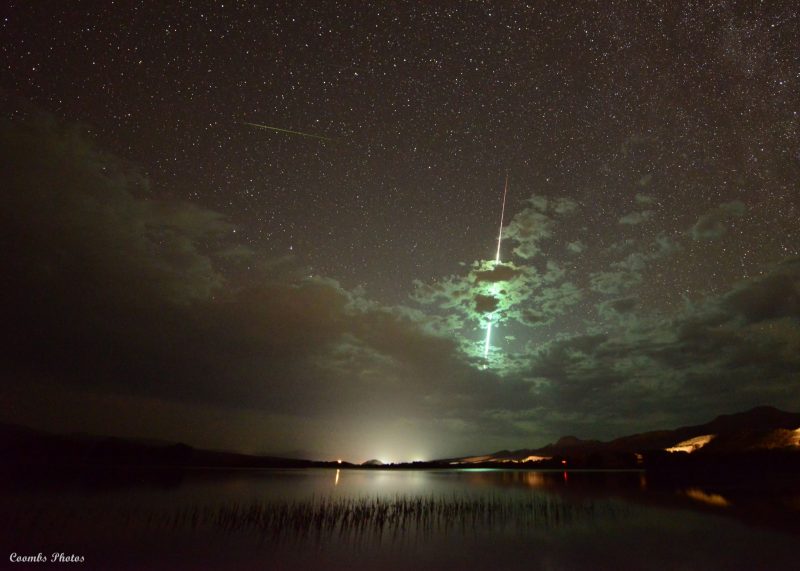
The Perseids are active for a surprisingly long stretch, roughly from July 14 to September 1, because that is the period when Earth is traveling through the debris stream in space. However, the meteor count climbs gradually toward a sharp peak and then falls off quickly, which is why the nights around August 12 matter so much.
In 2026, the peak is predicted for 14:53 UTC on August 13, according to EarthSky. That makes the pre-dawn hours of August 12 and 13 the best times to look, though the mornings of August 11 and 14 can still deliver a good show. Under a dark, moonless sky, observers frequently report 90 or more Perseid meteors per hour. The shower is rich, steady, and full of bright meteors that often leave glowing trains, lingering streaks of ionized gas, in their wake.
Where the Meteors Come From
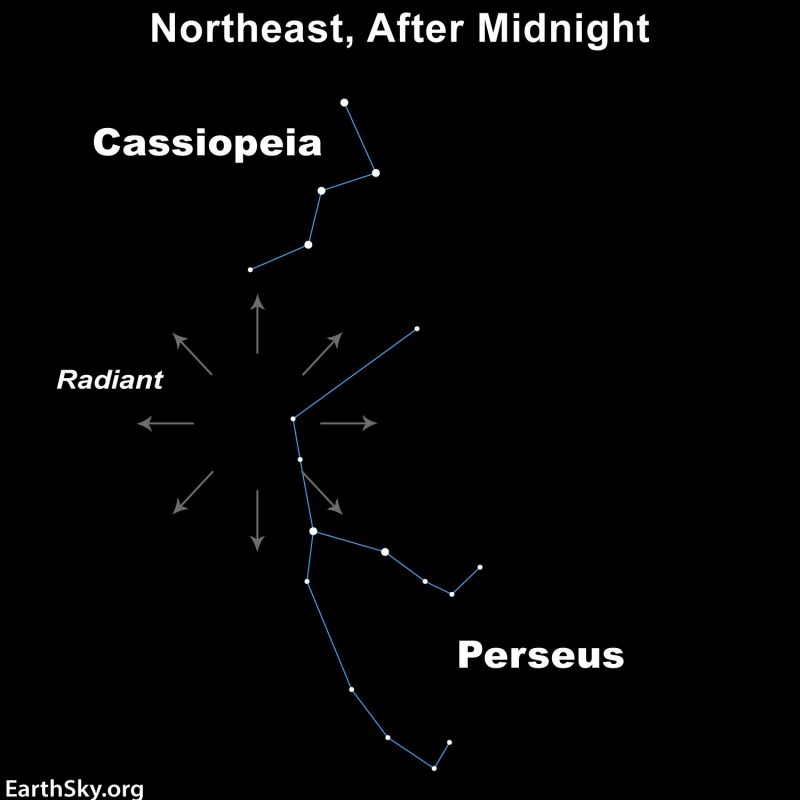
If you trace every Perseid meteor backward across the sky, the paths appear to originate from a single point in the constellation Perseus the Hero, near a pair of star clusters called the Double Cluster. This point is known as the radiant, and it is how the shower got its name. There is no real physical connection between the meteors and the stars of Perseus, however. Those stars are many light-years away, while the meteors themselves burn up only about 60 miles (100 kilometers) above Earth's surface.
The Comet Behind the Show: Swift-Tuttle
Every meteor shower has a parent comet, and the Perseids trace their origin to a large comet called 109P/Swift-Tuttle. The comet orbits the sun roughly once every 133 years, shedding dust and ice each time it swings through the inner solar system. That debris is what Earth encounters every August.
Swift-Tuttle was discovered in July 1862, when Lewis Swift of Marathon, New York, spotted it through a small telescope, and Horace Tuttle independently found it from Harvard Observatory three days later. The comet made its most recent return in 1992, confirming its roughly 133-year orbit and ensuring the Perseid debris stream stays freshly supplied.
Because the Perseids come from cometary ice and dust, flimsy material compared with the rocky or metallic bodies that produce most meteorites, very few, if any, Perseid meteors ever reach the ground intact. They vaporize high in the atmosphere, leaving nothing behind but a brief flash of light.
How to Watch the August 12 Meteor Shower
Catching the Perseids does not require any special equipment, just dark skies, patience, and a little planning. The single most important rule is timing: watch in the hours after midnight and before dawn, not in the early evening. The radiant in Perseus rises in the late evening and climbs highest just before dawn, which is why the pre-dawn hours produce the most meteors.
Here are the essentials for a successful night of meteor watching:
- Get away from city lights. The darker the sky, the more meteors you will see. A rural or semi-rural location makes a dramatic difference.
- Give your eyes time to adjust. Spend at least 20 to 30 minutes in the dark before the best viewing, and avoid looking at phone screens, which reset your night vision.
- Look broadly, not at one spot. Meteors can appear anywhere in the sky. Lie back on a blanket or reclining chair and take in as much of the sky as possible.
- Be comfortable and patient. Bring warm layers and bug spray, and plan to watch for at least an hour, since meteor rates come in bursts.
2026 Is a Great Year for the Perseids
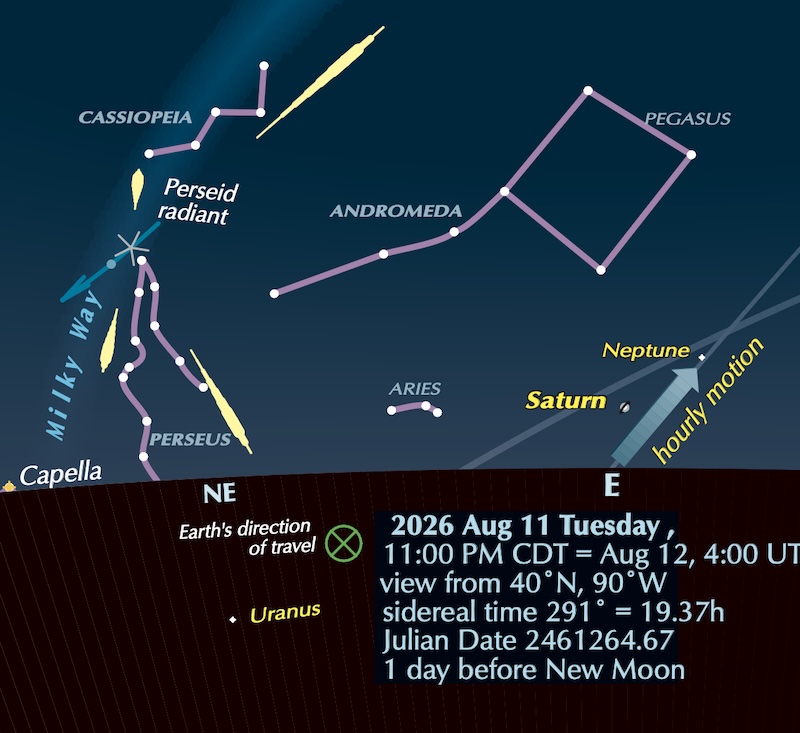
This year offers unusually good conditions. The new moon falls on August 12, 2026, meaning the peak mornings will be moon-free, with no bright moonlight to wash out the fainter meteors. For observers in the Northern Hemisphere, the radiant rises high in the sky before dawn, setting the stage for the best rates of the year.
There is one important caveat for viewers south of the equator. From many populated areas of the Southern Hemisphere, the Perseid radiant never rises above the horizon, so the shower is far less impressive there. Observers south of about 30 degrees south latitude are better off watching the Delta Aquariid meteors instead.
The Bottom Line
The Perseid meteor shower is the Northern Hemisphere's most beloved meteor display, and it peaks every year around August 12. Here is a quick summary of the essentials:
- The Perseids are caused by Earth passing through debris from Comet Swift-Tuttle, which orbits the sun about every 133 years.
- Meteors are tiny comet particles that burn up roughly 60 miles (100 km) above Earth, appearing to radiate from the constellation Perseus.
- In 2026, the best viewing is after midnight through dawn on the mornings of August 12 and 13, with up to 90 or more meteors per hour possible under dark skies.
- No equipment is needed, just dark skies, dark-adapted eyes, and patience.