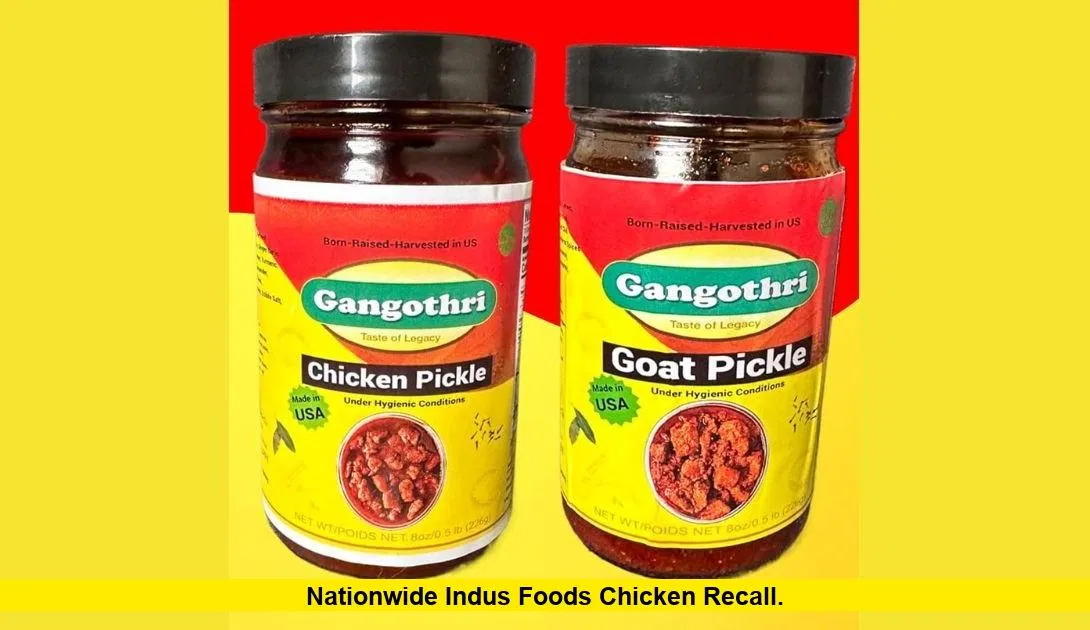
Indus Foods, LLC — an Austin, Texas company doing business as Gangothri Foods — has recalled roughly 1,626 pounds of ready-to-eat pickled goat and chicken products because they were produced without the benefit of federal inspection. The nationwide recall, announced August 17, 2026 by the U.S. Department of Agriculture's Food Safety and Inspection Service (FSIS), covers four varieties of 8-ounce glass jars sold to restaurants, retail stores, distributors, and online shoppers. No illnesses have been reported, but regulators warn the jars could still be sitting in home pantries and on store shelves, where they pose a preventable food-safety risk.
At the center of the recall is a straightforward but serious regulatory problem: the products never received the mandatory USDA inspection that federal law requires for meat and poultry. Understanding what that means — and how recalls like this one unfold — can help you decide exactly what to do if a recalled product ends up in your kitchen.
Why "Produced Without Benefit of Inspection" Triggered the Recall
Under the Federal Meat Inspection Act and the Poultry Products Inspection Act, commercial meat and poultry products must be produced under continuous inspection by FSIS. Inspectors monitor sanitation, ingredient safety, and labeling, and compliant products bear a USDA mark of inspection. The Gangothri Foods jars covered by this recall do not carry that mark, meaning they were made outside the required oversight — a condition FSIS describes as "produced without the benefit of inspection."
The affected items were manufactured between January 28, 2025 and May 6, 2026 and carry a two-year shelf life. The four products subject to recall are:
- 8-oz. glass jars of "Gangothri Goat Pickle"
- 8-oz. glass jars of "Gangothri Gongura Goat Pickle"
- 8-oz. glass jars of "Gangothri Chicken Pickle"
- 8-oz. glass jars of "Gangothri Gongura Chicken Pickle"
FSIS discovered the problem during routine surveillance activities rather than through a consumer illness report. Even so, the agency classified the recall as Class I — its highest-risk category, reserved for situations where there is a reasonable probability that use of the product will cause serious, adverse health consequences or death. Ready-to-eat foods such as pickled meats are treated with particular caution because they are generally consumed without a final cooking step that would otherwise kill harmful bacteria.
Timeline: From the Production Line to a Nationwide Recall
This recall did not materialize overnight. Here is how the sequence of events unfolded:
- January 28, 2025 to May 6, 2026: The pickled goat and chicken products are produced without the benefit of federal inspection.
- 2026: FSIS surveillance activities identify the uninspected products.
- August 17, 2026: FSIS announces the voluntary recall of approximately 1,626 pounds of product, which had been sold nationwide to restaurants, retail locations, and distributors, as well as directly to consumers online.
- Ongoing: FSIS conducts recall effectiveness checks to confirm the company is notifying its customers and pulling product from the marketplace.
Because the jars carry a two-year shelf life and were distributed across the country, regulators are concerned that some product may still be in consumers' pantries or on restaurant and distributor shelves long after production ended.
How Food Recalls Actually Work
To make sense of this recall, it helps to understand the machinery behind food safety in the United States. Meat, poultry, and processed egg products fall under FSIS, an agency within the USDA, while most other foods are regulated by the Food and Drug Administration (FDA). When a problem is found — through inspection, routine testing, or a report of illness — the company and the agency can move toward a recall.
Continuous inspection is the backbone of the system. Inspectors are present in federally inspected establishments to verify that products are handled under sanitary conditions, that ingredients are safe, and that labels are truthful. When a product skips that step, consumers lose the assurance that it was made in a properly monitored facility — which is precisely why "produced without benefit of inspection" is treated as a recall trigger on its own, even in the absence of reported illnesses.
FSIS sorts recalls into three classes based on the level of health risk involved:
- Class I: High or medium risk — a reasonable probability that the product will cause serious health consequences or death.
- Class II: Low risk — a remote probability of adverse health consequences.
- Class III: Marginal risk — the product is unlikely to cause adverse health consequences.
Most recalls are voluntary, meaning the company agrees to remove the product after being notified by FSIS. The agency then issues a public announcement listing the affected items and follows up with "recall effectiveness checks" to verify that the firm actually notifies its customers and takes steps to keep the product from being sold. When available, FSIS also publishes retail distribution lists so consumers can see which stores may have carried the products.
Chicken recalls can stem from several causes. Bacterial contamination with pathogens such as Salmonella and Listeria monocytogenes is among the most common, but recalls can also be triggered by undeclared allergens, foreign materials such as metal or plastic, mislabeling, and — as in this case — a failure to meet inspection requirements. Regardless of the trigger, the consumer response is the same: stop using the product, check the label, and follow the agency's guidance.
What Consumers Should Do Right Now
If you think you may have purchased a Gangothri Foods product, check your pantry for the four affected 8-ounce jar varieties. Do not eat them. FSIS recommends throwing the products away or returning them to the place of purchase. Restaurants and distributors are urged not to serve or sell the recalled items, and anyone concerned about a reaction after consuming an affected product should contact a healthcare provider.
Consumers with questions can contact the company through Jyothi Yerramreddy at 512-284-7790 or by email at [email protected]. For general food safety questions, the USDA Meat and Poultry Hotline is available at 1-888-MPHotline (1-888-674-6854).
What Happens Next
FSIS will continue its recall effectiveness checks to ensure the products are removed from commerce, and a retail distribution list may be posted on the FSIS website as more information becomes available. In the meantime, the recall remains active, and no confirmed illnesses have been linked to the products.
For consumers, the takeaway is simple: a missing USDA mark of inspection on a meat or poultry product is a red flag worth checking. When you shop, look for the inspection mark, and consider signing up for FSIS recall alerts so you learn about recalls like this one as soon as they are announced.
The Bottom Line: Key Points to Remember
- Indus Foods, LLC (dba Gangothri Foods) of Austin, Texas recalled about 1,626 pounds of ready-to-eat pickled goat and chicken.
- The products were produced without the benefit of federal inspection and do not bear a USDA mark of inspection.
- Four 8-ounce jar varieties are affected, produced between January 28, 2025 and May 6, 2026 with a two-year shelf life.
- The recall was classified as Class I (high risk), but no illnesses have been reported.
- Consumers should throw away or return the products rather than eat them.