The PGA Championship is one of the four most prestigious events in men's professional golf, standing alongside the Masters, the U.S. Open, and The Open Championship as a major championship. Conducted annually by the Professional Golfers' Association of America (PGA of America), it is the only major that is exclusively for professional golfers — no amateurs are invited to compete. In 2025, Scottie Scheffler claimed the title at Quail Hollow Club in Charlotte, North Carolina, securing his third major victory in dominant fashion.
What Is the PGA Championship and How Did It Begin?
The PGA Championship was first played in October 1916 at Siwanoy Country Club in Bronxville, New York, just months after the PGA of America was founded. The tournament was the brainchild of Rodman Wanamaker, a wealthy department store heir who hosted a luncheon with leading golf professionals at Wykagyl Country Club in January 1916 to organize the association. The first winner, Jim Barnes, received $500 and a diamond-studded gold medal. The prize money has grown dramatically since — the 2025 champion earned $3.42 million from a total purse of $19 million.
Originally a match play event, the championship underwent a major transformation after the 1957 tournament lost money. At the urging of television broadcasters who preferred a larger group of contenders on the final day, the PGA of America changed the format to stroke play beginning in 1958. The switch proved successful, and the 72-hole stroke play format has remained ever since.
How the PGA Championship Format Works
The PGA Championship is a 72-hole individual stroke play tournament played over four days, Thursday through Sunday. A field of 156 professional golfers competes, with all players completing 18 holes each day for the first two rounds. After 36 holes, a cut is made — only the top 70 players (including ties) advance to the weekend rounds. This is the largest cut among the four majors, allowing more players to compete on the final two days.
In the event of a tie for first place after 72 holes, a three-hole aggregate playoff determines the champion. The playoff is contested on three designated holes (typically the 16th, 17th, and 18th), with the player posting the lowest combined score winning. If still tied after three holes, the playoff continues on a sudden-death basis, rotating through the same three holes until a winner emerges.
Timeline: The PGA Championship Through the Years
1916: The first PGA Championship is held at Siwanoy Country Club. Jim Barnes wins the inaugural event, receiving $500 and a gold medal donated by Rodman Wanamaker.
1916–1957: The tournament is played as a match play event, with finalists sometimes playing over 200 holes in a single week. Walter Hagen and Jack Nicklaus dominate the era, with Hagen winning five titles and Nicklaus adding two during this period.
1958: The format changes to 72-hole stroke play, a move driven by television broadcasters who wanted more star contenders in the final round. Dow Finsterwald wins the first stroke-play edition.
1965–2018: The championship settles into an August date, serving as the season's final major — often called "Glory's Last Shot." Jack Nicklaus wins a record five PGA Championship titles during this era.
2019: The PGA Championship moves to May, becoming the second major of the year after the Masters. The change was made to avoid competing with the start of the football season and to allow cooler weather for host courses.
2024: Xander Schauffele sets the all-time major championship scoring record with a 72-hole total of 263 (21 under par) at Valhalla Golf Club, winning by one stroke over Bryson DeChambeau.
2025: Scottie Scheffler wins his first PGA Championship at Quail Hollow Club, finishing at 11-under 273, five strokes clear of the field. It is his third major title overall.
2026: The championship is scheduled for Aronimink Golf Club in Newtown Square, Pennsylvania, marking the tournament's return to the Philadelphia area.
The Wanamaker Trophy: A Prize with a Story
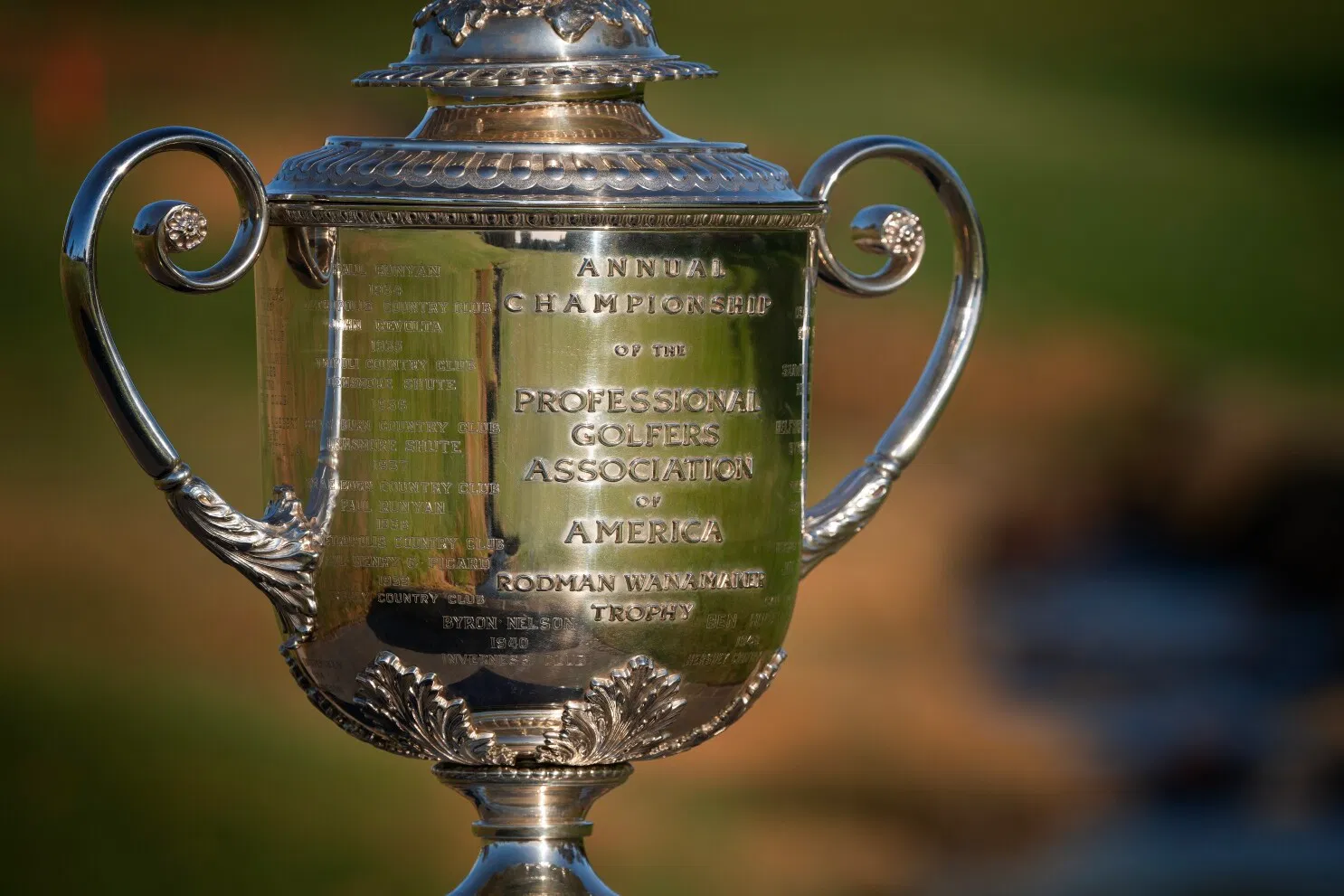
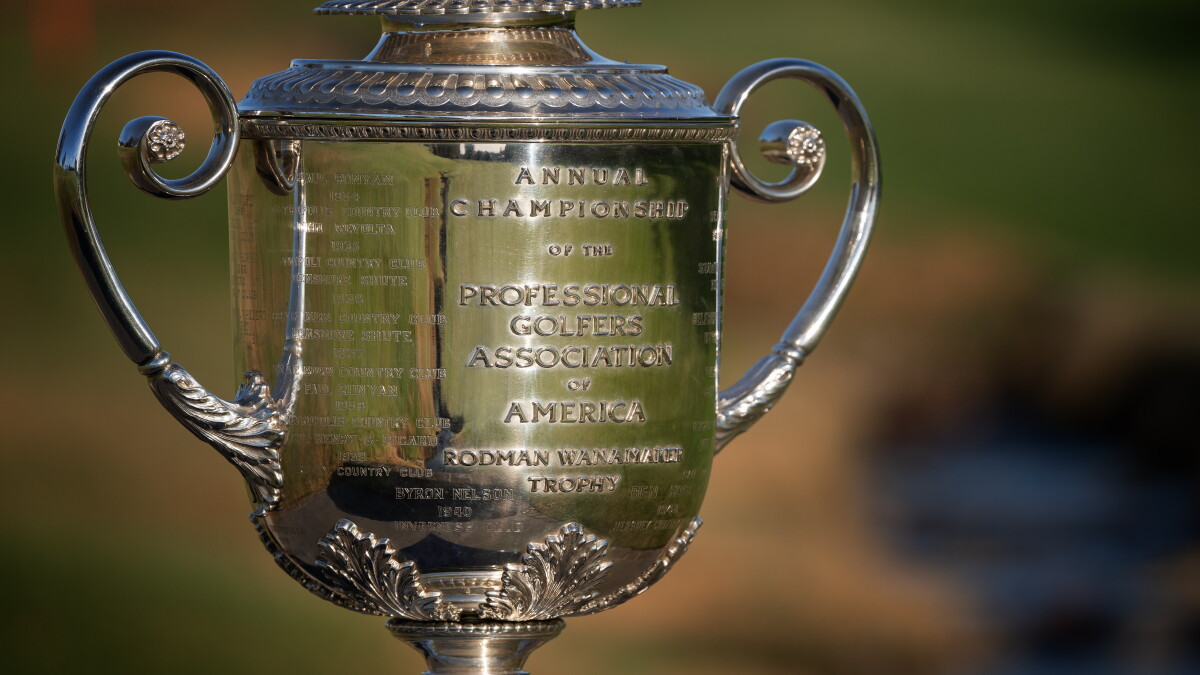
The Wanamaker Trophy, named after the PGA of America's founding benefactor, stands nearly 2.5 feet tall, weighs 27 pounds, and features a cluster of grapes on its lid. The champion receives a full-size replica to keep for one year and a smaller keeper replica to keep permanently. The trophy has a fascinating history — it went missing for several years in the 1920s after five-time champion Walter Hagen allegedly entrusted it to a taxi driver who never returned it. The trophy was eventually discovered in 1930 in the cellar of a club manufacturing company.
Who Gets to Play? Understanding PGA Championship Qualification
The PGA Championship is known for having one of the strongest fields in golf, thanks to its broad qualification criteria. What makes it unique among the four majors is that it reserves 20 spots specifically for club professionals through the PGA Professional Championship, reflecting the PGA of America's original mission to serve club and teaching professionals.
The full qualification categories include:
- Former PGA Champions — all past winners are eligible for life.
- Recent major winners — winners of the last five Masters, U.S. Opens, and Open Championships.
- Players Championship winners — winners of the last three Players Championships.
- Top world ranking players — the top 3 on the International Federation Official World Golf Ranking list.
- Senior PGA Champion — the current Senior PGA Championship winner.
- Previous year's top finishers — the low 15 scorers and ties from the prior PGA Championship.
- PGA club professionals — the top 20 finishers from the PGA Professional Championship.
- PGA Tour money leaders — the top 70 in the PGA Championship points list based on official money earned since the previous year's event.
- Ryder Cup team members — members of the most recent U.S. and European Ryder Cup teams ranked in the top 100 of the Official World Golf Ranking.
- PGA Tour winners — any tournament winner co-sponsored or approved by the PGA Tour since the previous PGA Championship.
The field is capped at 156 players, with any vacancies filled from an alternate list.
Where the PGA Championship Is Played
The PGA Championship rotates among different courses each year, primarily in the eastern half of the United States. New York has hosted the championship 13 times — more than any other state — followed by Ohio (11) and Pennsylvania (9). The tournament has ventured west only eleven times, most recently at TPC Harding Park in San Francisco in 2020. The championship has been played at some of America's most iconic courses, including Southern Hills, Oak Hill, Valhalla, Kiawah Island's Ocean Course, and Quail Hollow Club.
Future sites include Aronimink Golf Club (2026), while courses like Congressional Country Club and PGA Frisco have also been announced as upcoming venues through the 2030s.
What the Winner Receives
Winning the PGA Championship changes a golfer's career. Beyond the multi-million dollar prize money and the Wanamaker Trophy, the champion receives:
- Automatic invitations to the other three majors (Masters, U.S. Open, The Open) for five years.
- A lifetime exemption into future PGA Championships.
- A five-year exemption on the PGA Tour.
- A seven-year membership on the DP World Tour (European Tour).
- An invitation to The Players Championship for five years.
The Bottom Line: Key Points to Remember
- The PGA Championship is one of golf's four major championships, held annually in May since 2019.
- It is exclusively for professional golfers and features a 156-player field.
- The format is 72-hole stroke play with a cut to the top 70 after 36 holes.
- Ties are broken by a three-hole aggregate playoff.
- The Wanamaker Trophy, named after PGA founder Rodman Wanamaker, is awarded to the champion.
- Scottie Scheffler is the reigning champion, having won the 2025 edition at Quail Hollow Club.