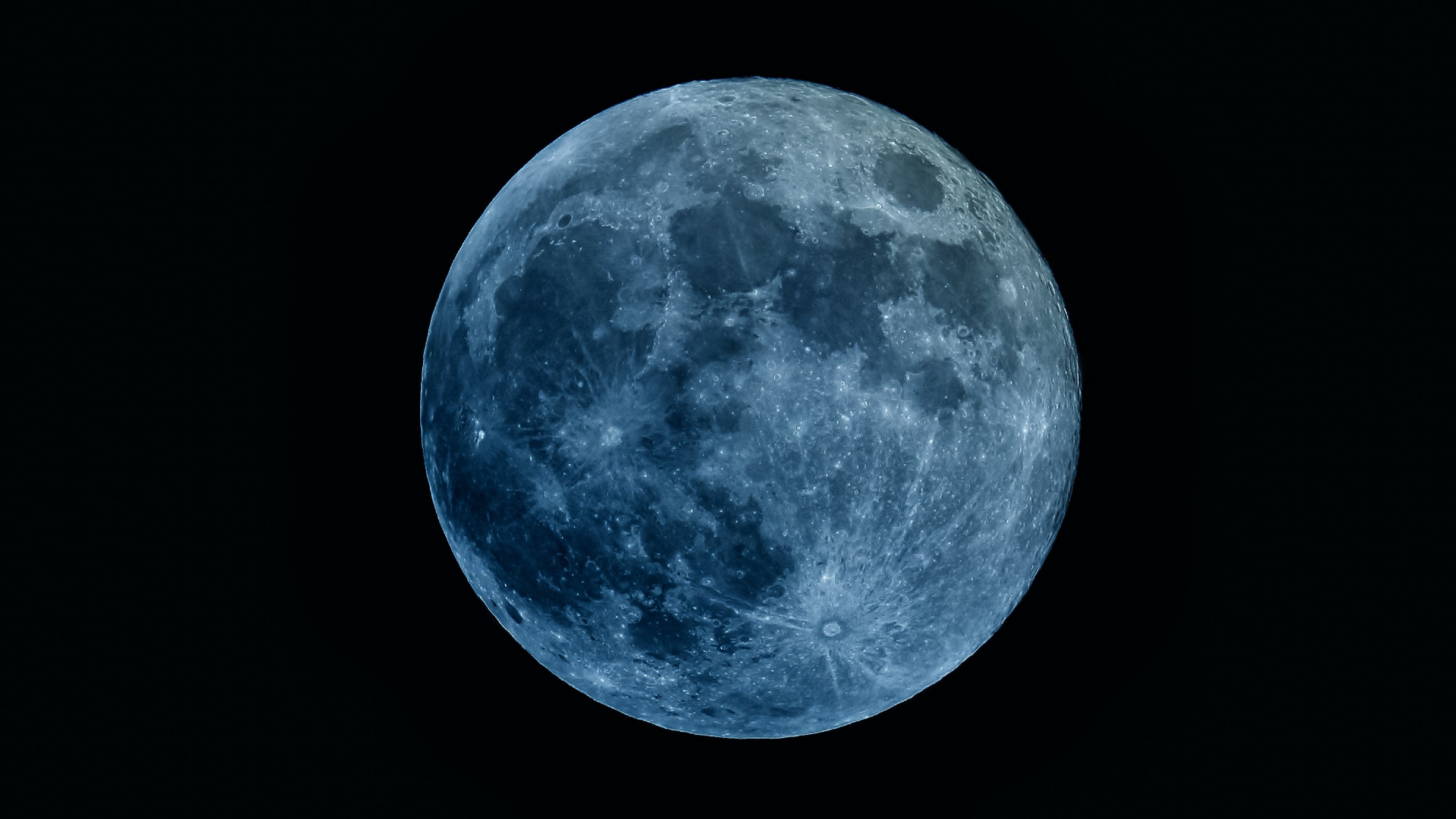
The phrase "once in a blue moon" suggests something extremely rare, but when it comes to astronomy, Blue Moons are actually more common than you might think. A Blue Moon will grace the night sky on May 31, 2026 — but despite its name, the Moon won't actually appear blue. Here's everything you need to know about what a Blue Moon is, the two different definitions, and when you can see the next one.
What Exactly Is a Blue Moon?
A Blue Moon has nothing to do with the color of the Moon. Instead, it's all about the timing of full moons throughout the year. The Moon takes approximately 29.5 days to complete its cycle of phases, which means a typical year with 12 full moons has 354 days total — falling short of the 365 or 366 days in a calendar year. Roughly every two and a half years, a 13th full moon occurs, and this extra full moon is called a "Blue Moon."
According to the Royal Observatory Greenwich, "This additional full moon does not fit with the normal naming scheme and so is instead referred to as a 'blue moon.'" This extra moon is what gives us two different definitions of the term.

Two Definitions of a Blue Moon
There are two accepted definitions of a Blue Moon — the traditional seasonal definition and the more popular monthly definition. Understanding both helps explain some of the confusion around the term.
Seasonal Blue Moon (The Traditional Definition)
The original definition of a Blue Moon is the third full moon in an astronomical season that contains four full moons instead of the usual three. Astronomical seasons are defined by the equinoxes and solstices — for example, winter begins at the winter solstice and ends at the spring equinox. Most seasons have three full moons, but occasionally a season will have four, making the third one a "Blue Moon."
Monthly Blue Moon (The Modern Definition)
The more commonly used definition today describes a Blue Moon as the second full moon in any calendar month that contains two full moons. Since a lunar cycle is 29.5 days and most months have 30 or 31 days, if a full moon occurs on the first day of a month (except February), a second full moon will occur near the end of that same month.
Interestingly, this modern definition originated from a mistake. As the Old Farmer's Almanac explains, "The modern understanding of 'Blue Moon' only took off in the 1980s. It was a result of a much earlier mistake printed in a 1946 issue of Sky & Telescope magazine." The error was later popularized by radio shows and the Trivial Pursuit board game, and it has persisted ever since.
When Is the Next Blue Moon?
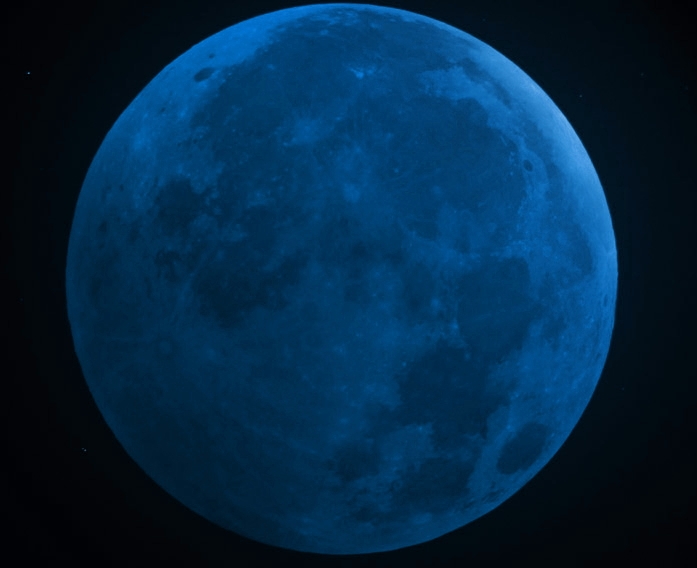
The next Blue Moon will occur on May 31, 2026. According to Time and Date, it will crest at approximately 4:45 a.m. ET, making it a monthly (calendrical) Blue Moon — the second full moon in the month of May. The first full moon of May 2026 occurs on May 1, known as the Flower Moon, setting up the second full moon on May 31 as the Blue Moon.
Interestingly, the May 31 Blue Moon will also be a micromoon — the smallest full moon of 2026. This is because the Moon will be near its apogee, the farthest point from Earth in its orbit, making it appear slightly smaller than usual in the sky.
The last Blue Moon occurred on August 19, 2024, and the next seasonal Blue Moon (by the traditional definition) will take place on May 20, 2027.
How Often Do Blue Moons Occur?
Despite the phrase "once in a blue moon" implying rarity, Blue Moons are relatively frequent. According to NASA, a Blue Moon happens approximately every two to three years. The seasonal Blue Moon occurs about seven times every 19 years, while the monthly Blue Moon happens roughly once every 2.5 years on average.
In 2018, an unusual event occurred — two Blue Moons in a single year (in January and March) with no full moon in February. This won't happen again until 2037.
Can the Moon Actually Turn Blue?
While a Blue Moon doesn't actually appear blue, there are rare circumstances where the Moon can take on a bluish hue. As Space.com reports, this requires specific atmospheric conditions — typically after a major volcanic eruption or massive wildfires.
The most famous example occurred after the 1883 eruption of Krakatoa in Indonesia. A tremendous cloud of ash and dust was injected into the stratosphere, causing the Moon and even the Sun to appear blue from many locations across the Northern Hemisphere for months after the explosion. Similarly, in September 1950, smoke from massive forest fires in Alberta, Canada, caused the Moon to appear blue across parts of the Great Lakes and New England.
Where Does the Name 'Blue Moon' Come From?
The true origin of the term "blue moon" remains uncertain. One theory, proposed by the Royal Observatory Greenwich, suggests it may be a mispronunciation of the old English word "belewe," which means "to betray." This could refer to the Moon "betraying" the usual expectation of one full moon per month, or perhaps confusing religious observers trying to determine the timing of Lent in the calendar year.
Future Blue Moon Dates
Here are the upcoming Blue Moon dates based on both definitions:
- May 31, 2026 — Monthly Blue Moon (second full moon in May)
- May 20, 2027 — Seasonal Blue Moon (third of four full moons in spring)
- December 31, 2028 — Monthly Blue Moon (second full moon in December)
Key Takeaways
- A Blue Moon is not actually blue — the name refers to the timing of an extra full moon in a season or month
- Two definitions exist: seasonal (third of four full moons in a season) and monthly (second full moon in a calendar month)
- The next Blue Moon is on May 31, 2026, which will also be the smallest full moon of the year
- Blue moons occur every 2-3 years on average, making them more common than folklore suggests
- True blue-colored moons are extremely rare and only happen after volcanic eruptions or massive wildfires