A press secretary is the chief spokesperson for a president, a governor, a government agency, or any large organization — the person whose job is to explain decisions, answer reporters' questions, and put the official position on the record. At the White House, the role is one of the most visible in American government: every day the press secretary steps up to the podium in the James S. Brady Press Briefing Room, faces a room full of journalists, and speaks on behalf of the president of the United States. The job returned to the front pages in October 2026, when Katie Zacharia was ousted as White House press secretary after just five days on the job — a rare, rapid collapse that put a spotlight on exactly what the position demands, how it works, and why getting it right matters to the entire country.
The work goes far beyond reading prepared statements. Government transition guides describe the press secretary as carrying four principal responsibilities: acting as an information conduit between the president and the public, representing constituents, managing administration and logistics, and driving communications planning. In practice, that means collecting information about what is happening across the administration, deciding what can be shared, and delivering it accurately to the press corps.
What a Press Secretary Actually Does
The core duty is straightforward: the press secretary gathers information about the president's actions and events, then communicates the administration's reactions and positions to the media. According to the White House Transition Project, the job breaks into four buckets. First, the press secretary is an information conduit — the person reporters call to get the official word on policy and events. Second, they represent constituents, making sure the public's questions and concerns are reflected back to the president. Third, they handle administration, overseeing the press office staff, scheduling, and day-to-day logistics. Fourth, they lead communications planning, coordinating with the communications director to shape how the president's message reaches the public.
Day to day, the press secretary briefs the president on what the media are asking, prepares for and delivers briefings, writes and releases statements, and fields questions both on the record and in informal settings. The job pays accordingly: the White House press secretary's salary was reported at $195,200 for 2026, reflecting the seniority of the role. But the pay reflects the pressure — the press secretary is the public face of the administration, and a single answer can shape or shake the president's message.
Inside the Daily Press Briefing
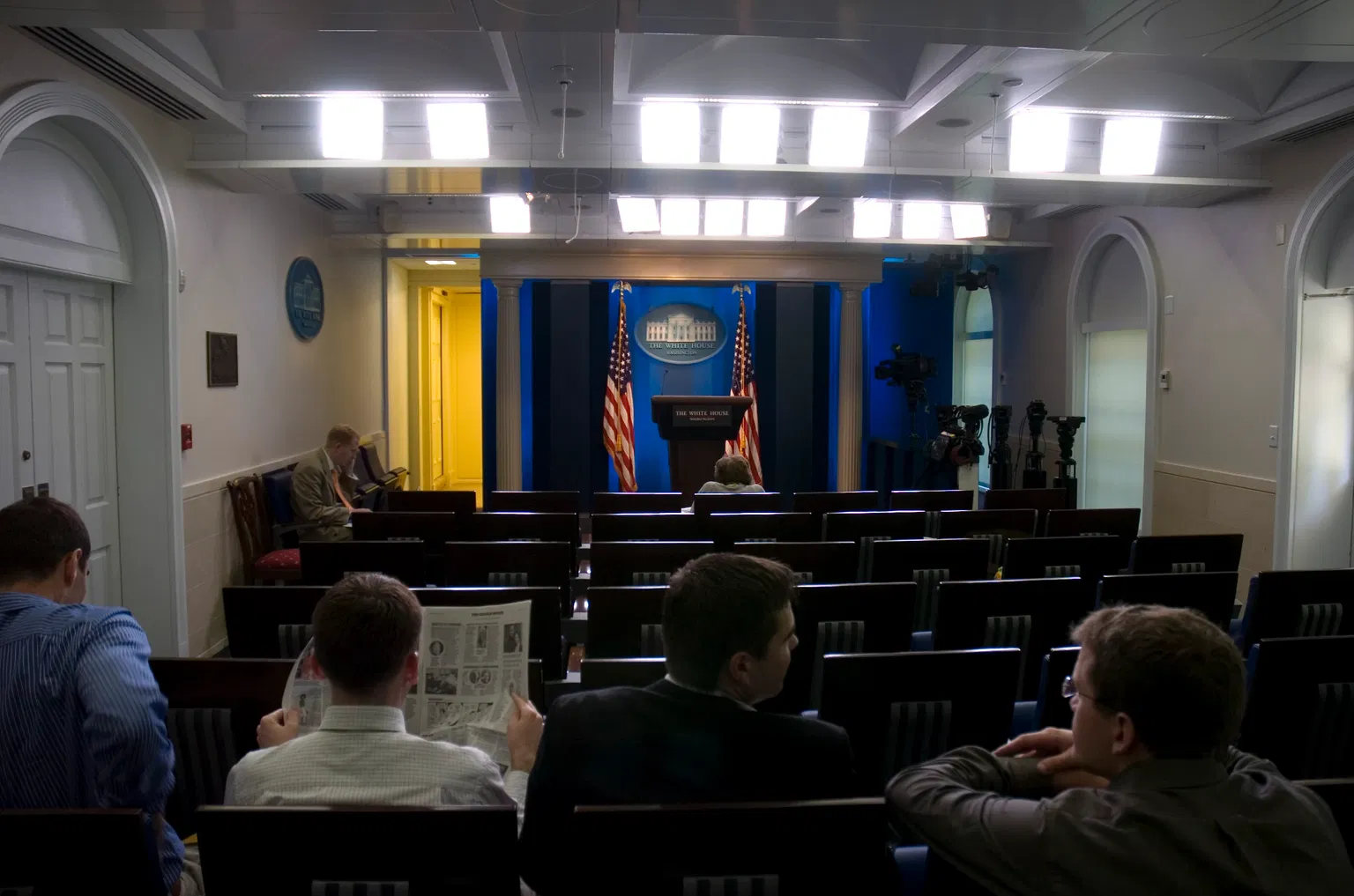
The most recognizable part of the job is the daily press briefing, held in the James S. Brady Press Briefing Room in the West Wing. It is a small theater with roughly 49 seats, named for James Brady, Ronald Reagan's press secretary who was seriously wounded in the 1981 assassination attempt on the president. Since 1970, this room has been where the press secretary stands behind a podium and takes questions from the White House press corps.
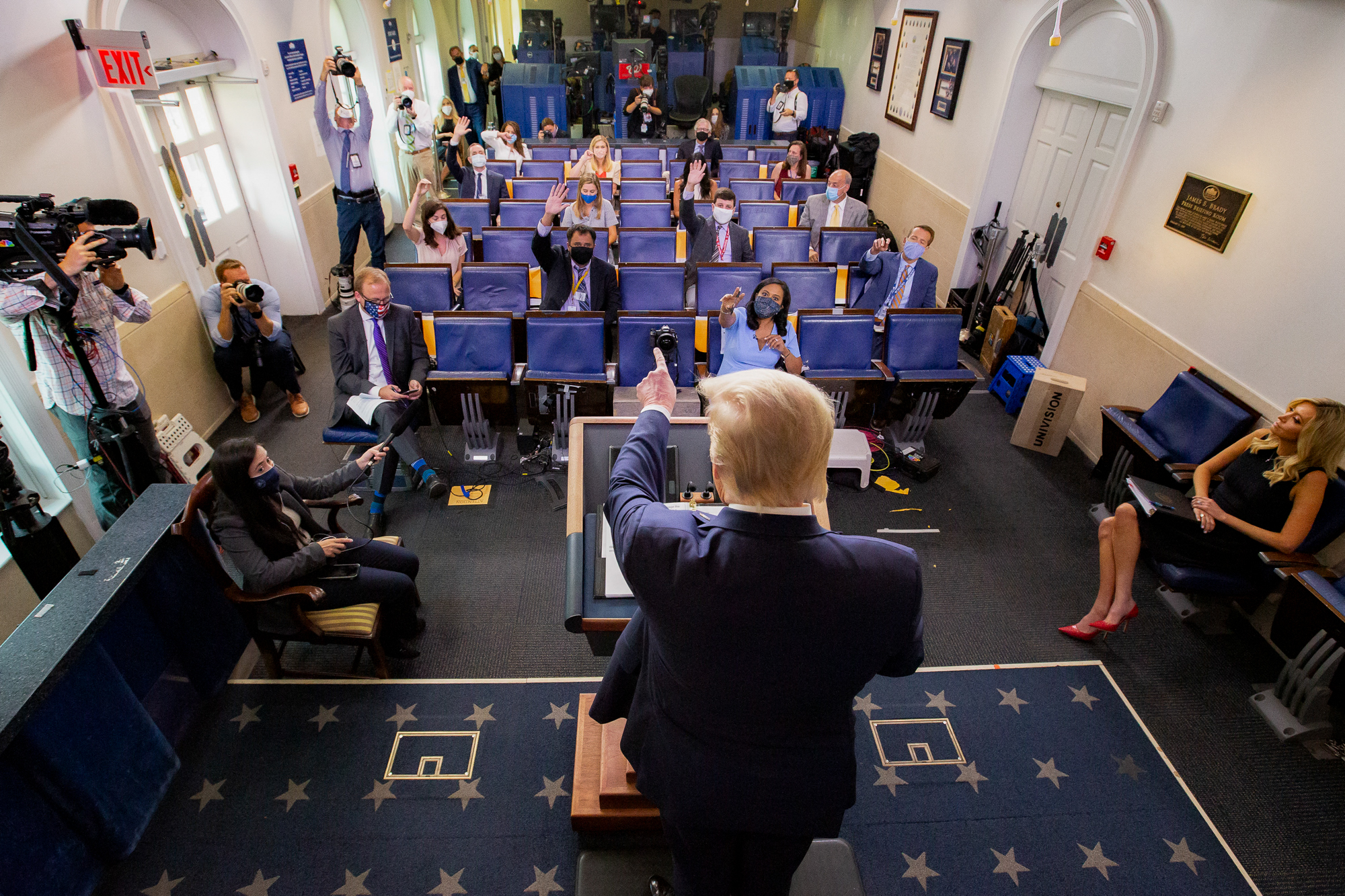
A successful briefing is the product of intense preparation. Before stepping to the podium, the press secretary meets with policy and communications staff, reviews the day's news, and tries to anticipate the toughest questions reporters will ask. The goal is to answer accurately while staying on message — reflecting White House policy rather than personal opinion. Briefings follow a familiar rhythm: the press secretary opens with announcements, then takes questions, often calling on reporters by name. The exchanges can be combative, and how a press secretary handles that pressure often shapes how the public views the entire administration.
From George Akerson to Today: A Brief History
The position is nearly a century old. George Akerson, a former journalist, is generally considered the first official White House press secretary, appointed by President Herbert Hoover in 1929 as radio and mass media transformed how the public heard from its leaders. Akerson served until 1931. Stephen Early, who worked for Franklin D. Roosevelt from 1933 to 1945, holds the record for the longest tenure and is credited with professionalizing the role. During the Eisenhower administration, James Hagerty expanded and elevated the job, pioneering the modern practice of carefully managed daily briefings.
The role has also broken barriers. In 1993, Dee Dee Myers became the first woman to serve as White House press secretary, taking the podium at just 31 years old under Bill Clinton. More recently, Karoline Leavitt became the youngest person ever to hold the job when she took the podium in January 2025 at age 27, serving until August 2026. Figures like Jen Psaki, Kayleigh McEnany, Sean Spicer, and Leavitt have become household names — a sign of how the position has grown into a public institution in its own right.
Why the Press Secretary Job Is Making Headlines Now
The role dominated the news in mid-October 2026 for an unusual reason: the person in the job lost it almost immediately. Katie Zacharia, a conservative commentator, was named White House press secretary on October 10, 2026, succeeding Karoline Leavitt, but she was ousted after just five days — one of the shortest tenures on record. Her first briefing, on Tuesday, October 13, was widely panned, a rocky, roughly 14-minute appearance that drew criticism over her preparedness. Then questions mounted about her credentials: Zacharia held a law degree from Pepperdine University but confirmed she had never passed a bar exam, despite having described herself as a lawyer. She had taken and failed the California bar exam in 2011.
Those revelations were followed by a bruising interview on Fox News with host Sean Hannity on Thursday, October 15 — an appearance that White House chief of staff Susie Wiles reportedly helped arrange. Several outlets, citing sources, described the interview as a "sanctioned hit" that set Zacharia up to fail. By Friday, October 16, she was out. Notably, Wiles is the chief of staff, not the press secretary — but her reported involvement showed how tightly the press secretary's fortunes can be tied to internal White House politics. President Donald Trump subsequently said Wiles would remain in her role.
What the Episode Reveals About the Job
The Zacharia episode is an extreme example, but it illustrates the core truth of the role: credibility is everything. A press secretary who cannot answer questions accurately — or whose own background becomes the story — quickly loses the trust of both the press corps and the public. That trust is the currency the job runs on, because the press secretary is the bridge between an administration's decisions and the citizens those decisions affect.
Looking ahead, the White House will name a successor, and attention will shift back to how that person handles the daily test of the briefing room. For anyone watching, the lesson is clear: the press secretary's podium is one of the most demanding stages in government, where preparation, honesty, and composure are the job's real qualifications.
Key Takeaways
- A press secretary is the chief spokesperson for a leader or organization; at the White House, they speak on behalf of the president.
- The job carries four main roles: information conduit, constituent representative, administrator, and communications planner.
- The first official White House press secretary was George Akerson, appointed by Herbert Hoover in 1929; Stephen Early served the longest tenure (1933–1945).
- Dee Dee Myers became the first woman in the role in 1993; Karoline Leavitt became the youngest in 2025.
- The daily briefing in the James S. Brady Press Briefing Room is the press secretary's most visible duty.
- In October 2026, Katie Zacharia was ousted after five days amid a panned first briefing and questions over her legal credentials, underscoring how central credibility is to the job.