Since a grainy, roughly one-and-a-half-second security-camera clip began spreading across TikTok, Instagram, and X in mid-November 2026, millions of people have been asking the same question: is there really a pterodactyl flying over Mexico? The footage, captured in the Anapra neighborhood of Ciudad Juárez, shows a dark, winged silhouette gliding across the sky — and it was enough to revive an old fascination with one of prehistory's most misunderstood animals. To make sense of the viral videos, and why scientists are skeptical, it helps to begin with a more basic question: what is a pterodactyl, exactly?
What Is a Pterodactyl, Really?
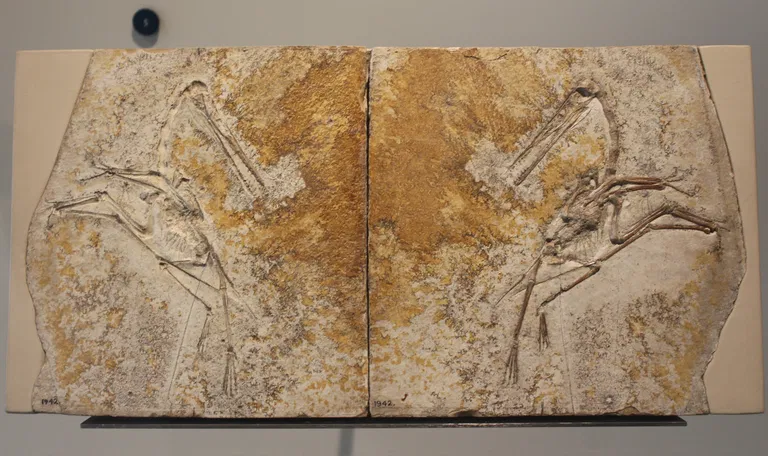
The word "pterodactyl" is one of the most commonly used — and most commonly misused — names in paleontology. In everyday conversation, people use it to describe any big prehistoric flying reptile, but scientifically the name points to something specific. Strictly speaking, a pterodactyl is a member of the genus Pterodactylus, a group of flying reptiles that lived roughly 150 million years ago during the Late Jurassic period. Its best-known species is Pterodactylus antiquus, and it holds a special place in history: it was the very first pterosaur ever named and identified by scientists.
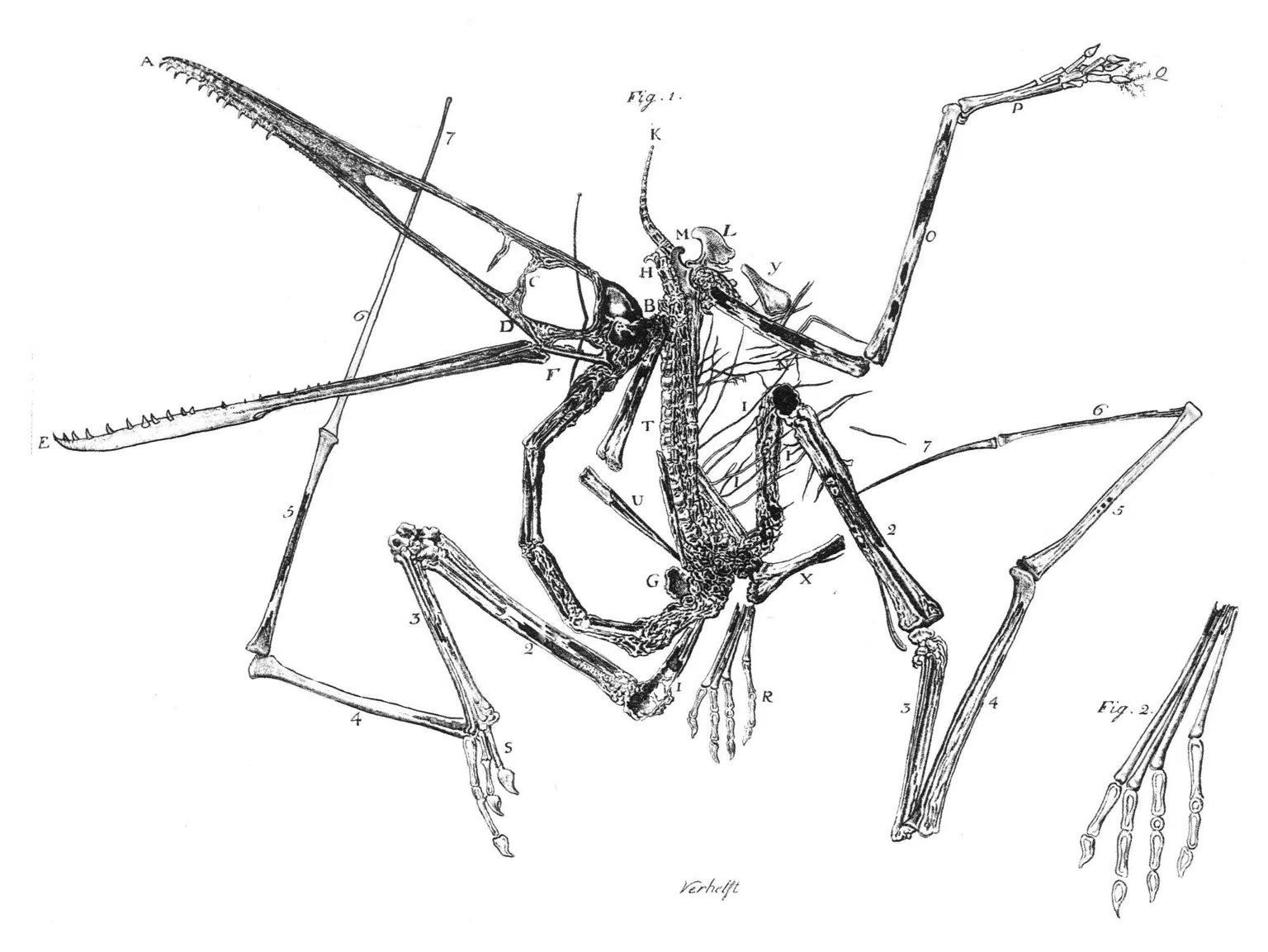
The story begins in 1784, when a fossil was discovered in the Solnhofen limestone of Germany — the same fine-grained rock that preserved the famous Archaeopteryx. At the time, no one knew what the strange creature was. It was only in 1809 that the French naturalist Georges Cuvier recognized it as a flying reptile and gave it the name Pterodactylus, meaning "winged finger," a reference to the long fourth finger that supported its wing membrane. The name proved so catchy that "pterodactyl" stuck as an umbrella term, even though it technically refers to just one small genus.
So how big was a true pterodactyl? Far smaller than the giant "dinosaur" most people picture. Pterodactylus antiquus had a wingspan of up to about 5 feet (roughly 1.5 meters), a long, slender beak, and it likely fed on fish, insects, and other small prey near the warm lagoons and shallow seas of what is now Europe. Many of the flying giants people imagine — such as Pteranodon or the airplane-sized Quetzalcoatlus, with its estimated 30-foot wingspan — belong to entirely different groups of pterosaurs.
Why Pterodactyls Are Not Dinosaurs
One of the most persistent misconceptions about pterodactyls is that they were dinosaurs. They were not. Dinosaurs were a specific group of land-dwelling reptiles, while pterosaurs belonged to a separate order called Pterosauria — and they were the first vertebrates (animals with a backbone) ever to evolve true powered flight, taking to the skies tens of millions of years before birds or bats.
That said, the two groups are related. Both dinosaurs and pterosaurs fall within a larger group called archosaurs, which today also includes crocodilians and birds. Think of them as distant cousins rather than parent and child. The confusion is understandable, because pterosaurs lived alongside dinosaurs for most of the Mesozoic Era, from about 228 million years ago in the Late Triassic until their extinction around 66 million years ago at the end of the Cretaceous — the same mass extinction that killed off the non-avian dinosaurs.
This distinction matters for the Mexico videos, because a "pterodactyl" would not simply be a surviving dinosaur. It would be a surviving flying reptile from an entirely separate branch of the evolutionary tree — one that, as far as the fossil record shows, left no living descendants when the group vanished 66 million years ago.
Timeline: How the Mexico "Pterodactyl" Videos Went Viral
The online buzz centers on two short clips from Ciudad Juárez, a Mexican border city that sits directly across the Rio Grande from El Paso, Texas. Here is how the story unfolded:
- Late October 2026: A home security camera in the Anapra district, in the Valle de Juárez, records a dark, winged shape passing through the frame. The clip is only about a second and a half long.
- Early November 2026: A second clip, reportedly filmed near the local airport, begins circulating alongside the first, adding to the impression that something large is flying over the city.
- November 12, 2026: Mexican outlets including Infobae pick up the story, and the clips draw the attention of Jaime Maussan, a Mexican journalist known for promoting UFO and "extraterrestrial" claims.
- Mid-November 2026: The footage is posted to TikTok by the user @daniela230997 and quickly spreads to Instagram, Facebook, Threads, and X, where millions of viewers ask whether a pterodactyl has been spotted in Mexico.
As the videos spread, so did the speculation. Some commenters pointed to the creature's apparent size and the way its "wings" moved, while others insisted the whole thing was a prank, a drone, or a doctored clip.
What the Blurry Footage Actually Shows
Fact-checkers and scientists were quick to weigh in, and their conclusion is far less exciting than a living fossil. The most likely explanation, according to palaeontologists quoted by outlets including IFLScience, Vice, and Snopes, is that the "pterodactyl" is actually a great blue heron — a large wading bird with long legs, a long neck, and a broad wingspan that, when filmed in poor light from a distance, can look startlingly prehistoric. Herons are common across North America and are perfectly capable of flying over a city like Ciudad Juárez.
Other experts noted that some versions of the clip appear to have been edited or enhanced with artificial intelligence, a technique that has become increasingly common in viral hoaxes. Blurry security footage is especially easy to manipulate because the low resolution already hides detail. The municipal Civil Protection authority in Juárez also weighed in, stating there was no verified evidence of any living pterosaur or unusual creature in the area.
The name attached to the story reinforced the skepticism. Jaime Maussan, who boosted the videos, has a long history of championing dubious claims, including several "alien mummy" presentations that were later debunked. When the same figure who promotes UFO hoaxes is also amplifying a "pterodactyl" sighting, researchers say, the bar for evidence should be set even higher.
Where Things Stand Now
As of mid-November 2026, no reputable scientific organization has confirmed a living pterosaur anywhere in the world — in Mexico or otherwise. The viral videos remain exactly that: viral videos. They have been widely flagged by fact-checkers, and the consensus among palaeontologists is that the footage shows either a large bird or digitally altered imagery, not a creature that has been extinct for 66 million years.
The story does, however, highlight how easily short, low-quality clips can spark mass belief in the impossible — and how rarely the "monster" turns out to be anything more than a bird, a shadow, or a clever edit.
Could a Living Pterodactyl Ever Exist?
From a scientific standpoint, the odds of a pterodactyl surviving undetected into the modern day are essentially zero. Pterosaurs disappear completely from the fossil record at the end of the Cretaceous period, 66 million years ago, and no pterosaur fossil has ever been found in younger rocks. A breeding population of large flying reptiles would need a steady food supply, and animals with huge wingspans are not the sort of creatures that hide quietly in a border city without leaving physical evidence such as bones, nests, or droppings.
It is true that some "living fossils," like the coelacanth fish, have been rediscovered after being presumed extinct. But the coelacanth is a small, deep-sea fish, not a giant flying reptile, and its fossil record extends much closer to the present day. For a pterodactyl to have survived, it would have had to remain hidden through 66 million years of climate change, ice ages, and human expansion — a feat no evidence supports.
So while the videos are fun to watch and the idea is thrilling, the answer to "could it be real?" is a firm no. The simplest explanations — a heron, a drone, or AI trickery — remain, as usual, the most likely ones.
Key Takeaways
- "Pterodactyl" is an informal name for Pterodactylus, the first flying reptile ever scientifically described, which lived about 150 million years ago.
- Pterodactyls were pterosaurs, not dinosaurs, though the two groups were distant cousins within the archosaur family tree.
- Pterosaurs were the first vertebrates to evolve powered flight and died out 66 million years ago, leaving no living descendants.
- The viral "pterodactyl" videos from Ciudad Juárez, Mexico, were most likely a great blue heron or AI-edited footage, according to palaeontologists and fact-checkers.
- No living pterodactyl has ever been confirmed, but the fascination the clips sparked is very real.