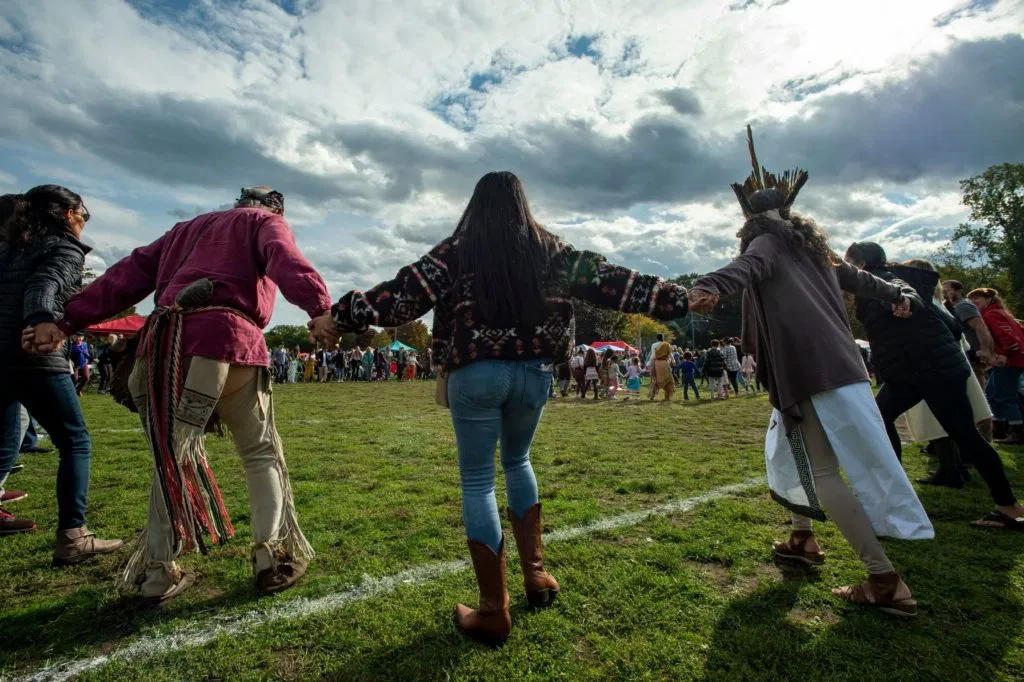
Indigenous Peoples' Day is a holiday observed across the United States on the second Monday of October, the same date long reserved for the federal holiday of Columbus Day. Rather than honoring Christopher Columbus's 1492 arrival in the Americas, the observance celebrates the history, resilience, cultures, and continuing contributions of Native American and other Indigenous peoples — while also acknowledging the displacement, enslavement, and loss of life and land that followed European colonization.
Although it is not a federal holiday, Indigenous Peoples' Day has been recognized through presidential proclamations since 2021 and is now observed in some form by dozens of states, hundreds of cities, and many school districts and institutions. Here is what the day means, how it began, and how communities across the country mark it.
What Is Indigenous Peoples' Day, and When Is It Observed?
Indigenous Peoples' Day falls on the second Monday of October each year. In 2025, it was observed on October 13, and in 2026 it falls on October 12. The date is deliberate: it shares the calendar with Columbus Day, the federal holiday that has honored Christopher Columbus since the late 18th century and was made a legal federal holiday in 1937.
Where Columbus Day centers on the Italian explorer credited with "discovering" the Americas, Indigenous Peoples' Day shifts the focus to the people who already lived on those lands. The Smithsonian's National Museum of the American Indian describes the day as one that "recognizes the resilience and diversity of Indigenous Peoples in the United States."
Nick Tilsen, president and CEO of the advocacy group NDN Collective, told PBS NewsHour that the day "is meant to recognize the painful history Indigenous people have faced and to celebrate their communities."
Indigenous Peoples' Day vs. Columbus Day: What's the Difference?
The two observances now share the same date but tell very different stories. Columbus Day commemorates Columbus's October 12, 1492, landing in the Bahamas, which opened the Americas to European colonization. Supporters — including many Italian American communities, for whom Columbus is a symbol of heritage — see the holiday as a celebration of exploration and of Italian American contributions to the country.
Indigenous Peoples' Day was created as a direct counter-celebration. Advocates point out that Columbus did not "discover" a land that was already home to millions of Indigenous people, and that his voyages set in motion centuries of violence, disease, forced removal, and cultural erasure. The movement recasts the second Monday of October as a time to honor Native histories and cultures that mainstream American history long marginalized. As NPR reported, advocates say the recognition helps correct a "whitewashed" version of American history that has glorified European explorers.
The History: How Indigenous Peoples' Day Began
The idea of replacing Columbus Day took shape over decades through a series of key milestones:
- 1977: Delegates at the International Conference on Discrimination Against Indigenous Populations in the Americas, held in Geneva, Switzerland, first proposed replacing Columbus Day with a day honoring Indigenous peoples.
- 1989: South Dakota became the first state to drop Columbus Day, adopting "Native American Day" during a declared "Year of Reconciliation."
- 1992: Berkeley, California, became the first city to rename the holiday "Indigenous Peoples' Day," timed to the 500th anniversary of Columbus's arrival.
- 2019: New Mexico officially replaced Columbus Day with Indigenous Peoples' Day.
- 2021: President Joe Biden issued the first-ever presidential proclamation commemorating Indigenous Peoples' Day, declaring it alongside Columbus Day, and has renewed the proclamation each year since.
What began as a small counter-celebration has grown steadily. History.com notes that dozens of states now recognize Indigenous Peoples' Day in some form, either in place of or in addition to Columbus Day.
How Communities Observe Indigenous Peoples' Day
There is no single way to observe Indigenous Peoples' Day, and that flexibility is part of its meaning. Communities mark the day through cultural celebrations, education, and activism. Common observances include powwows, cultural festivals, museum exhibits, film screenings, traditional music and dance performances, and educational gatherings that teach Native history and contemporary issues.
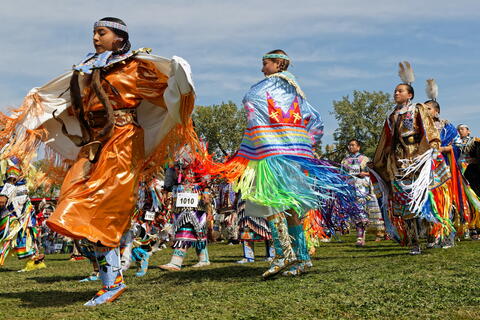
The day is also used for advocacy. According to PBS NewsHour, it is often marked by protests against memorials to Columbus, calls for environmental justice, efforts to protect sacred sites, and campaigns for the return of Indigenous lands. Many educators use the occasion to teach a more complete account of American history, while some people observe it simply as a day of reflection on the role Native peoples have played in the United States and on the impacts that history has had on their communities.
Where Is Indigenous Peoples' Day Recognized?
Recognition depends heavily on where you live. A Pew Research Center analysis published in October 2025 found that 30 states and three U.S. territories recognize Columbus Day in some form, but only 20 states and two territories make it a paid holiday for state workers. At the same time, more than a dozen states — and hundreds of cities, counties, schools, and universities — now observe Indigenous Peoples' Day, some in place of Columbus Day and others alongside it.
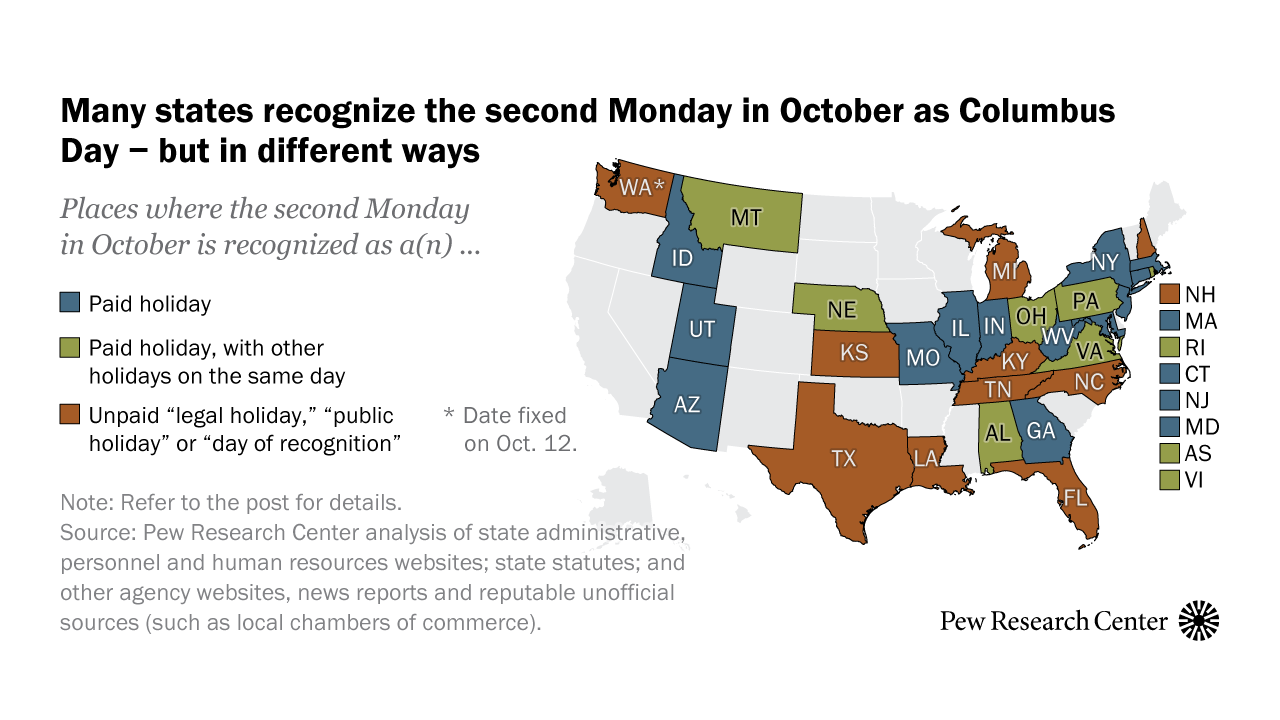
Because there is no single national standard, the second Monday in October can look very different from one place to the next: a paid day off for state employees in some states, a school holiday in others, or an ordinary Monday in places that observe neither holiday.
Why Indigenous Peoples' Day Matters
Supporters say the holiday matters because it corrects a one-sided version of American history that has centered European explorers while marginalizing the people who lived on the continent for thousands of years before 1492. The day makes Indigenous communities visible and affirms that they are not relics of the past but living peoples with distinct nations, languages, and cultures.
Advocates describe the observance as a reminder of "the diversity and depth of Native peoples, and how hard we've had to work for recognition," as one Indigenous leader told CNN. President Biden framed the day in similar terms, saying it is meant to "honor America's first inhabitants and the Tribal Nations that continue to thrive today."
The day also serves as an entry point for learning — encouraging people to consider whose land they live on, to learn the names and histories of local tribes, and to understand both the harms of colonization and the resilience of Indigenous communities today. At the same time, the holiday remains contested: some Italian American organizations and others continue to defend Columbus Day, arguing it honors Italian heritage and an important chapter of exploration. As a result, the two observances increasingly coexist — a reflection, supporters say, of a country still working through its own history.
Key Takeaways
- Indigenous Peoples' Day is observed on the second Monday of October, the same day as Columbus Day.
- It honors the history, cultures, resilience, and contributions of Native American and Indigenous peoples.
- The movement began with a 1977 proposal in Geneva and gained momentum when South Dakota (1989) and Berkeley, California (1992) replaced Columbus Day.
- President Joe Biden has issued an annual proclamation commemorating the day since 2021, though it is not a federal holiday.
- Observances include powwows, cultural festivals, educational events, and advocacy for Indigenous rights, land, and environmental justice.
- Recognition varies by state and city, with many places observing both holidays side by side.