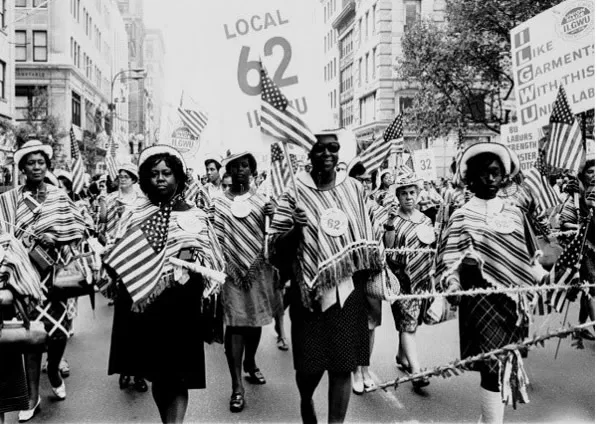
Labor Day is a United States federal holiday observed every year on the first Monday in September. It honors the American labor movement and celebrates the social and economic achievements of the nation's workers. Because the date is tied to a weekday rather than a calendar date, it shifts each year: Labor Day lands on Monday, September 7, 2026, and on September 6 in 2027. Far more than a long weekend or an excuse to fire up the grill, the holiday traces its roots to the late nineteenth century, when labor activists fought for a federal holiday recognizing the contributions working people have made to America's strength, prosperity, and well-being.
What Is Labor Day and Why Do We Celebrate It?
According to the U.S. Department of Labor, Labor Day is an annual celebration of the social and economic achievements of American workers. The holiday is rooted in the late nineteenth century, when labor activists pushed for a federal holiday to honor the people who, in the words of the holiday's original proposal, "from rude nature have delved and carved all the grandeur we behold."
The day exists to recognize the labor movement and the role workers have played in building the country's prosperity. Today it is marked by parades, parties, community festivals, and family gatherings — festivities that closely mirror the very first proposal for the holiday, which called for a street parade followed by a festival for the recreation of workers and their families. Labor Day is one of eleven federal holidays in the United States, though the 1894 law originally applied only to federal employees; as late as the 1930s, unions still encouraged strikes to make sure all workers got the day off.
The First Labor Day: A Parade in 1882
The very first Labor Day was celebrated on Tuesday, September 5, 1882, in New York City, in accordance with the plans of the Central Labor Union. The Central Labor Union, working alongside the Knights of Labor, organized a public parade of labor organizations followed by a picnic. The Central Labor Union held its second Labor Day celebration a year later, on September 5, 1883.
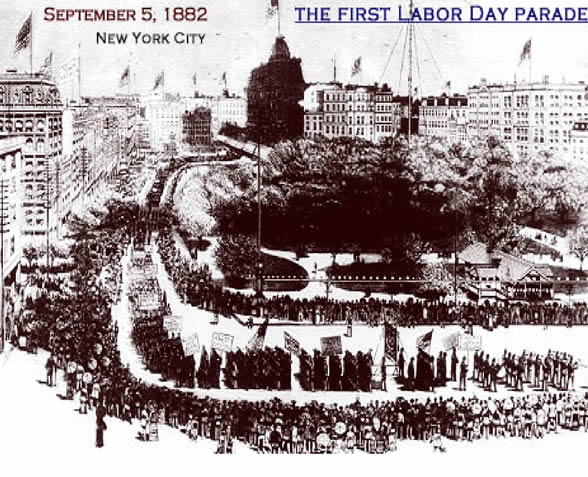
That first celebration set the template that endures today. The original proposal suggested the day should open with a street parade to exhibit "the strength and esprit de corps of the trade and labor organizations" of the community, followed by a festival for workers and their families. Speeches by prominent men and women were added later, as more emphasis was placed on the holiday's economic and civic significance.
Who Founded Labor Day? The McGuire vs. Maguire Debate
Who first proposed a holiday for workers? The answer is not entirely settled, and two men with similar-sounding last names both lay claim to the title of "founder" of Labor Day.
Some records show that in 1882, Peter J. McGuire, general secretary of the Brotherhood of Carpenters and Joiners and a co-founder of the American Federation of Labor, suggested setting aside a day for a "general holiday for the laboring classes." According to McGuire's account, he made the proposal on May 8, 1882, and recommended the first Monday in September for its favorable weather and its position midway between the Fourth of July and Thanksgiving.
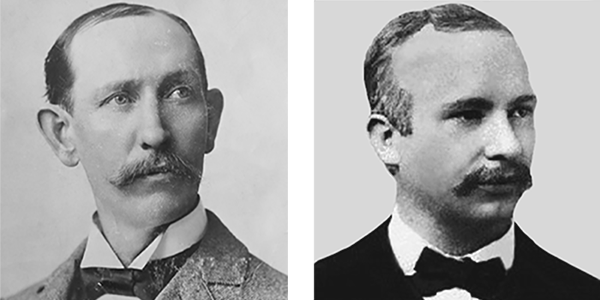
But McGuire's claim has not gone unchallenged. Many believe that machinist Matthew Maguire — not Peter McGuire — founded the holiday. Recent research appears to support the contention that Matthew Maguire, later secretary of Local 344 of the International Association of Machinists in Paterson, New Jersey, proposed the holiday in 1882 while serving as secretary of the Central Labor Union in New York. Both men attended the country's first Labor Day parade in New York City that year, and the dispute over who deserves credit remains one of the holiday's enduring curiosities.
How Labor Day Became a Federal Holiday
Before it was a federal holiday, Labor Day was recognized by labor activists and individual states. After municipal ordinances were passed in 1885 and 1886, a movement developed to secure state legislation. New York was the first state to introduce a bill, but Oregon was the first to pass a law recognizing Labor Day, on February 21, 1887. During 1887, four more states — Colorado, Massachusetts, New Jersey, and New York — passed laws creating a Labor Day holiday, and Connecticut, Nebraska, and Pennsylvania followed by the end of the decade. By 1894, roughly 30 states had adopted the holiday.
The push for a national holiday reached its turning point in 1894, shortly after the Pullman Strike — a nationwide railroad strike that disrupted freight and passenger traffic and prompted the federal government to send in troops. On June 28, 1894, Congress passed an act making the first Monday in September of each year a legal holiday, and President Grover Cleveland signed it into law.
Why September? Labor Day vs. May Day
One of the most common questions about the holiday is why Americans celebrate workers in September while much of the rest of the world observes May Day on May 1. The two dates share a tangled history.
More than 150 countries celebrate International Workers' Day on May 1, a date chosen by socialist and communist parties to commemorate the Haymarket affair, a labor demonstration in Chicago that turned violent on May 4, 1886. President Cleveland was among those concerned that a May 1 labor holiday would become a commemoration of the Haymarket affair and strengthen the socialist and anarchist movements that backed it. He publicly supported the September Labor Day as a less inflammatory alternative, a preference he formalized when he signed the 1894 law. Canada's Labour Day is also celebrated on the first Monday in September, reinforcing the North American tradition of a September holiday distinct from May Day.
The Unofficial End of Summer
Over time, Labor Day has taken on a second identity as the "unofficial end of summer." It marks the close of the summer season in American culture, and many fall activities — school, football, and other sports — begin around the holiday weekend. Many school districts resume classes around Labor Day weekend, making it the first three-day weekend of the school year in some areas or the final weekend of summer break in others. The NFL traditionally plays its season kickoff game the Thursday following Labor Day, and college football teams usually play their first games that weekend.
The holiday also carries cultural traditions. For decades, Labor Day was considered the last acceptable day to wear white or seersucker, a fashion rule rooted in the migration of wealthy nineteenth-century New Yorkers back from their summer homes. Retailers also treat the weekend as a major shopping event, with back-to-school sales that some say are second only to Black Friday. In 1909, the American Federation of Labor convention designated the Sunday preceding Labor Day as "Labor Sunday," dedicated to the spiritual and educational aspects of the labor movement.
Key Takeaways
- Labor Day is a U.S. federal holiday held on the first Monday in September to honor American workers and the labor movement.
- The first Labor Day was celebrated on Tuesday, September 5, 1882, in New York City, organized by the Central Labor Union.
- Oregon was the first state to make it a legal holiday (February 21, 1887); President Grover Cleveland signed it into federal law on June 28, 1894, shortly after the Pullman Strike.
- Its founder is disputed between Peter J. McGuire and Matthew Maguire, with recent research favoring Matthew Maguire.
- It is celebrated in September rather than May 1 partly to distance it from the more radical May Day tradition.
- Labor Day is widely considered the unofficial end of summer in the United States.