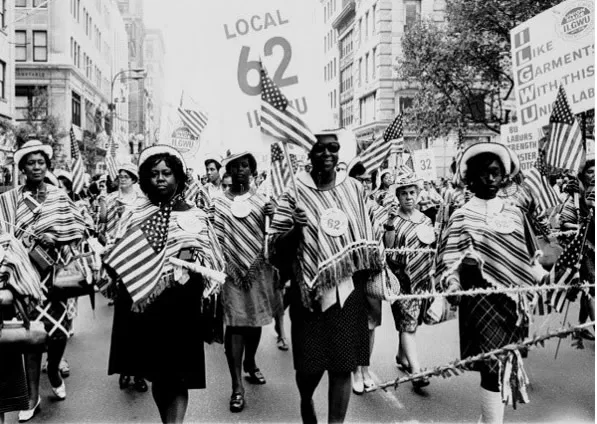
Labor Day is a United States federal holiday observed on the first Monday of September, dedicated to celebrating the social and economic achievements of American workers. Rooted in the labor movement of the late nineteenth century, it marks the unofficial end of summer and is traditionally observed with parades, backyard barbecues, and a well-earned three-day weekend. In 2026, Labor Day falls on Monday, September 7.
Behind the cookouts and end-of-summer sales, Labor Day has a deep and sometimes contested history. Understanding what Labor Day is means looking back at the strikes, parades, and political compromises that turned a single day off for a handful of New York workers into a nationwide federal holiday.
When Is Labor Day? The First Monday of September
Labor Day is what is known as a "floating" holiday: it is not tied to a fixed calendar date. Instead, it always lands on the first Monday in September, which means it can fall anywhere from September 1 through September 7. That placement was deliberate. Early labor organizers wanted a date roughly midway between the Fourth of July and Thanksgiving, with comfortable weather suited to outdoor parades and picnics.
Here are the upcoming Labor Day dates:
- 2026: Monday, September 7
- 2027: Monday, September 6
- 2028: Monday, September 4
Because the holiday always falls on a Monday, it reliably creates a three-day Labor Day weekend, which is one of the busiest travel periods of the year in the United States.
The Origins of Labor Day: A Parade That Started It All
The story of Labor Day begins in New York City. On Tuesday, September 5, 1882, the Central Labor Union organized what is widely considered the first Labor Day parade. Thousands of workers took an unpaid day off to march through the streets, calling attention to their demands for fair pay, shorter hours, and safer working conditions at a time when industrial workers often labored long hours in dangerous conditions for low wages.
The idea caught on quickly. A year later, the Central Labor Union held its second Labor Day celebration on September 5, 1883. From there, the movement spread as individual cities and states began passing their own ordinances recognizing the holiday.
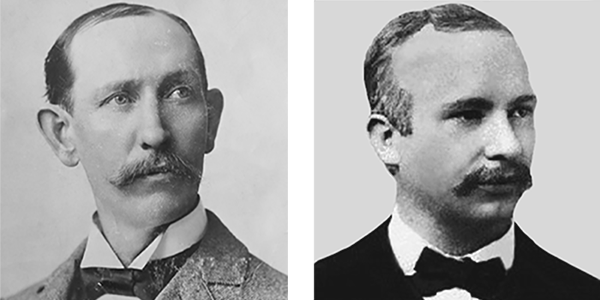
Interestingly, historians still debate exactly who first proposed the holiday. Peter J. McGuire, a co-founder of the American Federation of Labor and general secretary of the Brotherhood of Carpenters and Joiners, is frequently credited with the idea. In 1882, he reportedly suggested setting aside a day for a "general holiday for the laboring classes" to honor those "who from rude nature have delved and carved all the grandeur we behold."
But many researchers argue the true founder was Matthew Maguire, a machinist who served as secretary of the Central Labor Union in New York. According to the New Jersey Historical Society, a Paterson, New Jersey newspaper even declared Maguire "the undisputed author of Labor Day as a holiday." Both men attended the first Labor Day parade in New York City in 1882, and the debate over the title of founder continues to this day.
Timeline: How Labor Day Became a Federal Holiday
Labor Day did not become a national holiday overnight. It took more than a decade of organizing, and a major labor crisis, to secure its place on the federal calendar.
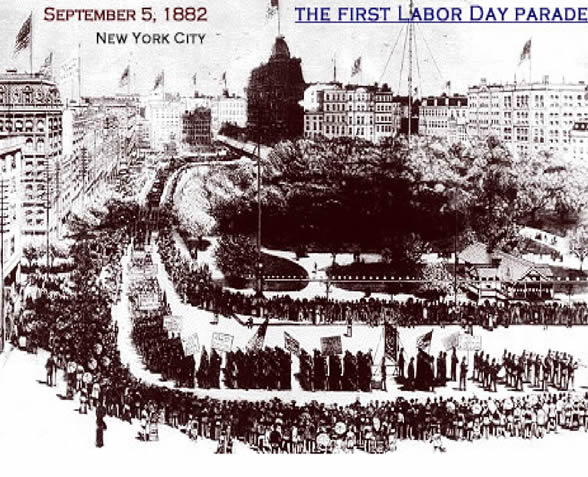
- 1882: The first Labor Day parade is held in New York City on September 5, organized by the Central Labor Union.
- 1885–1886: Municipal ordinances recognizing the holiday are passed in several cities.
- February 21, 1887: Oregon becomes the first state to pass a law recognizing Labor Day. Colorado, Massachusetts, New Jersey, and New York follow that same year.
- Late 1880s: Connecticut, Nebraska, and Pennsylvania join the growing list of states adopting the holiday.
- 1894: By this year, roughly 30 states officially celebrate Labor Day.
- June 28, 1894: Congress passes a law making the first Monday in September a federal holiday, and President Grover Cleveland signs it into law.
The final push came during a turbulent moment in American labor history. In the summer of 1894, the Pullman Strike, a massive railroad workers' strike that began at the Pullman Company near Chicago, brought rail traffic to a standstill and turned violent. In the aftermath, lawmakers moved quickly to recognize Labor Day as a federal holiday, a gesture widely seen as an effort to ease tensions with organized labor.
How Americans Celebrate Labor Day Today
More than a century later, Labor Day is still celebrated much the way its original planners intended, with parades, community festivals, and family gatherings. The first proposal for the holiday suggested a street parade to exhibit "the strength and esprit de corps of the trade and labor organizations," followed by a festival for workers and their families. That formula remains the blueprint for modern celebrations.
Today, Labor Day is best known as the unofficial end of summer. It marks the last long weekend before many schools reopen, which is why you will see a rush of backyard barbecues, beach trips, and major retail sales. It is also the traditional signal to put away white clothing, a fashion "rule" that has faded in recent decades but persists in popular culture.
In many cities, labor unions still hold parades and rallies, continuing a tradition that dates back more than 140 years. And while most Americans now get the day off automatically, that was not always the case: the 1894 federal law only applied to federal workers, and as late as the 1930s, some unions encouraged workers to strike to make sure they actually received the day off. A related observance, Labor Sunday, the Sunday before Labor Day, was adopted by the American Federation of Labor in 1909 to honor the spiritual and educational aspects of the labor movement, though it never gained widespread popularity.
Why the U.S. Celebrates Labor Day in September, Not May 1
If you have traveled abroad, you may have noticed that much of the world celebrates workers on May 1, a date known as International Workers' Day or May Day. More than 150 countries observe that holiday, which traces back to the Haymarket affair in Chicago in May 1886.
So why does the United States hold its labor holiday in September instead? The September date predates the international movement's adoption of May 1 and was already firmly established by the time May Day gained global traction. Canada also celebrates its Labour Day on the first Monday of September. The September timing was chosen partly for practical reasons, pleasant weather and a spot on the calendar between two other major holidays, and partly to distance the American holiday from the more radical socialist associations of May Day.
The result is a distinctly American tradition: a holiday that honors workers while also serving as a nationwide farewell to summer.
The Bottom Line: Key Facts About Labor Day
- Labor Day is a U.S. federal holiday observed on the first Monday in September.
- It honors the social and economic achievements of American workers and the labor movement.
- The first Labor Day parade was held on September 5, 1882, in New York City.
- Oregon was the first state to make it an official holiday, in 1887.
- President Grover Cleveland signed Labor Day into federal law on June 28, 1894, shortly after the Pullman Strike.
- Both Peter J. McGuire and Matthew Maguire are credited with founding the holiday.
- Labor Day is celebrated with parades, picnics, and barbecues and marks the unofficial end of summer.