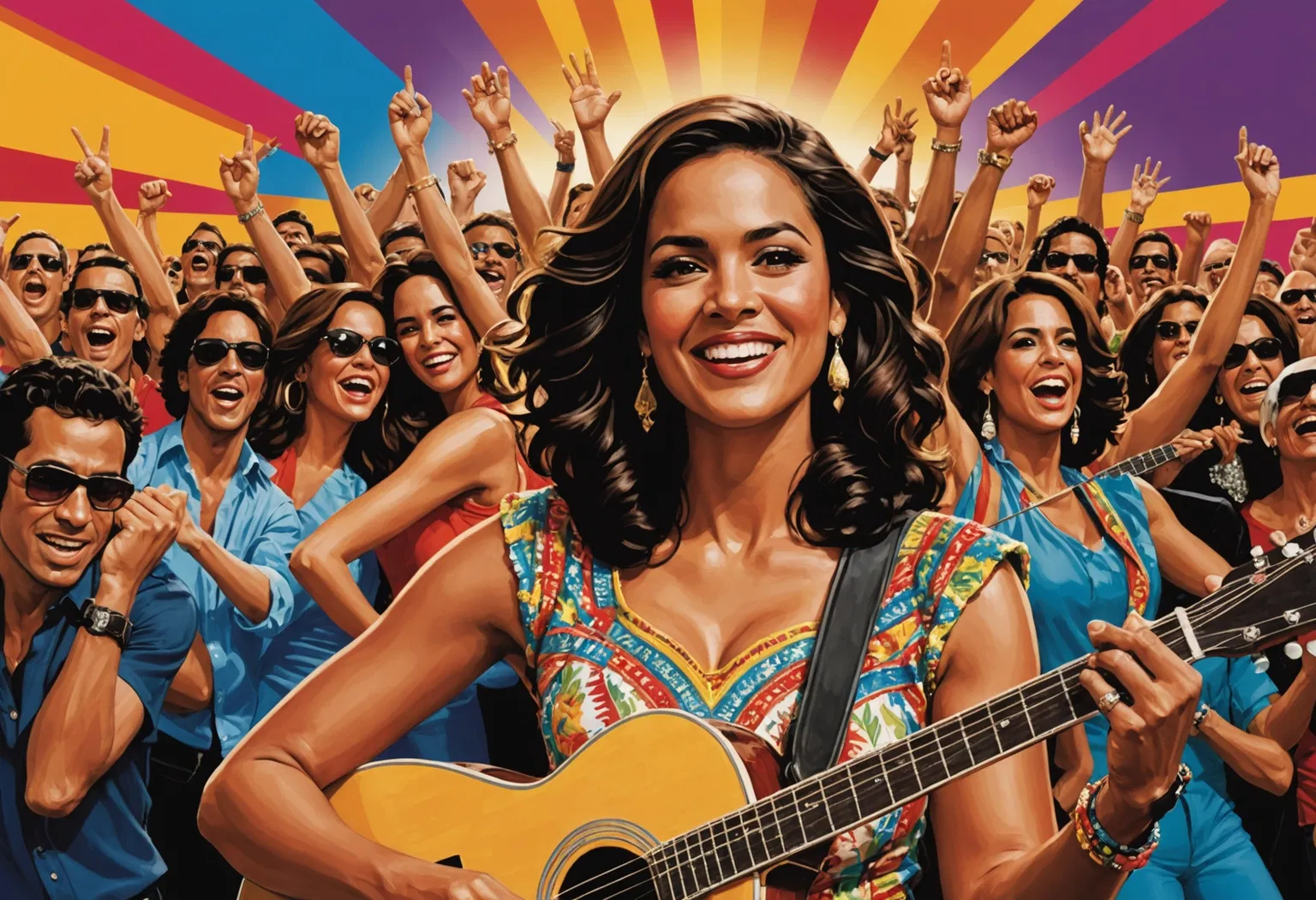
Latin pop is one of the most dynamic and commercially successful music genres on the planet, yet millions of listeners who sing along to its biggest hits rarely stop to ask a simple question: what is Latin pop, exactly, and how does it work? At its core, Latin pop is a fusion genre that pairs the melody, song structure, and production polish of mainstream pop with the rhythms, instruments, and lyrical traditions of Latin America, Spain, and the wider Spanish- and Portuguese-speaking world. From the crossover explosion of the late 1990s to today's streaming era, the genre has grown from a regional sound into a global cultural force that tops charts from Mexico City to Tokyo.
What Is Latin Pop? A Straightforward Definition
Latin pop describes popular music that applies the familiar formula of pop — catchy hooks, memorable choruses, verse-chorus-bridge arrangements, and polished studio production — to Latin musical foundations. Those foundations can come from anywhere in the Spanish- and Portuguese-speaking world: the salsa and bolero of the Caribbean, the cumbia of Colombia, the tango of Argentina, the mariachi and ranchera of Mexico, or the samba and bossa nova of Brazil. Most Latin pop is sung in Spanish or Portuguese, but bilingual and Spanglish tracks that switch between Spanish and English have become a signature of the genre since the 1990s crossover era.
The genre is intentionally broad. A romantic ballad by Luis Miguel, a brass-driven dance hit by Gloria Estefan, an acoustic Latin rock anthem by Shakira, and a reggaeton-pop crossover by Bad Bunny can all be grouped under the Latin pop umbrella. What unites them is a shared DNA: pop songcraft wrapped around recognizably Latin rhythm and phrasing.
How Latin Pop Works: The Rhythms, Instruments, and Language
The most important ingredient in Latin pop is rhythm. Where mainstream pop is built around a steady four-on-the-floor beat, much of Latin pop leans on syncopated patterns rooted in African and Indigenous musical traditions. The clave — a repeating rhythmic pattern that underpins salsa, son, and many Afro-Cuban styles — often acts as the invisible skeleton of a track, giving the music its characteristic swing even when it is dressed up in modern production.
Instrumentation is another defining feature. Classic Latin pop draws on percussion instruments such as congas, bongos, timbales, maracas, and güiro, alongside brass sections of trumpets and trombones and the nylon-string Spanish guitar. Piano montunos — short, repeated rhythmic figures — add texture. In the contemporary era, producers blend these organic sounds with drum machines, synthesizers, and the dembow beat of reggaeton, creating hybrid tracks that sound unmistakably Latin yet fully modern.
Language and vocal style matter just as much. Spanish and Portuguese lyrics bring different vowel sounds, syllable rhythms, and phrasing than English, and Latin pop singers frequently draw on romantic, emotive vocal traditions stretching back to the bolero. Even the way a singer ornaments a melody — the trills, runs, and sustained high notes — often signals the genre's heritage.
The Roots of Latin Pop: From Bolero to the Crossover Boom
Latin pop did not appear overnight. Its foundations lie in the romantic boleros and big-band mambo of the 1940s and 1950s, and in the rock-and-roll and pop boom of the 1960s, when artists across Latin America began blending local rhythms with Anglo-American pop structures. Spanish crooner Julio Iglesias became one of the best-selling artists in history by packaging the romantic ballad for an international audience, while Brazilian artists such as Roberto Carlos brought a Portuguese-language version of the same formula to the world stage.
The genre's first major mainstream breakthrough in the United States arrived in the 1980s, when Gloria Estefan and the Miami Sound Machine scored crossover hits with songs such as Conga (1985) and Rhythm Is Gonna Get You (1987), which fused Cuban rhythms with dance-pop production. The 1990s then brought the so-called Latin explosion, a period in which artists including Ricky Martin, Enrique Iglesias, Marc Anthony, and Jennifer Lopez pushed Latin pop to the very top of the U.S. Billboard charts. Selena, the Tejano-pop superstar whose tragic death in 1995 cut short a promising crossover career, became an enduring symbol of the genre's cultural weight.
Timeline: Key Moments That Shaped Latin Pop
- 1940s–1950s: Bolero and mambo lay the rhythmic and melodic groundwork for modern Latin pop.
- 1960s–1970s: Artists across Latin America and Spain fuse rock and pop with local folk rhythms; Julio Iglesias emerges as a global balladeer.
- 1985: Gloria Estefan and Miami Sound Machine release Conga, a crossover hit that brings Cuban rhythms to U.S. pop radio.
- 1995: The death of Selena Quintanilla sparks a wave of mainstream interest in Latin music.
- 1999: Ricky Martin's Livin' la Vida Loca and a landmark Grammy performance ignite the Latin explosion.
- 2001: Shakira releases Laundry Service and Whenever, Wherever, cementing the bilingual crossover model.
- 2017: Luis Fonsi and Daddy Yankee's Despacito becomes a global phenomenon, ranking among the most-streamed and most-viewed songs of all time.
- 2020s: Reggaeton and urbano artists such as Bad Bunny and Karol G make Spanish-language music a permanent fixture atop global charts.
Why Latin Pop Matters: The Global Impact
The rise of Latin pop has reshaped the broader music industry. Once treated as a niche category, Spanish-language music is now among the fastest-growing sectors in the business, driven by streaming platforms that erase geographic borders. Bad Bunny, a Puerto Rican artist who sings almost entirely in Spanish, was the most-streamed artist in the world on Spotify for multiple consecutive years — a feat that would have seemed unthinkable a generation ago. In the United States, the growth of the Latin audience and the crossover appeal of bilingual hits have made Latin pop a permanent part of mainstream radio, festivals, and award shows, from the Billboard Latin Music Awards to the Latin Grammy Awards, which launched in 2000.
Beyond commerce, the genre functions as a cultural bridge. It carries the sounds of Caribbean, Andean, and Iberian traditions into living rooms around the world, introducing listeners to Spanish and Portuguese while celebrating the identity of Latin communities in the diaspora.
Latin Pop Today: Where the Genre Stands
Contemporary Latin pop is inseparable from the urbano movement — the umbrella term for reggaeton, Latin trap, and their pop fusions. Artists such as Bad Bunny, Karol G, J Balvin, Rosalía, and Rauw Alejandro dominate global charts with songs that blend dembow rhythms, hip-hop production, and pop hooks, sung primarily in Spanish. At the same time, a new wave of Latin American and Spanish pop singers, from Sebastián Yatra to Tini, keeps the melodic ballad tradition alive for a streaming audience. The result is a genre that is more diverse, more commercially powerful, and more globally visible than at any point in its history.
What Comes Next for Latin Pop
Industry analysts expect the genre's momentum to continue. Streaming data shows sustained growth in Spanish-language music consumption worldwide, and record labels have responded by investing heavily in Latin artists and in regional styles such as Mexican regional music, which is now crossing over in its own right. The likely future is one of continued fusion — more collaboration between Latin and non-Latin artists, more bilingual releases, and further blending of pop with regional folk, electronic, and hip-hop sounds. If the past three decades are any guide, Latin pop will keep absorbing new influences while never losing the rhythms that made it distinctive in the first place.
The Bottom Line: Key Takeaways
- Latin pop is a fusion of mainstream pop songwriting with Latin American and Iberian rhythms, instruments, and Spanish or Portuguese lyrics.
- Its signature sound comes from clave-based rhythms, percussion such as congas and timbales, brass, and Spanish guitar.
- The genre broke into the U.S. mainstream through Gloria Estefan in the 1980s and exploded globally with Ricky Martin, Shakira, and others around the turn of the millennium.
- Today, Latin pop and its urbano offshoots are among the fastest-growing and most-streamed music categories in the world.