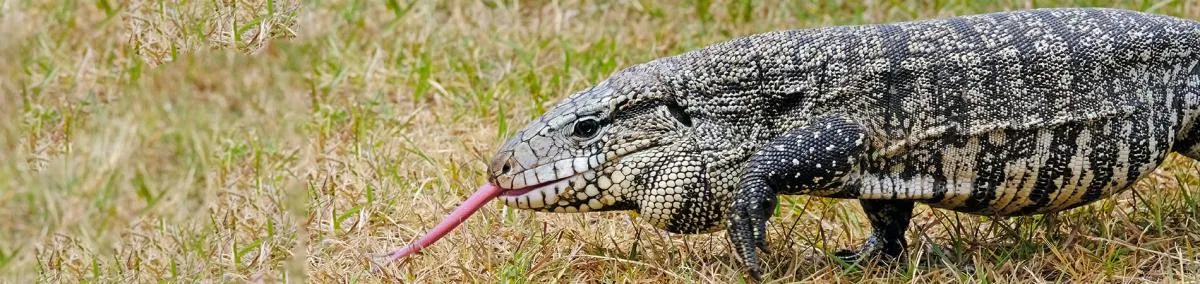
Georgia residents may not expect to find a four-foot-long reptile native to South America roaming their backyards, but the Argentine black and white tegu (Salvator merianae) has established a foothold in the Peach State. Wildlife officials are asking for the public's help in tracking and removing these large invasive lizards that threaten native species and could spread across the Southeast.
What Is the Argentine Black and White Tegu?
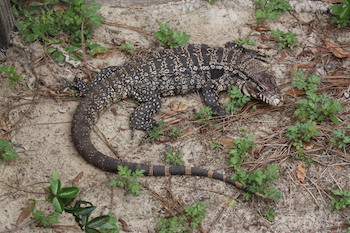
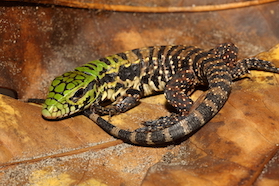
The Argentine black and white tegu is one of the largest lizard species in the Western Hemisphere. Adults can grow up to four feet long and weigh 10 pounds or more, with a lifespan of up to 20 years. They have black to dark gray skin covered with white speckled bands across the back and tail. Hatchlings are about 6-8 inches long and have bright green heads that fade to adult coloration after about a month.
Native to Brazil, Paraguay, Uruguay, and Argentina, these tegus are the largest of all tegu species. They are active during the day, fast-moving, and primarily terrestrial, though they are also strong swimmers capable of staying submerged for extended periods. In colder months, they enter a hibernation-like state called brumation, often sheltering in burrows or under cover.
How Did Tegus Arrive in Georgia?
The Georgia Department of Natural Resources (DNR) first began investigating reports of Argentine black and white tegus in the wild in 2018. The established population is concentrated in Toombs and Tattnall counties in southeastern Georgia, in the area between Lyons and Reidsville. While the DNR cannot say definitively how they arrived, the most likely explanation is that captive animals either escaped or were intentionally released by exotic pet owners.
These lizards have long been popular in the pet trade. Between 2000 and 2015, over 79,000 tegus were imported to the United States. As they grow large and require specialized care, some owners have illegally released them into the wild when they became too difficult to manage.
Why Are Tegus a Threat to Georgia's Ecosystem?
Tegus are omnivores with a remarkably broad diet, and their feeding habits pose a serious threat to native wildlife. According to the Georgia DNR, tegus will eat the eggs of ground-nesting birds such as quail and wild turkeys, as well as the eggs of other reptiles including American alligators and gopher tortoises — both protected species. They also consume chicken eggs, fruits, vegetables, plants, pet food, carrion, and small live animals ranging from grasshoppers to young gopher tortoises.
Beyond predation, there is concern that tegus could spread exotic parasites to native wildlife and contaminate crops with bacteria. Research shows these reptiles, like many reptiles, carry salmonella. Their ability to eat almost anything and reproduce quickly makes them particularly dangerous as an invasive species.
Timeline: How the Tegu Invasion Unfolded
- Pre-2018: Argentine black and white tegus are imported into the U.S. in large numbers for the exotic pet trade
- 2018: Georgia DNR begins investigating reports of wild tegus in Toombs and Tattnall counties
- 2020: DNR works with partners including the U.S. Geological Survey and Georgia Southern University to trap and study the population
- 2022: DNR takes the lead on trapping efforts, humanely euthanizing captured tegus and documenting their diet and reproductive status
- December 4, 2023: Deadline for pet owners to register their tegus with DNR; after this date, keeping tegus as pets in Georgia is prohibited
- 2024-2025: Multiple tegu sightings reported; DNR and partners document over 20 tegus in the wild
- June 2026: Fresh wave of news coverage as officials urge residents to report or kill invasive tegus, with concerns about disease spread and ecological damage reaching a peak
How Fast Can Tegus Multiply?
Adult tegus have few natural predators in Georgia and can reproduce rapidly. Females reach reproductive age when they reach about 12 inches in length, typically after their second season of brumation. A single female can lay up to 35 eggs per year, with hatching expected in June and July in Georgia. With a lifespan of up to 20 years, a single female could potentially produce hundreds of offspring over her lifetime.
Their cold tolerance also increases their invasive potential. Unlike many reptiles, tegus can brumate during colder months, allowing them to survive winters in Georgia and potentially spread to other parts of the southeastern United States. Scientific modeling suggests that under current climate conditions, one or more invasive tegu species have the potential to occupy most ecoregions in the continental U.S.
Where Else Have Tegus Been Found?
Georgia is not alone in battling tegus. According to mapping by the U.S. Geological Survey and Georgia Southern University, residents across Florida, Alabama, South Carolina, and Texas have also reported sightings in recent years. Florida, in particular, has established wild populations and considers tegus a high-priority exotic invasive animal targeted for removal. The species has already proven it can establish breeding populations beyond its native South American range.
What Is Being Done About the Invasion?
The Georgia DNR is working with partners including the U.S. Geological Survey and Georgia Southern University to trap and remove tegus from the wild. Trapped animals are humanely euthanized, and their diet and reproductive status are documented for research purposes. Public outreach efforts continue to raise awareness and encourage reporting.
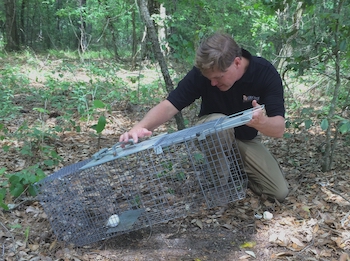
Since Argentine black and white tegus are listed as non-native wild animals in Georgia, they are not protected by state wildlife laws. They can be legally trapped or killed year-round on private property with landowner permission. On state wildlife management areas, they can be taken with firearms legal for the current hunting season.
What Should You Do If You See a Tegu?
If you spot a tegu in the wild in Georgia, the DNR asks that you report it. Note the location, take a photo if possible, and contact the DNR through the following channels:
- Online report: gainvasives.org
- Phone: (478) 994-1438
- Email: [email protected]
In Toombs and Tattnall counties specifically, residents can help by keeping pet food indoors, filling holes that might serve as shelter, and clearing yard debris like brush piles that can provide cover for tegus. While tegus are not considered aggressive toward people, they will defend themselves if threatened — they have sharp teeth, strong jaws, and can lash with their tails.
Key Takeaways About the Argentine Tegu in Georgia
- Size: Up to 4 feet long and 10+ pounds, making them one of the largest lizard species in the Western Hemisphere
- Range: Established in Toombs and Tattnall counties, Georgia, with sightings also in Florida, Alabama, South Carolina, and Texas
- Diet: Omnivorous — eats eggs, small animals, fruits, vegetables, and carrion, threatening protected species like gopher tortoises and alligators
- Reproduction: Up to 35 eggs per year, with few natural predators in Georgia
- Pets: No longer legal to own unless registered with DNR by December 4, 2023
- Action: Report sightings to the DNR; tegus can be legally trapped or killed year-round on private property