The Democratic Party is one of the two major political parties in the United States and the oldest active voter-based political party in the world. Founded in 1828, the party sits on the center-left of the American political spectrum and has returned to the center of national attention after a decisive “blue wave” in the 2026 midterm elections, when Democrats won back both the U.S. Senate and the House of Representatives. This guide explains what the Democratic Party is, how it began, what its members believe, how it is organized, and why it has dominated headlines in November 2026.
The Nation's Oldest Political Party, Explained
Alongside the Republican Party, the Democratic Party is one of the two dominant forces in American politics. Britannica describes it as the oldest political party in the United States and among the oldest political parties in the world, while historians often call it the oldest active voter-based political party anywhere. Ideologically, the party is generally classified as liberal, sitting on the center to center-left of the spectrum, and its platform is rooted in what political scientists call “modern liberalism.” Its signature color is blue, a convention that became standard in U.S. news coverage around the 2000 election.
The party's roots reach back to Thomas Jefferson, who led the Democratic-Republican Party in the 1790s. When that coalition splintered in 1824, New York Senator Martin Van Buren helped build a new political organization — the Democratic Party — which took shape around 1828. Andrew Jackson, the party's first standard-bearer, won the presidency that year and became the first Democratic president in American history.
From Jefferson to Today: How the Party Evolved
The Democratic Party's history is a story of constant reinvention. Here are the key turning points:
- 1790s: The party's ideological roots form in Thomas Jefferson's Democratic-Republican Party.
- 1824: The Democratic-Republican Party splits into competing factions.
- 1828: The modern Democratic Party is founded, and Andrew Jackson is elected president.
- 1848: The Democratic National Committee (DNC) is established to coordinate the party nationwide.
- 1870: Political cartoonist Thomas Nast popularizes the donkey as the party's mascot in Harper's Weekly.
- 20th century: Under Franklin D. Roosevelt's New Deal and the civil-rights era, the party shifts toward a more progressive, activist role for government.
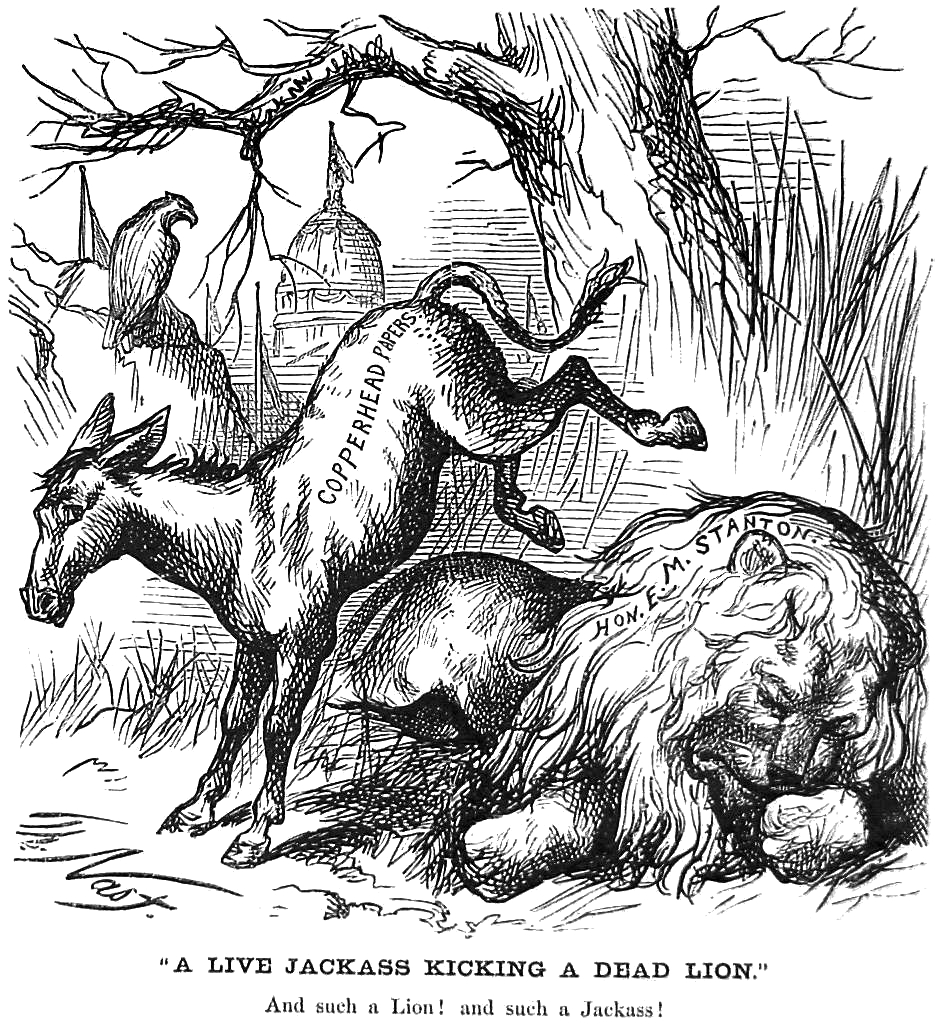
The donkey remains the party's most recognizable symbol. The association began in the late 1820s, when opponents mocked Andrew Jackson as a “jackass” — and Jackson embraced the label. Decades later, Nast's famous cartoon, published on January 15, 1870, cemented the donkey in the public imagination, where it has stayed ever since.
Core Beliefs: What the Party Stands For
The Democratic Party is generally associated with progressive policies and a belief that government should play an active role in expanding opportunity. According to Britannica, Democrats advocate for the civil rights of minorities and support a social safety net for individuals. The party's national organization sums up its mission in a single sentence: “Democrats believe that every American deserves a fair shot at the American dream.”
In practice, the party's current agenda centers on lowering everyday costs, improving and expanding healthcare, creating jobs, protecting voting rights and democracy, and acting on climate change. On social issues, Democrats broadly support abortion rights, stronger civil-rights protections, and a pathway to citizenship for many immigrants. On the economy, the party tends to favor progressive taxation, stronger labor unions, and a larger role for government programs such as Social Security, Medicare, and Medicaid.
How the Democratic Party Is Organized
At the national level, the party is run by the Democratic National Committee, founded in 1848. The DNC is made up of roughly 400 party leaders representing every U.S. state and territory, and it handles day-to-day operations such as fundraising, organizing, and setting rules for the presidential nominating process. Above the DNC, the party's national convention is considered the ultimate authority when it is in session — it is where delegates formally nominate the party's presidential ticket and adopt the national platform.
The party operates as a federalized system, with 57 state and territorial party organizations working alongside the national committee. The current DNC chair is Ken Martin of Minnesota, who was elected on February 1, 2025, at the party's winter meeting.
Why the Democratic Party Is Trending: The 2026 Midterm Blue Wave
The Democratic Party has been in the news in November 2026 because of its sweeping midterm election victories. On November 3, 2026, voters decided 35 U.S. Senate seats — 33 regular contests plus two special elections. Entering election night, the Senate was split with 53 Republicans and 47 Democrats, including two independents who caucus with Democrats. By the end of the week, Democrats had flipped control of the chamber, winning 20 of the 35 contested seats and picking up seven Republican-held seats, including high-profile flips in Texas and Kansas.
Democrats also reclaimed the House of Representatives, clearing 250 seats in a wave that some analysts compared to the 2008 election that carried Barack Obama into the White House. Taken together, the results handed Democrats control of both chambers of Congress and delivered a significant political blow to the sitting Republican administration.
What Happens Next for the Democratic Party
With majorities in both the House and the Senate, Democrats gain the power to set the legislative agenda, block the president's nominees, and launch committee investigations. Analysts caution that controlling Congress does not let the party pass everything on its wish list — the president can still veto legislation — but it fundamentally shifts the balance of power in Washington.
Looking further ahead, the party's attention will turn to the 2028 presidential election and to internal questions about leadership and finances, with the DNC having faced reported pressure in the run-up to the midterms. For now, the immediate story is the result itself: a Democratic Party that entered 2026 out of power in Congress and ended the year back in the majority.
The Bottom Line: Democratic Party Essentials
- The Democratic Party is one of America's two major parties and the oldest active voter-based political party in the world, founded in 1828.
- It is a liberal, center-left party whose platform is rooted in modern liberalism and a belief that government should expand opportunity and protect civil rights.
- Its roots reach back to Thomas Jefferson, and its iconic donkey symbol dates to Andrew Jackson and an 1870 Thomas Nast cartoon.
- The party is run nationally by the Democratic National Committee, led since February 2025 by chair Ken Martin.
- In the 2026 midterms, Democrats won back both the Senate and the House, flipping seats in Texas, Kansas, and elsewhere in a blue wave.