Every year on April 14, scientists, educators, and technology enthusiasts around the world unite for World Quantum Day—a global celebration designed to demystify one of the most complex yet fundamental areas of science. While quantum physics might seem like an abstract field reserved for laboratories and advanced textbooks, this annual event bridges the gap between cutting-edge research and public understanding, showcasing how quantum science shapes everything from the GPS in your phone to future medical breakthroughs.
The Quantum Celebration: What World Quantum Day Represents
World Quantum Day is an international observance dedicated to promoting public awareness and understanding of quantum science and technology. Unlike traditional science celebrations that focus on specific discoveries or scientists, this day emphasizes the fundamental principles that govern our universe at the smallest scales. The initiative represents a collaborative effort spanning over 65 countries, bringing together researchers, educators, engineers, artists, and communicators to make quantum concepts accessible to everyone.
According to the official World Quantum Day organization, the event serves multiple purposes: explaining how quantum mechanics helps us understand nature at its most fundamental level, highlighting technologies that have already transformed our daily lives, and exploring how future quantum revolutions might impact society. The celebration has grown exponentially since its inception, with participation from prestigious institutions including CERN, national laboratories, universities, and technology companies worldwide.
Why April 14? The Planck Constant Connection
The specific date of April 14 wasn't chosen arbitrarily—it carries direct mathematical significance to quantum physics. The numbers "4.14" represent the rounded first digits of Planck's constant, one of the most fundamental values in quantum mechanics. Planck's constant (approximately 4.1356677×10⁻¹⁵ electron volt-seconds) serves as the fundamental constant that quantifies the relationship between energy and frequency in quantum systems.
This tiny number might seem insignificant, but it's crucial to our understanding of the quantum world. As explained on the World Quantum Day "Why April 14" page, Planck's constant is so important that it's used to define the kilogram in the International System of Units. The constant appears in countless quantum equations and helps explain why energy at the atomic level comes in discrete packets called "quanta" rather than continuous flows.
From Idea to Global Movement: The History of World Quantum Day
World Quantum Day began as an initiative by quantum scientists around the world, officially launched on April 14, 2021 as a countdown toward the first global celebration. The following year, on April 14, 2022, the first World Quantum Day saw over 200 events across more than 40 countries spanning five continents. These included lectures, laboratory tours, panel discussions, artistic creations, and hands-on workshops designed to make quantum concepts tangible.
The movement gained significant institutional recognition when the United States Senate passed a resolution on May 2, 2023, commemorating and supporting World Quantum Day. This political endorsement highlighted the growing importance of quantum science in national priorities and technological advancement. By 2023, the number of World Quantum Day events had more than doubled to over 400, demonstrating rapidly expanding public interest and engagement.
Global Celebrations: How World Quantum Day Unites Communities
World Quantum Day operates as a decentralized, bottom-up initiative, encouraging participants worldwide to create their own events and activities. This approach has resulted in a remarkably diverse range of celebrations that adapt quantum science to local contexts and audiences. Typical activities include public lectures by leading researchers, virtual lab tours of quantum facilities, interactive workshops for students, quantum-themed art exhibitions, and community discussions about the ethical implications of quantum technologies.
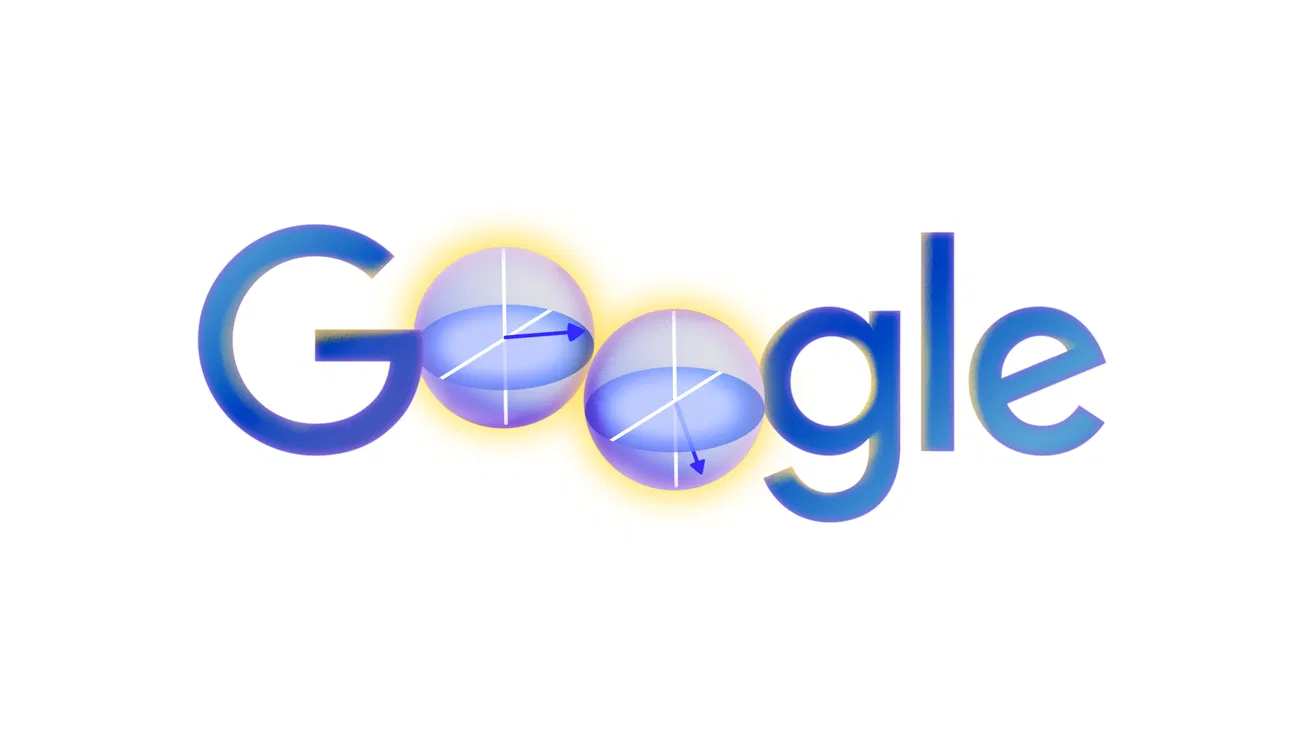
Major technology companies have embraced the celebration as well. Google marked World Quantum Day 2026 with a special animated Doodle featuring the Bloch sphere—a geometrical representation of quantum states—alongside an explanatory video about quantum computing. Other organizations like Hewlett Packard Enterprise (HPE) host dedicated events, while research institutions open their doors to demonstrate quantum computers and other experimental setups to the public.
Quantum 101: Understanding the Science Behind the Celebration
At its core, quantum physics is the study of matter and energy at the smallest scales—typically atoms and subatomic particles like electrons and photons. As explained by the Quantum Economic Development Consortium, quantum mechanics reveals that at these tiny scales, particles behave in ways that defy our everyday intuition. They can exist in multiple states simultaneously (superposition), become intrinsically connected across distances (entanglement), and exhibit both wave-like and particle-like properties.
These strange behaviors aren't just theoretical curiosities—they enable technologies we use daily. Quantum mechanics explains how lasers work, forms the basis of magnetic resonance imaging (MRI) in medicine, enables the precision of GPS systems, and underpins the semiconductors in all modern electronics. The field has progressed from explaining atomic structure in the early 20th century to now promising revolutionary technologies like quantum computers that could solve problems impossible for classical computers.
Beyond the Celebration: How Quantum Technology Shapes Our Future
While World Quantum Day focuses on education and awareness, it also highlights the rapid advancement of practical quantum technologies. Quantum computing represents perhaps the most anticipated development, with potential applications in drug discovery, materials science, cryptography, and optimization problems. Companies like Google, IBM, and numerous startups are racing to build increasingly powerful quantum processors, with milestones like "quantum supremacy" demonstrating these machines can perform specific calculations faster than classical supercomputers.
Other emerging quantum technologies include quantum sensors with unprecedented sensitivity for medical imaging and navigation, quantum communication networks that offer theoretically unbreakable encryption, and quantum simulations that could accelerate the development of new materials and chemicals. These advancements promise to transform industries ranging from pharmaceuticals to finance, making public understanding of their principles and implications increasingly important.
Joining the Quantum Conversation: How to Get Involved
World Quantum Day isn't just for scientists—it's designed to include everyone curious about how our universe works at its most fundamental level. Participation can take many forms: attending local or virtual events, exploring online resources about quantum concepts, engaging with educational content from research institutions, or simply starting conversations about quantum science with friends and family. The official World Quantum Day website maintains a calendar of global events and provides resources for organizers wishing to host their own activities.
For educators, the day offers opportunities to introduce quantum concepts through age-appropriate activities and demonstrations. For artists and creators, it presents inspiration for works that visualize the strange beauty of the quantum world. And for the general public, it provides a welcoming entry point to understanding one of science's most fascinating frontiers.
Key Takeaways: What to Remember About World Quantum Day
World Quantum Day represents a growing global movement to make quantum science accessible and relevant to everyone. Celebrated annually on April 14 (4.14) in reference to Planck's constant, the event has expanded from 200+ activities in 2022 to 400+ in 2023, with participation from over 65 countries. It combines serious scientific discussion with creative outreach, demonstrating how quantum principles already power everyday technologies while hinting at revolutionary developments to come. Whether you're a complete beginner or have some background in physics, World Quantum Day offers a unique opportunity to explore the quantum realm and appreciate how this fundamental science shapes our world and future.