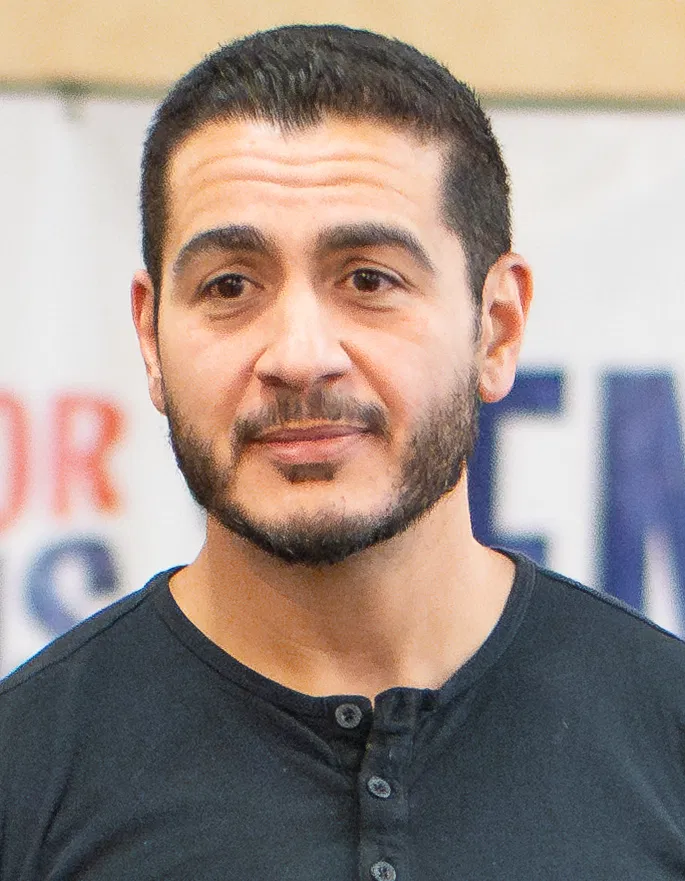
Abdul El-Sayed is a name that has become increasingly prominent in Michigan politics. A physician, epidemiologist, and former public health official, El-Sayed is now running for the U.S. Senate in Michigan's 2026 election. With his unique background combining medicine, public health expertise, and progressive political activism, many voters are asking: who exactly is Abdul El-Sayed, and what does he stand for? This article provides a comprehensive overview of his background, political career, and what his candidacy means for Michigan.
From Egyptian Immigrant Roots to Rhodes Scholar: The Early Life of Abdul El-Sayed
Abdulrahman Mohamed El-Sayed was born in 1984 in Gratiot County, Michigan, to Egyptian immigrant parents. His father, Mohamed El-Sayed, worked as an engineer in the automotive industry, while his mother, Jacqueline El-Sayed, became a professor of mechanical engineering. Growing up in a household that valued education and hard work, El-Sayed excelled academically from an early age.
He attended Andover High School in Bloomfield Hills, Michigan, before earning his undergraduate degree from the University of Michigan, where he studied biology and political science. His academic achievements earned him a coveted Rhodes Scholarship, which took him to Oriel College at Oxford University, where he earned a PhD in public health. He then returned to the United States to attend Columbia University's Vagelos College of Physicians and Surgeons, earning his medical degree and becoming a fully licensed physician.
This rare combination of credentials — a medical degree from Columbia, a doctorate in public health from Oxford, and the distinction of being a Rhodes Scholar — set El-Sayed apart as someone with both deep scientific expertise and a sophisticated understanding of the structural factors that shape public health outcomes.
Leading Detroit's Health Department: Public Health in Action
In 2015, at just 30 years old, El-Sayed was appointed as the Executive Director of the Detroit Health Department by Mayor Mike Duggan. He took on this role at a critical time for the city, which was still recovering from bankruptcy and grappling with significant public health challenges.
During his tenure, El-Sayed led the city's response to several major health crises. He focused heavily on childhood lead poisoning prevention — a particularly urgent issue in a city with aging housing stock and lead water pipes. He also spearheaded programs addressing asthma, which disproportionately affects Detroit's children, and worked to improve access to healthcare in underserved neighborhoods.
One of his signature achievements was the "SisterFriends" program, which provided support to pregnant women and new mothers in an effort to reduce Detroit's high infant mortality rate. Under his leadership, the health department rebuilt its capacity after years of budget cuts and privatization, restoring critical public health services to city residents.
El-Sayed's approach to public health emphasized the social determinants of health — the idea that factors like housing, income, education, and environmental conditions are just as important to health outcomes as access to doctors and medicine. This philosophy would later become central to his political platform.
The 2018 Gubernatorial Run: A Progressive Campaign That Captured National Attention
In 2017, El-Sayed resigned from his position at the Detroit Health Department to run for governor of Michigan in the 2018 Democratic primary. At 33, he was one of the youngest candidates in the race, and he positioned himself as the most progressive option in a three-way primary that included future Governor Gretchen Whitmer and entrepreneur Shri Thanedar.
El-Sayed's campaign attracted national attention when he received endorsements from progressive leaders including Senator Bernie Sanders and Representative Alexandria Ocasio-Cortez. His platform centered on Medicare for All, a $15 minimum wage, tuition-free public college, bold climate action, and getting corporate money out of politics. These positions placed him firmly in the progressive wing of the Democratic Party.
If elected, El-Sayed would have made history as the first Muslim governor in American history. His candidacy was seen as part of a broader wave of diverse, progressive candidates running for office across the country. However, he ultimately finished third in the Democratic primary, receiving approximately 30% of the vote, behind Whitmer's 52% and Thanedar's 17%.
Despite the loss, El-Sayed's 2018 campaign established him as a significant figure in Michigan politics and built a grassroots network that he would later draw upon for future campaigns. He also authored a book, "Healing Politics: A Doctor's Journey into the Heart of Our Political Epidemic," which outlined his vision for applying public health principles to political problems.
The 2026 Senate Race: El-Sayed's Return to the Campaign Trail
In early 2026, El-Sayed announced his candidacy for Michigan's open U.S. Senate seat. The seat became available when incumbent Senator Gary Peters, a Democrat, announced he would not seek re-election. This created a rare open Senate seat in a key swing state, drawing significant interest from candidates on both sides of the aisle.
El-Sayed entered the Democratic primary as a progressive alternative, running on many of the same policy positions that defined his 2018 gubernatorial campaign. His platform includes Medicare for All — a single-payer healthcare system that would guarantee healthcare as a right — bold action on climate change through a Green New Deal-style program, economic justice measures including a living wage and stronger worker protections, and campaign finance reform to reduce the influence of corporate money in politics.
As a physician who treated patients and a public health official who managed one of America's largest city health departments, El-Sayed brings a distinctive perspective to healthcare policy debates. He argues that his background in medicine and public health gives him unique insight into how federal policy affects the health and wellbeing of ordinary Americans.
His candidacy is also historically significant: if elected, he would become the first Muslim U.S. Senator from Michigan and one of only a handful of Muslim Americans to serve in the Senate. In a state with one of the largest Arab American and Muslim populations in the country, this representation carries particular resonance.
Understanding El-Sayed's Political Philosophy: Public Health as a Political Framework
What makes El-Sayed's approach to politics distinctive is his application of public health thinking to policy problems. In public health, professionals look beyond individual behaviors to understand the structural and environmental factors that shape health outcomes. El-Sayed applies this same lens to issues like poverty, education, and economic inequality.
For example, where a traditional politician might frame healthcare as a question of insurance markets and consumer choice, El-Sayed frames it as a question of epidemic prevention: just as we treat infectious disease at the population level rather than leaving each individual to fend for themselves, he argues, we should treat healthcare access the same way. This perspective leads him naturally toward support for universal, government-guaranteed healthcare.
Similarly, his approach to climate change is informed by his understanding of environmental health. Having seen firsthand how air pollution and environmental toxins affect vulnerable communities in Detroit, he views climate action not just as an environmental issue but as a public health imperative.
This framework — what El-Sayed calls "Healing Politics" — is the intellectual foundation of his political career and distinguishes him from candidates who come from more traditional backgrounds in law or business.
What Happens Next: The Road to the 2026 Michigan Senate Election
The Michigan Senate race is expected to be one of the most closely watched contests of the 2026 election cycle. As a swing state, Michigan's Senate election will have significant implications for control of the chamber. The Democratic primary field includes multiple candidates, and the eventual nominee will face a Republican challenger in the general election.
For El-Sayed, the path forward involves rebuilding the grassroots coalition that powered his 2018 campaign while expanding his appeal to a broader electorate. His challenge will be to translate progressive enthusiasm into enough votes to win both a primary and a general election in a politically diverse state.
The outcome of this race will not only determine who represents Michigan in the Senate but could also signal the direction of the Democratic Party — whether progressive candidates like El-Sayed can win in competitive statewide elections, or whether the party's center of gravity remains with more moderate figures.
The Bottom Line: Key Points to Remember
- Abdul El-Sayed is a physician, epidemiologist, and Rhodes Scholar with degrees from the University of Michigan, Columbia University, and Oxford University
- He served as Executive Director of the Detroit Health Department from 2015 to 2017, leading public health initiatives on lead poisoning, asthma, and infant mortality
- He ran for Michigan governor in 2018 as a progressive Democrat, earning endorsements from Bernie Sanders and Alexandria Ocasio-Cortez
- In 2026, he is running for Michigan's open U.S. Senate seat on a platform of Medicare for All, climate action, and economic justice
- If elected, he would be the first Muslim U.S. Senator from Michigan
- His political philosophy applies public health principles to policy problems — an approach he calls "Healing Politics"