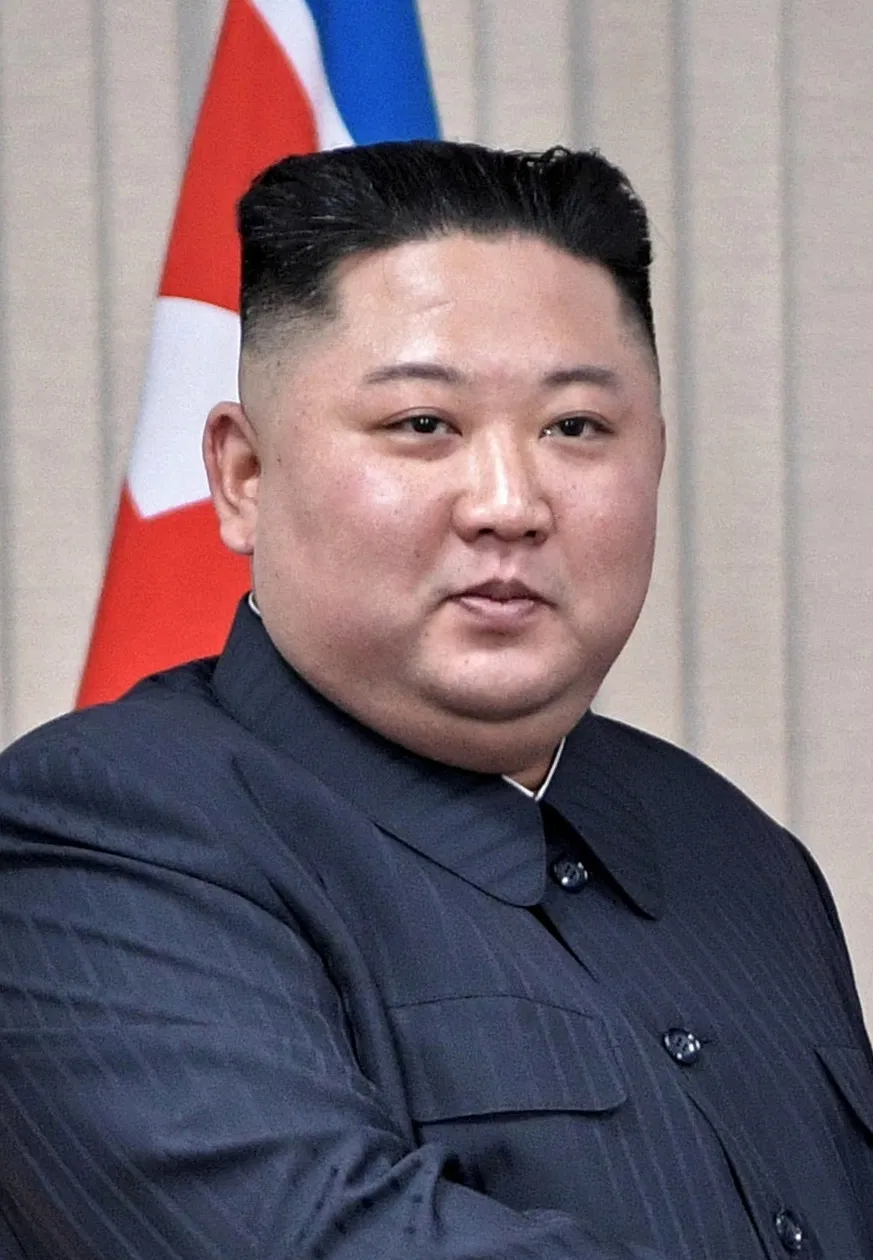
Kim Jong Un is the Supreme Leader of North Korea and the third member of the Kim family to rule the isolated, nuclear-armed state since its founding in 1948. Born in Pyongyang as the youngest son of former leader Kim Jong Il, he inherited power in December 2011 while still in his late twenties, becoming one of the world's youngest heads of state. More than a decade later, he remains the center of one of the most centralized governments on Earth — and a fresh wave of rumors about his health and his eventual successor has once again put him in global headlines.
Who Is Kim Jong Un? The Basics
Kim Jong Un was born on January 8, though his exact birth year is disputed. North Korea officially lists 1982, while South Korean and Western intelligence estimates point to 1983 or 1984, which would place him in his early forties today. He is the third and youngest son of Kim Jong Il and Ko Young-hee, an opera singer who was one of the former leader's partners.
As a teenager, Kim was reportedly educated in Switzerland under an assumed identity, attending an elite English-language boarding school near Bern. The regime kept this Western schooling secret at the time. After returning to North Korea, he studied at Kim Il Sung Military University and was gradually introduced to the public as his father's chosen successor.
Kim is married to Ri Sol Ju, and the couple is believed to have three children. Their daughter Kim Ju Ae made her first public appearance in November 2022 and has since become a regular at military events — a development widely interpreted as grooming for a future leadership role.
How North Korea's Government Actually Works
On paper, North Korea has a familiar-looking government. Its constitution describes a socialist state with the Supreme People's Assembly (SPA) as the highest organ of state power and a Cabinet as the executive branch responsible for the economy. In practice, all meaningful authority flows from a single figure: the Supreme Leader.
The real center of power is the Workers' Party of Korea (WPK), the country's ruling party, which Kim Jong Un leads as general secretary. The SPA, elected every five years, largely functions as a rubber-stamp legislature that approves decisions already made by the leadership, while the Cabinet implements economic policies guided by the party. Monitors such as Freedom House describe North Korea as a one-party state under a dynastic, totalitarian dictatorship, in which the Kim family's authority is reinforced by ideology, surveillance, and a pervasive cult of personality.
Kim concentrates power through a cluster of overlapping titles: General Secretary of the Workers' Party of Korea (the top party post), President — formally Chairman — of the State Affairs Commission (the highest state office), and Supreme Commander of the Korean People's Army, among others. His father and grandfather held the same core posts, and after Kim Jong Il's death in 2011, Kim Jong Un rapidly accumulated them to seal his position as the sole center of authority.
Three Generations of the Kim Dynasty
North Korea's leadership is organized around a single family line, often called the Paektu bloodline after Mount Paektu, the mythical birthplace of the Kim family. The line begins with Kim Il Sung, a former guerrilla fighter who founded the Democratic People's Republic of Korea on September 9, 1948, and ruled until his death in July 1994 — a span of 46 years.
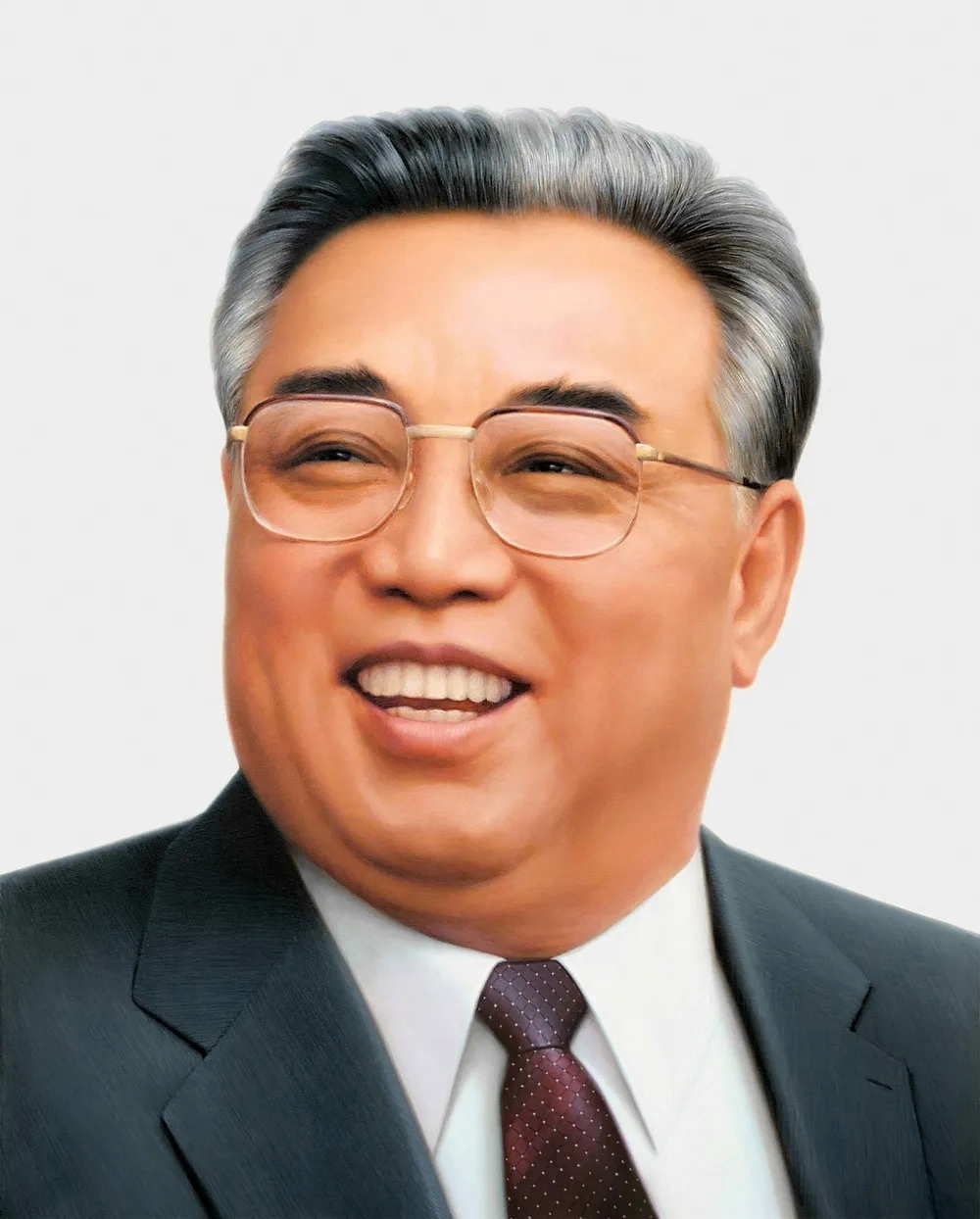
When Kim Il Sung died, power passed to his son Kim Jong Il, who adopted a military-first (Songun) policy that prioritized the armed forces. Kim Jong Il ruled for 17 years until his death on December 17, 2011. Within days, his youngest son, Kim Jong Un, was announced as the Great Successor, completing the third hereditary transfer of power in the family's history. Each transition was formally ratified by party and state institutions, but in practice the bloodline — not elections — determined the next ruler.
The Personality Cult and the Juche Ideology
Two ideas help explain how one family has held power for more than seven decades. The first is Juche, North Korea's official state ideology, usually translated as self-reliance. Developed and formalized under Kim Il Sung, Juche holds that a nation must achieve political, economic, and military independence in order to prosper, and it places the leader at the center of the country's destiny.
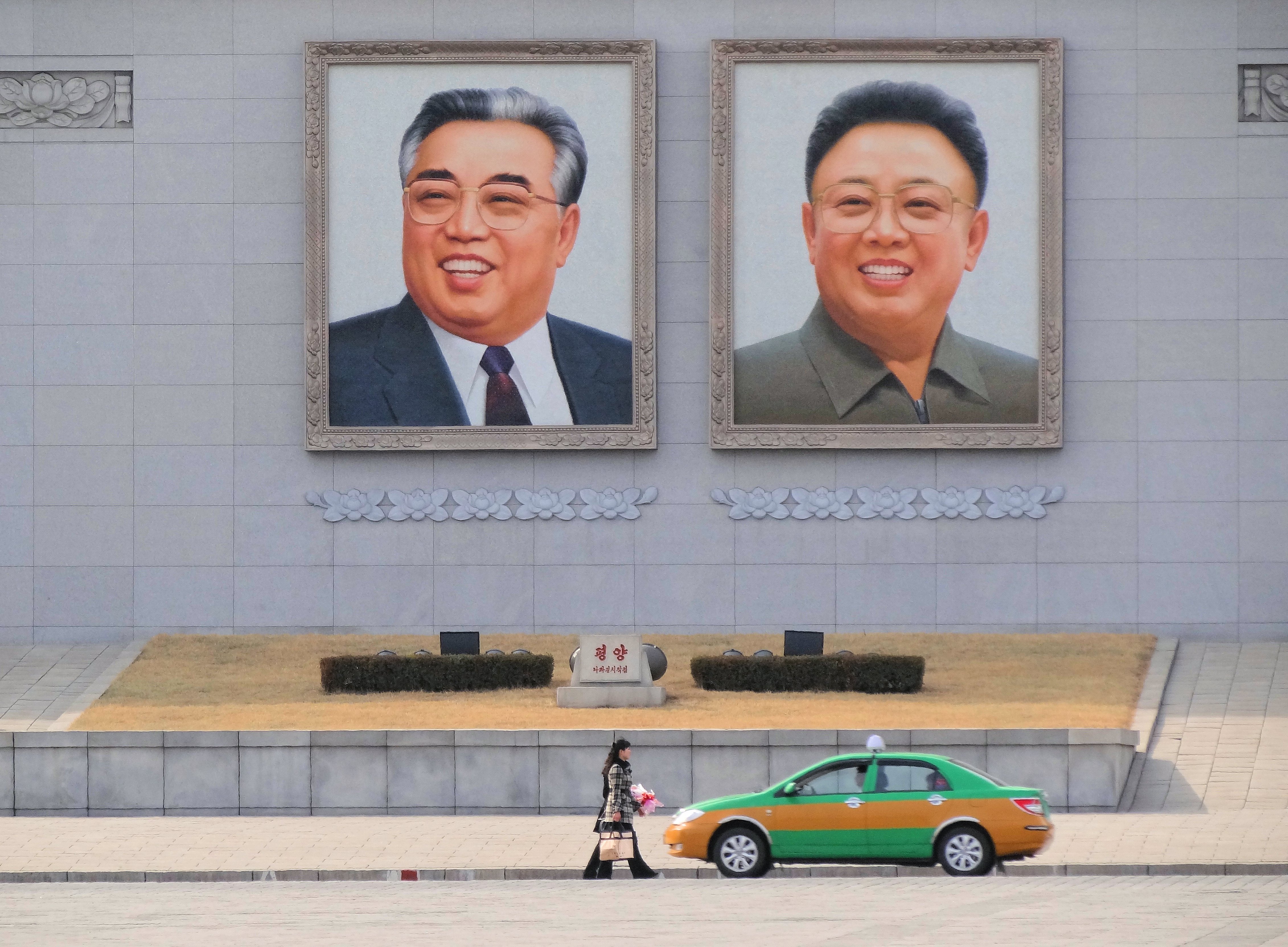
The second is the personality cult surrounding the Kim family. Portraits of Kim Il Sung and Kim Jong Il hang in homes, offices, and public squares across the country, and citizens are required to wear loyalty badges bearing their images. The Ten Principles for Establishing the Monolithic Ideological System demand absolute loyalty to the leader and the party. State media portrays the Kims in near-divine terms, and questioning the leadership carries severe consequences. This combination of ideology and enforced veneration is what allows such a centralized system to function.
Why Kim Jong Un Is in the News Right Now
In late October 2026, unverified posts on social media claimed Kim Jong Un had suffered a brain hemorrhage, slipped into a coma, or died. The rumors — a recurring phenomenon whenever the leader is absent from public view — spread quickly enough that North Korean state media responded by releasing proof-of-life photographs showing Kim inspecting footwear and clothing at a national garment exhibition, accompanied by his wife Ri Sol Ju and daughter Kim Ju Ae.
Health rumors about Kim are not new; he has disappeared from public view for weeks at a time before, each time triggering speculation. What makes this cycle notable is the parallel focus on succession. South Korea's National Intelligence Service has said Kim's teenage daughter Kim Ju Ae has been positioned as his likely successor, citing her rising public profile, though in September 2026 the same agency raised the possibility that Kim has an older son who could complicate the line of succession. His sister Kim Yo Jong — promoted in February 2026 to a senior party post — remains one of the country's most powerful figures and a potential regent or rival.
At the same time, North Korea's weapons programs continue to advance. In 2026, state media reported tests of hypersonic missiles, submarine-launched cruise missiles, and an AI-guided torpedo system — a reminder that the succession question is unfolding alongside an active nuclear and missile buildup.
What Happens Next: Succession and the Road Ahead
Because North Korea has never publicly named an official successor to Kim Jong Un, any transition would carry significant uncertainty. Analysts generally expect a future succession to remain within the Kim family, with Kim Ju Ae the most-discussed candidate despite her youth and the regime's patriarchal history. Some experts suggest Kim Yo Jong could serve as a bridge or regent in the event of a sudden transition.
Whatever the outcome, the underlying structure of power — the Workers' Party, the military, and the cult of personality — is unlikely to change fundamentally. The deeper question is whether a fourth-generation transfer of power, whenever it comes, can proceed as smoothly as the previous three.
Key Takeaways
- Kim Jong Un has been North Korea's Supreme Leader since December 2011, succeeding his father Kim Jong Il.
- He is the third ruler of the Kim dynasty, which has led North Korea since Kim Il Sung founded the state in 1948.
- His core titles include General Secretary of the Workers' Party of Korea, President of the State Affairs Commission, and Supreme Commander of the army.
- North Korea is a one-party state where all real power flows from the leader; the Supreme People's Assembly largely ratifies decisions made by the party.
- Recent health rumors were answered with state-media photos, while attention turns to his daughter Kim Ju Ae and sister Kim Yo Jong as possible successors.