
For millions of people worldwide, the day doesn't truly begin until that first cup of coffee. But beyond the familiar caffeine jolt and comforting aroma, your morning brew is doing something remarkable inside your digestive system. Mounting scientific evidence reveals that coffee significantly shapes the trillions of microbes living in your gut, with effects that ripple far beyond digestion—influencing everything from inflammation levels to mood and even cognitive function.
The gut microbiome—the complex community of bacteria, fungi, and other microorganisms residing in your digestive tract—plays a central role in overall health. And it turns out that coffee, one of the most consumed beverages on the planet, is a potent modulator of this internal ecosystem. With more than 2 billion cups of coffee consumed daily worldwide, understanding exactly how this popular drink affects our gut bacteria has become a hot topic in nutritional science.
The Key Bacteria Coffee Boosts: What the Latest Research Reveals
In the largest study of its kind, published in Nature Microbiology in November 2024, researchers analyzed fecal DNA from more than 22,800 participants across US and UK populations who tracked their daily coffee consumption. The results were striking: coffee drinkers had significantly higher levels of a specific gut bacterium called Lawsonibacter asaccharolyticus. The association was so strong that researchers could predict with 89% accuracy whether someone drank coffee just by analyzing their gut microbiome.
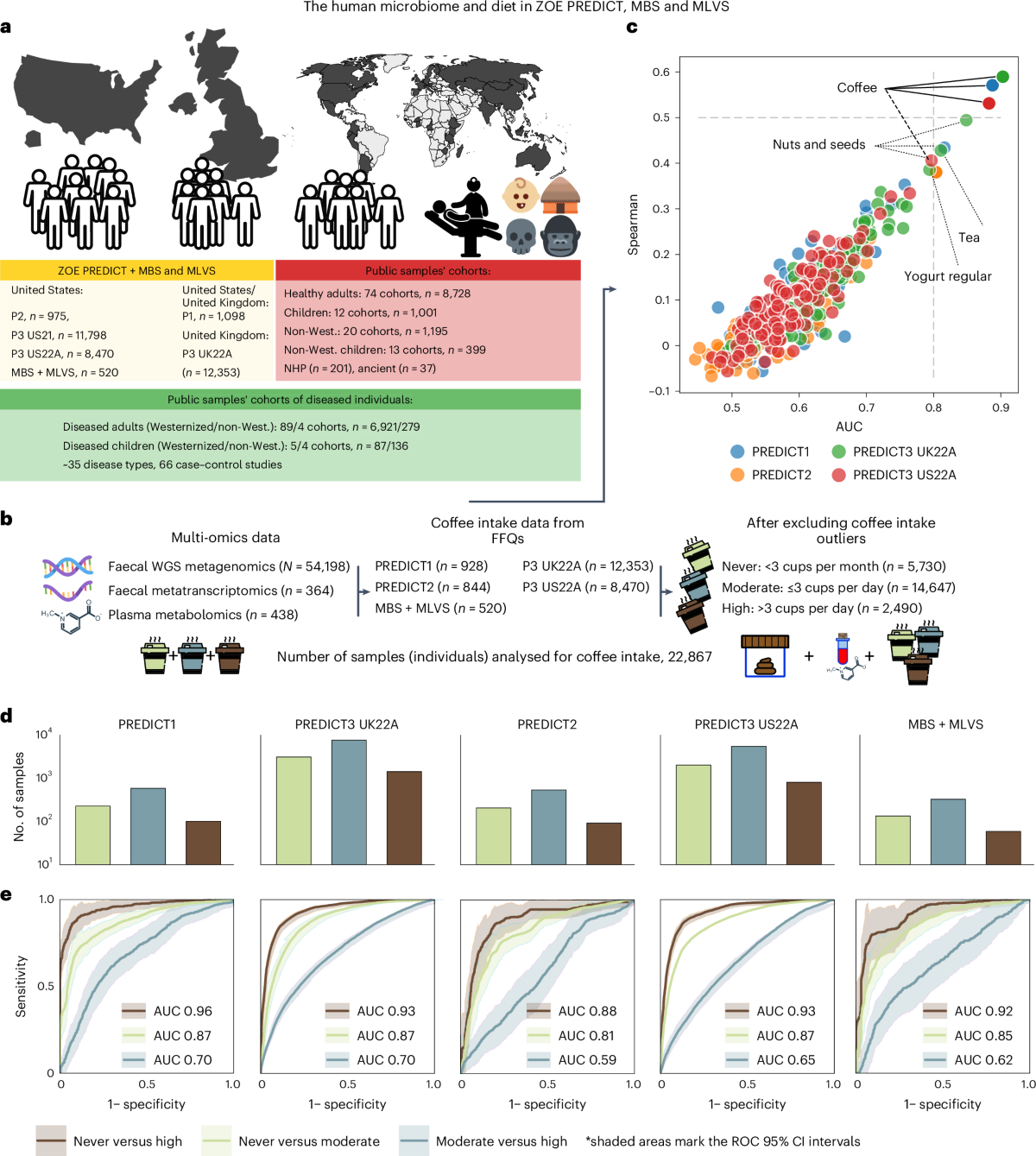
"For this, you really need these large dataset approaches that haven't been possible until recently," said Peter Belenky, a microbiologist at Brown University who was not affiliated with the study, speaking to Scientific American. The research, led by Paolo Manghi and colleagues, integrated data from 211 cohorts totaling 54,198 participants, making it the most comprehensive analysis of coffee's impact on the gut microbiome to date.
L. asaccharolyticus, first described in 2018, is a relatively understudied bacterium. But its strong link to coffee consumption suggests it plays an important role in metabolizing coffee compounds. In laboratory experiments, researchers confirmed that coffee directly stimulates the growth of this microbe, indicating a genuine biological relationship rather than a mere correlation.
Timeline: How the Science of Coffee and Gut Health Evolved
Scientific understanding of coffee's effect on the gut microbiome has developed rapidly in recent years:
- 2013: Early animal studies show coffee consumption increases Bifidobacterium spp. and decreases harmful E. coli and Clostridium in mice
- 2021: Researchers demonstrate that chlorogenic acid, a key polyphenol in coffee, boosts short-chain fatty acid (SCFA) producers that protect the intestinal barrier
- 2022: Studies confirm that even decaffeinated coffee affects gut microbiota composition in animal models
- January 2024: A comprehensive narrative review in Current Issues in Molecular Biology concludes that moderate coffee consumption increases beneficial bacterial phyla including Firmicutes and Actinobacteria
- November 2024: The landmark multi-cohort study in Nature Microbiology definitively links coffee to Lawsonibacter asaccharolyticus across global populations
- February 2025: UCLA Health reports that coffee's prebiotic effects help moderate inflammation and support the gut-brain axis
- April 2026: APC Microbiome Ireland study in Nature Communications shows coffee reshapes gut bacteria in ways that influence mood, stress, and cognition
How Coffee Works as a Prebiotic: The Science Behind the Benefits
Coffee isn't just a vehicle for caffeine—it's a complex mixture of hundreds of bioactive compounds. The most important players for gut health are polyphenols, particularly chlorogenic acid, along with dietary fiber and melanoidins formed during roasting.
These compounds act as prebiotics, meaning they serve as food for beneficial gut bacteria. When microbes break down coffee polyphenols, they produce short-chain fatty acids (SCFAs) like butyrate, acetate, and propionate. These SCFAs are crucial for maintaining gut health: they serve as fuel for colon cells, help regulate gene expression, reduce inflammation, and strengthen the intestinal barrier.
According to a 2024 literature review published in Current Issues in Molecular Biology, moderate coffee consumption (fewer than 4 cups per day) increased the relative abundance of beneficial bacterial phyla such as Firmicutes and Actinobacteria while decreasing potentially harmful Bacteroidetes. Coffee consumption also increased Bifidobacterium spp.—a group of bacteria widely recognized for their health-promoting properties—and decreased Enterobacteria, which include some pathogenic strains.
The Coffee & Health Institute (ISIC) reports that dietary fiber found in coffee may be metabolized into SCFAs, increasing the presence of dominant bacterial species in the intestinal flora. Additionally, coffee's polyphenols, including chlorogenic acid, caffeic acid, and trigonelline, appear to be the primary drivers of these microbial changes.
Beyond Digestion: How Coffee's Gut Effects Reach the Brain
Perhaps the most exciting development comes from research led by Professor John Cryan at APC Microbiome Ireland, published in Nature Communications in 2026. The study followed 62 participants—31 coffee drinkers and 31 non-coffee drinkers—through a period of stopping and restarting coffee consumption.

"Coffee is more than just caffeine—it's a complex dietary factor that interacts with our gut microbes, our metabolism, and even our emotional well-being," Cryan said. Coffee drinkers were found to have higher levels of beneficial bacteria such as Eggerthella and Cryptobacterium curtum, which help release gastric acids and create bile, aiding the body in eliminating harmful bacteria and managing inflammation.
Remarkably, both caffeinated and decaf drinkers reported lower levels of perceived stress, depression, and impulsivity. This suggests that the non-caffeine components of coffee—the polyphenols and antioxidants—are doing significant work for mental health. However, the two types of brew offered different perks: caffeinated coffee was linked to reduced anxiety and better focus, while decaf was associated with improvements in learning and episodic memory, possibly tied to better sleep quality.
Current Status: What We Know Today
The scientific consensus has shifted notably in favor of coffee's gut health benefits. Multiple large-scale studies now converge on several key conclusions:
- Regular coffee consumption (3-5 cups per day, considered moderate and safe by the European Food Safety Authority) consistently increases gut microbial diversity
- The link between coffee and Lawsonibacter asaccharolyticus is highly reproducible across different populations worldwide
- Coffee's benefits for the gut microbiome appear independent of caffeine content—decaf drinkers also show positive microbial changes
- These microbial changes may mediate some of coffee's well-documented health benefits, including reduced risks of type 2 diabetes, fatty liver disease, and certain cancers
Researchers caution that individual results may vary based on overall diet, genetics, and lifestyle factors. The studies relied partly on self-reported data, and variables like sugar, dairy additives, and brewing methods could independently influence gut health.
What's Next: The Future of Coffee and Gut Microbiome Research
The field is moving rapidly toward understanding the precise mechanisms by which coffee compounds interact with specific bacterial species. Researchers are particularly interested in the metabolic pathways through which gut bacteria process coffee polyphenols and how these interactions produce health effects throughout the body.
Scientists at ZOE, the personalized nutrition company, have demonstrated that the gut microbiome of coffee drinkers is so distinct that researchers can identify coffee consumers from stool samples alone. Future research aims to unravel why some people's gut bacteria respond more robustly to coffee than others and whether specific brewing methods or coffee bean varieties offer different prebiotic benefits.
The emerging picture suggests that coffee, far from being merely a morning pick-me-up, is a complex functional food that nourishes the microbial residents of our gut—residents that, in turn, support our health in ways we are only beginning to understand.
Key Takeaways: Coffee and Your Gut Microbiome at a Glance
- Boosts beneficial bacteria: Coffee significantly increases Lawsonibacter asaccharolyticus and Bifidobacterium spp.
- Acts as a prebiotic: Coffee's polyphenols and fiber feed good gut bacteria, leading to anti-inflammatory SCFA production
- Caffeine isn't essential: Decaf coffee provides similar microbiome benefits
- Gut-brain connection: Coffee-induced microbiome changes may improve mood, reduce stress, and support cognition
- Moderation is key: 3-5 cups per day appears to be the optimal range for gut health benefits
- Consistency matters: Regular, habitual consumption produces the strongest effects on gut microbiota composition