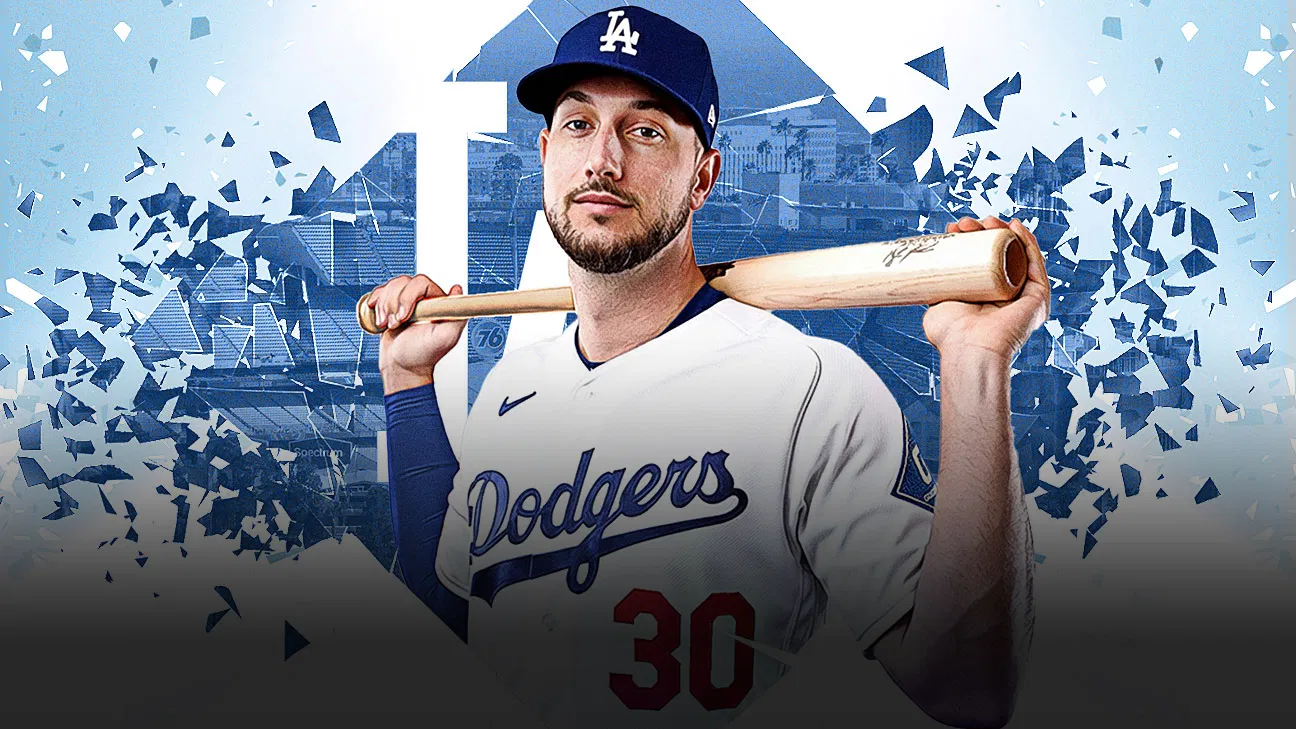
When the Los Angeles Dodgers signed outfielder Kyle Tucker to a four-year, $240 million contract this week, it wasn't just another big free agent signing—it was a masterclass in modern MLB contract construction. With opt-outs after years two and three, a $64 million signing bonus, and $30 million in deferred payments, Tucker's deal exemplifies the complex financial engineering that goes into today's baseball mega-contracts. But what do all these terms actually mean, and how do MLB contracts really work? Understanding the mechanics behind baseball's biggest deals reveals a sophisticated system of guaranteed money, creative financing, and strategic planning that shapes the entire sport.
The Anatomy of a Modern MLB Contract: Breaking Down Tucker's $240 Million Deal
At first glance, Kyle Tucker's contract seems straightforward: four years, $240 million. But the devil is in the details, and those details reveal how MLB teams structure deals to manage risk and maximize value. The $60 million average annual value (AAV) makes this the second-highest per-year contract in MLB history, behind only Shohei Ohtani's $70 million AAV. However, when you factor in the $30 million in deferrals—money paid out in future years rather than during the contract term—the present-day value actually calculates to $57.1 million per season, still a record for a non-two-way player according to ESPN's analysis.

The opt-out provisions represent perhaps the most player-friendly aspect of the deal. Tucker can choose to become a free agent again after either the 2027 or 2028 season, allowing him to re-enter the market at ages 30 or 31 if he performs well. This gives him tremendous leverage and potential upside while providing the Dodgers with flexibility if his performance declines. The $64 million signing bonus—with $54 million paid immediately—provides Tucker with substantial upfront cash while helping the Dodgers manage their luxury tax calculations, since signing bonuses are prorated over the life of the contract for Competitive Balance Tax purposes.
From Rookie Deals to Free Agency: The Baseball Contract Lifecycle
Understanding MLB contracts requires knowing the three distinct phases of a player's career. When players first enter professional baseball through the draft or international signing, they're typically bound by team control for their first six seasons. During years 1-3, teams can renew contracts at essentially the league minimum salary ($740,000 in 2026). Years 4-6 bring salary arbitration, where players and teams submit salary figures and an arbitrator chooses one if they can't agree. This system keeps costs controlled while players establish their value.
Free agency represents the payoff phase, where players like Tucker finally reach the open market after six full seasons. As MLB.com explains in their offseason guide, "Players become free agents the day after the conclusion of the World Series" but cannot sign with new teams until five days later. This exclusive window allows former teams one last chance to retain their departing players. Tucker reached free agency after spending 2025 with the Chicago Cubs, who had acquired him from Houston in a trade during his final arbitration year.
The Complex Machinery: Opt-Outs, Deferrals, and Signing Bonuses Explained
Modern MLB contracts have evolved into sophisticated financial instruments with multiple moving parts. Opt-outs, like those in Tucker's deal, allow players to terminate contracts early and retest free agency if they outperform their current deal's value. As the MLB offseason guide notes, "Opt-outs have become more common in recent years, and they are a means for players to potentially cash in if they perform well in the initial years of a contract." The risk for teams is that they lose star players just as they're peaking; the reward is potentially signing players they otherwise couldn't afford.
Deferrals represent another critical component, particularly for high-spending teams like the Dodgers. By pushing $30 million of Tucker's compensation into future years, the Dodgers reduce their current Competitive Balance Tax (CBT) hit, even though they'll pay a premium for the deferred money later. This accounting maneuver helps manage luxury tax penalties that escalate dramatically for repeat offenders—the Dodgers paid $170 million in luxury taxes alone last season, more than the Mets and Yankees combined according to ESPN's reporting.
Signing bonuses serve multiple purposes: they provide players with immediate financial security, help teams with CBT management (since bonuses are spread evenly over the contract term for tax purposes), and can make offers more attractive in competitive bidding situations. Tucker's $64 million bonus—particularly the $54 million upfront portion—likely helped sway his decision toward Los Angeles over other suitors like the Mets and Blue Jays.
Guaranteed Money vs. NFL: Why Baseball Contracts Are Different
One of the most fundamental distinctions between MLB and other professional sports is the concept of fully guaranteed contracts. Unlike the NFL, where only signing bonuses are typically guaranteed, MLB contracts guarantee the entire stated value unless specific contingencies are met. As TDA Baseball's contract analysis guide explains, "Teams commit an 'x' amount of dollars to a player in exchange for a set of probabilities that a player will produce a given amount." This means Tucker will receive his $240 million regardless of performance or injury—a security rarely seen in professional sports.
The guaranteed nature of MLB contracts fundamentally changes team-building strategies. Front offices must project performance over many years, weighing upside potential against downside risk. This explains why teams increasingly include opt-outs and options: they provide escape hatches if projections prove overly optimistic. For players, guaranteed money provides life-changing financial security but often comes in exchange for accepting below-market rates during peak performance years.
The Dodgers' Financial Playbook: How They Built a $400 Million Roster
Los Angeles' approach to roster construction represents the extreme end of modern MLB strategy. With Tucker's addition, the Dodgers now have eight players on nine-figure contracts and a projected Competitive Balance Tax payroll exceeding $400 million. As ESPN reports, "The Dodgers paid close to $170 million in luxury taxes last year, more than the second- and third-place Mets and New York Yankees combined." This willingness to operate deep into luxury tax territory—where penalties reach 110% of overage—reflects both extraordinary financial resources and a championship-or-bust mentality.
Owner Mark Walter's strategy leverages several unique advantages: a lucrative local television deal that provides stable revenue streams, additional income generated by Shohei Ohtani's global marketing appeal, and the financial benefits of playing in the nation's second-largest market. The Dodgers also benefit from what TDA Baseball's analysis calls the "Shoo-In" team profile: "These teams are almost guaranteed to make the playoffs, regardless of any further signings. The acquisition of a player is only to enhance their already great odds." For such teams, marginal wins carry extraordinary value in championship probability.
What's Next: The Future of MLB Contracts and Labor Relations
The current Collective Bargaining Agreement expires after the 2026 season, and contracts like Tucker's will undoubtedly influence negotiations. Player opt-outs have become increasingly common, reflecting growing player empowerment and agents' sophistication in structuring deals. Deferrals, once rare, have become standard practice for large contracts—though they may face scrutiny in CBA talks given their impact on competitive balance.
Emerging trends include more creative performance incentives, earlier extension opportunities for young stars, and potentially new mechanisms for managing competitive balance. As the New York Post noted in their Tucker analysis, "The Dodgers yet again flexed their financial muscle to bolster their roster," highlighting growing concerns about payroll disparity. Whether the next CBA addresses these imbalances remains to be seen, but Tucker's contract exemplifies the current state of baseball economics: sophisticated, player-friendly, and increasingly complex.
Key Takeaways: Understanding MLB Contract Essentials
Kyle Tucker's $240 million Dodgers deal provides a perfect case study in modern baseball contract mechanics. The key components include: fully guaranteed money (unlike NFL contracts), average annual value (AAV) calculations that affect luxury tax burdens, opt-out clauses that provide player flexibility, deferrals that help teams manage current payroll, and signing bonuses that offer players upfront security. Teams evaluate these deals using sophisticated projection systems that estimate future performance probabilities, while players weigh immediate guarantees against potential future earnings.
As baseball's financial landscape evolves, understanding these contract elements becomes essential for appreciating team-building strategies and player movement. The Dodgers' aggressive approach—combining massive spending with creative contract engineering—represents one extreme of today's MLB, but the fundamental principles apply across the league. Whether you're analyzing your favorite team's latest signing or simply trying to understand why players earn what they do, knowing how MLB contracts work provides crucial insight into America's pastime.