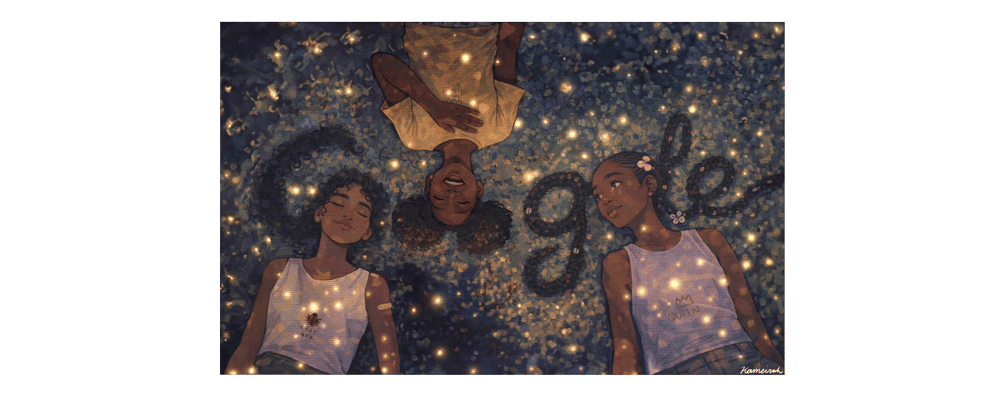
The Doodle for Google contest is one of the most exciting opportunities for young artists across the United States. Each year, thousands of K-12 students create original artwork to be featured on the Google homepage, competing for life-changing prizes including a $55,000 college scholarship and a $50,000 technology grant for their school. Now in its 17th year, the 2025-2026 competition drew tens of thousands of entries with the theme "My superpower is..." — and the winner, 12th grader Kameirah from Washington, saw her artwork "Hair Power: The Crown that Grows From Us" displayed on Google.com in June 2026. Whether you're a student, parent, or educator looking to participate in future contests, here's everything you need to know about entering and maximizing your chances of winning.
How the Contest Works: Theme, Eligibility, and Entry Process
The Doodle for Google contest follows a straightforward structure designed to be accessible to students of all artistic levels. Each year, Google announces a theme that students must interpret through their artwork. For the 2025-2026 cycle, the prompt was "My superpower is..." — a broad and personal theme that allowed students to showcase what makes them unique.
To enter, students must be enrolled in grades K-12 in the United States or its territories. The submission window typically runs from mid-October to early December — the 2025-2026 contest accepted entries from October 15 to December 10, 2025. Each student is allowed only one entry, and submissions can be made either online through the official Doodle for Google website or by mail. The entry requires three key components: the completed doodle artwork placed on the official entry form template, a title for the artwork, and an artist's statement explaining the doodle's connection to the theme.
Timeline: Key Dates in the Doodle for Google Competition
The competition follows a predictable annual calendar. For the 2025-2026 contest, the timeline was as follows:
- October 15, 2025: Contest opens for submissions at doodles.google.com/d4g/
- December 10, 2025: Submission deadline at 8:00 p.m. PST
- January-March 2026: Internal judging and state/territory winner selection
- April 2026: Five national finalists announced; public voting opens on Google's website
- May 2026: Public voting closes; judges deliberate with finalist votes in consideration
- June 4, 2026: National winner announced; winning doodle displayed on Google.com
Future contests are expected to follow a similar schedule, with the contest typically opening in the fall and the winner announced the following spring or early summer.
Judging Criteria: What the Judges Are Looking For
Understanding how entries are evaluated is critical for creating a competitive submission. Doodles are judged based on three equally weighted criteria:
Artistic Merit (⅓): This evaluates the technical skill demonstrated in the artwork, considered age-appropriately. Judges look for proficiency with the chosen medium — whether it's colored pencils, markers, paint, or digital tools. Strong composition, color theory, and attention to detail all contribute to a high artistic merit score.
Creativity (⅓): Originality is paramount. Judges seek out unique visual interpretations that stand out from the thousands of other entries. The most memorable doodles often incorporate unexpected elements, inventive metaphors, or distinctive artistic styles that capture attention immediately.
Theme Communication (⅓): Perhaps the most important criterion — how effectively does the doodle express the contest theme? The best entries tell a clear story or convey a meaningful message that resonates emotionally. Winners typically create work where the connection to the theme is immediately obvious and powerfully expressed.

Winning Strategies: Tips from Past Winners and Experts
Drawing from analysis of past winners and advice from educational experts, several strategies consistently emerge for creating a standout Doodle for Google entry.
Embrace the theme personally. Kameirah's winning entry "Hair Power: The Crown that Grows From Us" succeeded because it connected the theme to a deeply personal subject. She explained her artwork: "My superpower is my hair, and the family it carries. Each texture and style holds culture, care, and survival passed down without words." The most successful doodles come from authentic, personal experiences rather than generic concepts.
Tell a story through your art. The best doodles don't just illustrate a concept — they invite viewers into a narrative. Kameirah's image of lying in the grass with hair spreading outward created a peaceful yet powerful visual story about heritage and identity.
Focus on craftsmanship. While creativity is essential, technical execution matters enormously. Clean lines, thoughtful color palettes, and careful composition all signal to judges that the artist took the competition seriously. Take time to refine your work before submitting.
Write a compelling artist's statement. The written component is often underestimated. A strong statement can elevate a good doodle to a great one by providing context and emotional depth that the visual alone might not fully convey. Explain not just what your doodle shows, but why it matters to you personally.
Prizes and Awards: What Winners Receive
The prize structure for Doodle for Google is designed to reward not just the student but their entire school community:
- National Winner: $55,000 college scholarship + $50,000 technology package for their school + Google hardware + their artwork featured on Google.com for 24 hours
- Five National Finalists (one per grade group): $5,000 college scholarship + Google hardware + their doodle featured in a virtual gallery
- State and Territory Winners: Recognition and their artwork featured in an online gallery
The five grade groups ensure that students compete against peers of similar age and development: Grades K-3, 4-5, 6-7, 8-9, and 10-12. One finalist is selected from each group, with the overall National Winner chosen from among these five.
Where Things Stand Now: The 2025-2026 Winner and What's Next
The 2025-2026 Doodle for Google contest concluded on June 4, 2026, with the announcement of Kameirah as the National Winner. Her doodle was featured on the Google homepage, and she received the grand prize package. Five finalists were also honored, each representing their grade group. The contest saw tens of thousands of public votes, demonstrating the program's massive reach and popularity.
For students and educators looking ahead, the 2026-2027 contest is expected to open in the fall of 2026. While the official theme has not yet been announced, past themes have included "My superpower is..." (2025), "I am grateful for..." (2024), and "A brighter tomorrow" (2023). Following the pattern, future prompts will likely focus on personal expression, community values, or aspirational thinking.
The Future of Doodle for Google: What to Expect
With 17 successful years behind it, Doodle for Google shows no signs of slowing down. The program continues to evolve, with expanded digital submission tools and broader outreach to underserved communities. Educators can expect resources and lesson plans to be released alongside future contest announcements, making it easier to integrate the competition into classroom art curriculum. For students aspiring to see their artwork on the world's most visited homepage, the key is to start planning early, brainstorm deeply personal connections to the theme, and dedicate time to both artistic development and thoughtful written expression.
Key Takeaways: Everything You Need to Know About Doodle for Google
- Open to all U.S. K-12 students, with entries accepted online or by mail during the fall submission window
- Judged equally on artistic merit, creativity, and theme communication
- National winner receives a $55,000 college scholarship plus a $50,000 tech grant for their school
- Submit only one entry per student — make it count
- Personal, authentic stories consistently outperform generic concepts
- Watch for the next contest announcement around October 2026 on doodles.google.com/d4g/