Ramadan, the ninth month of the Islamic lunar calendar, is a time of deep spiritual reflection, fasting, prayer, and community for Muslims worldwide. In 2026, the holy month is expected to begin on Wednesday, February 18, 2026, following official moon‑sighting announcements from Saudi Arabia, the United Arab Emirates, Qatar, and Kuwait. This article explains what Ramadan is, when it occurs in 2026, how it is observed, and why it holds such profound significance for over 1.8 billion Muslims around the globe.
Understanding Ramadan: The Islamic Lunar Calendar and Moon Sighting
Ramadan is the ninth month of the Hijri (Islamic) calendar, which is based on the cycles of the moon. Because the lunar year is about 10–11 days shorter than the solar Gregorian year, Ramadan shifts earlier each Gregorian year. The start of each Islamic month depends on the actual sighting of the crescent moon after the new moon, a practice rooted in prophetic tradition. For Ramadan 1447 AH (the Islamic year corresponding to 2026), the astronomical new moon (conjunction) occurs on February 17, 2026 at 12:00 Universal Time. On that day the moon cannot be seen anywhere on Earth; the earliest widespread visibility of the crescent is expected on February 18, particularly in regions west of India.
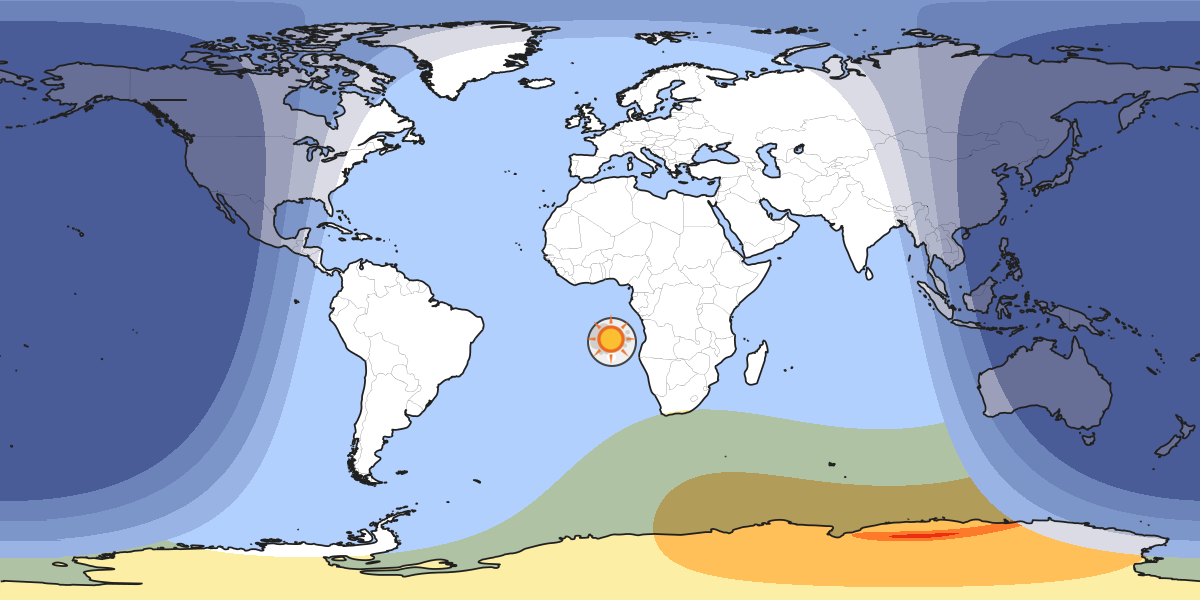
This reliance on visual moon‑sighting means that local announcements may vary by a day depending on weather conditions and the decisions of national moon‑sighting committees. In 2026, however, multiple Gulf countries have already coordinated their announcements, creating a unified start date for much of the Muslim world.
Key Dates for Ramadan 2026: From Start to Eid al‑Fitr
Based on the latest announcements and astronomical calculations, the following dates are projected for Ramadan 2026:
- First day of fasting: Wednesday, February 18, 2026 (subject to local moon‑sighting confirmation).
- Laylat al‑Qadr (Night of Power): Expected on the evening of Monday, March 16, 2026 (the 27th night of Ramadan). This night, described in the Quran as “better than a thousand months,” is when Muslims intensify prayers and seek divine mercy.
- Eid al‑Fitr: Anticipated on Thursday, March 19, 2026, marking the end of Ramadan with festive prayers, feasting, and charitable giving.
Ramadan lasts either 29 or 30 days, depending on the moon sighting for the following month of Shawwal. The exact end date will be confirmed closer to the time.
The Spiritual Significance and Practices of Ramadan
Ramadan is one of the Five Pillars of Islam, making fasting (Sawm) obligatory for every adult Muslim who is physically and mentally capable. The fast entails abstaining from food, drink, smoking, and sexual relations from dawn (the time of the Fajr prayer) until sunset (the Maghrib prayer). Beyond physical abstinence, Ramadan is a time for heightened spiritual discipline, self‑examination, and increased devotion through additional prayers (Taraweeh), Quran recitation, and acts of charity.
The primary goal of fasting is to develop taqwa—God‑consciousness, self‑restraint, and a deeper awareness of the plight of the less fortunate. By experiencing hunger and thirst, Muslims cultivate empathy and gratitude, reinforcing the social and ethical dimensions of their faith.
Fasting Rules, Exemptions, and Daily Timings in 2026
Healthy adult Muslims are required to fast each day of Ramadan. Exemptions are granted to those who are ill, traveling, pregnant, breastfeeding, menstruating, or facing conditions that would make fasting harmful. Missed fasts must be made up later or compensated for by feeding the poor (Fidya).
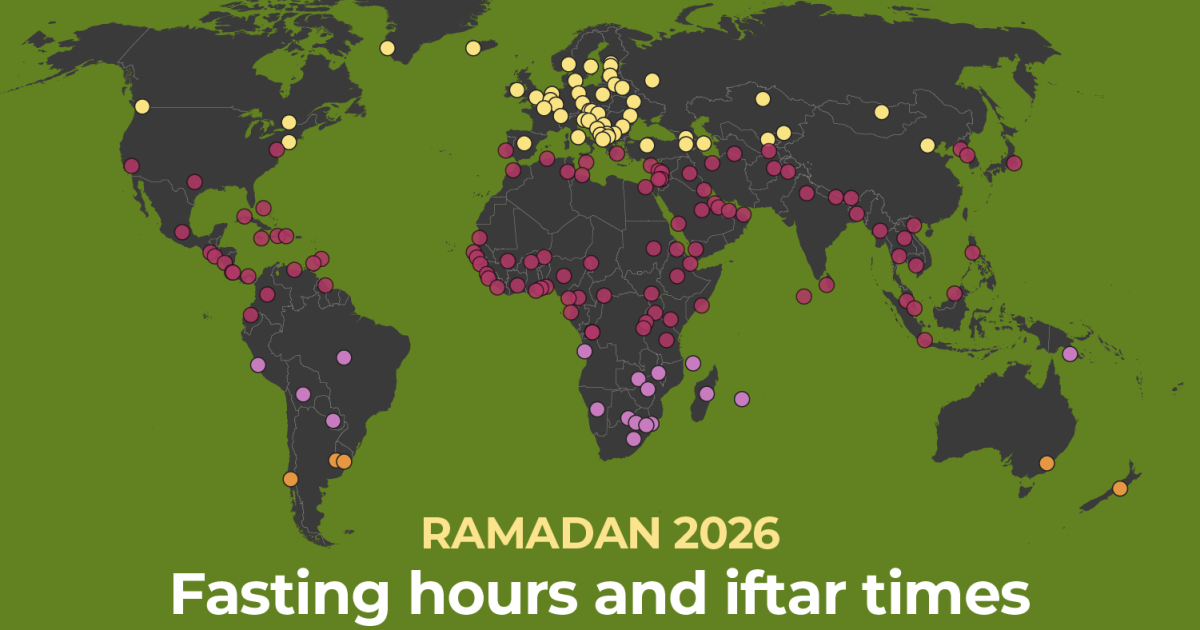
In 2026, fasting hours will vary significantly across the world due to the time of year (late winter/early spring in the Northern Hemisphere). According to astronomical data, daily fasts will range from about 11.5 hours in southern latitudes to 15.5 hours in northern regions. For example:
- In the United Kingdom and much of Europe: approximately 12–13 hours.
- In the Middle East and South Asia: around 12–14 hours.
- In North America: roughly 12–14 hours, depending on latitude.
These relatively moderate fasting hours (compared to summer Ramadans) are a result of the earlier sunset times in February–March.
Charity and Community During the Holy Month
Charity (Zakat and Sadaqah) is especially emphasized during Ramadan. Zakat al‑Fitr, a mandatory charity given before the Eid prayer, ensures that even the poorest members of the community can partake in the celebrations. Many Muslims also use the month to fulfill their annual Zakat obligation, calculated as 2.5 % of their qualifying wealth. Voluntary acts of kindness, feeding the hungry, and supporting humanitarian causes are multiplied in reward during Ramadan, making it a peak period for charitable giving worldwide.
How Countries Are Preparing for Ramadan 2026
As of February 2026, several nations have already announced the start of Ramadan based on confirmed moon sightings. Saudi Arabia, the UAE, Qatar, and Kuwait have all declared Wednesday, February 18, 2026 as the first day of fasting. Other countries will follow suit after their own moon‑sighting committees meet. These coordinated announcements help synchronize the global Muslim community and facilitate planning for prayers, work schedules, and public festivities.
Looking Ahead: The Future Timing of Ramadan
Because the Islamic calendar is lunar, Ramadan continues to shift earlier each Gregorian year. After 2026, Ramadan will next fall in January–February 2027, then December–January 2028, and so on, completing a full cycle every 33 years. This cyclical movement means that Muslims experience fasting in all seasons, with varying day lengths and climatic conditions, reinforcing the universal and adaptable nature of the obligation.
Key Takeaways About Ramadan 2026
- Start date: Expected Wednesday, February 18, 2026 (subject to local moon sighting).
- End date: Anticipated Thursday, March 19, 2026, followed by Eid al‑Fitr celebrations.
- Fasting duration: Daily fasts will last between 11.5 and 15.5 hours depending on location.
- Spiritual core: Ramadan is a month of fasting, prayer, Quran recitation, and charity aimed at cultivating God‑consciousness and empathy.
- Charity emphasis: Zakat, Sadaqah, and Zakat al‑Fitr are central to the Ramadan experience.
- Global coordination: Major Gulf countries have already announced a unified start date for 2026, providing clarity for Muslims worldwide.
Whether you are a Muslim preparing for the holy month or someone seeking to understand this important religious observance, Ramadan 2026 represents a time of spiritual renewal, community bonding, and compassionate action that transcends geographical and cultural boundaries.