
Income is the money and value a person, household, or business gains over a set period of time — usually expressed in dollars and cents. In plain terms, it is what you earn from working, investing, or owning assets that produce value, and it powers nearly every personal budget, business plan, and government tax system. Economists define income more precisely as the consumption and saving opportunity gained within a given timeframe, but the concept is harder to pin down than it first appears: a person's income in an economic sense can differ from their income as defined by law. Understanding what income is, the different types, and how it works is the first step toward managing your money and your taxes.
What Is Income? A Simple Definition
At its most basic level, income is the flow of money or value received over time. For households and individuals in the United States, tax law defines income as the sum of any wage, salary, profit, interest payment, rent, or other form of earnings received in a calendar year. That broad definition matters because almost anything of value you receive — from a paycheck to interest on a savings account — can count as income.
Economists rely on an even more famous definition called Haig–Simons income, first proposed in 1938. It states that income equals your consumption plus the change in your net worth. In other words, income is not just what you spend — it is what you spend plus what you save or accumulate. If you earn $50,000, spend $40,000, and save $10,000, your Haig–Simons income is the full $50,000.
The legal system offers its own working definition. In the landmark case Commissioner v. Glenshaw Glass Co., U.S. courts described income as "undeniable accessions to wealth, clearly realized, and over which the taxpayer has complete dominion." That phrase captures three key ideas: the money must actually be received (not merely promised), the gain must be clear, and you must have full control over it.
The Three Main Types of Income
The Internal Revenue Service (IRS) organizes income into three broad buckets: earned (or active) income, passive income, and portfolio income. The difference matters because each type can be taxed differently.
1. Earned (Active) Income
Earned income — also called active income — is money you receive in exchange for work. It includes wages, salaries, tips, commissions, bonuses, and self-employment earnings. If you trade your time and labor for a paycheck, that is earned income. For most people, this is the primary source of income, and it is generally taxed at ordinary income tax rates, with payroll taxes funding programs such as Social Security and Medicare.
2. Passive Income
Passive income is money earned with little to no ongoing labor. The IRS defines passive income narrowly as coming from just two "passive activities": rental activity, or a trade or business in which you do not materially participate. A classic example is owning a rental property where a property manager handles the day-to-day work, or being a silent partner who provides capital but takes no role in running the business.
About 20% of Americans receive some passive income each year, mostly from interest on savings and bonds, dividends on stocks, and informal rental arrangements such as renting a room to a roommate. Of those who earn passive income, most receive less than $5,000 per year.
3. Portfolio Income
Portfolio income is the money your investments generate: interest, dividends, capital gains (profit from selling an asset for more than you paid), and some royalties. It is distinct from passive income in the eyes of the IRS, even though people often use the terms interchangeably. In the United States, portfolio income such as long-term capital gains is frequently taxed at lower rates than earned income, which is one reason investing is such a popular way to build wealth.
Gross vs. Net vs. Discretionary Income
Income is measured at several levels, and each one tells a different story:
- Gross income is everything you earn before anything is taken out. For an individual, it is the total of wages, interest, dividends, and other earnings. For a business, gross income is total revenue minus the cost of goods sold.
- Net income is what remains after deductions. For a business, net income equals revenue minus the cost of goods sold, operating expenses, depreciation, interest, and taxes. For a person, net (or take-home) income is what remains after taxes and other withholdings.
- Discretionary income is gross income minus taxes and mandatory deductions such as pension contributions. It is the money you actually have available to spend or save, and it is widely used to compare people's financial well-being.
How Different Types of Income Are Taxed
Not all income is taxed the same way, and the distinction between income types sits at the heart of the tax system. Earned income is subject to ordinary income tax rates, which rise with your income level, plus payroll taxes in many countries. Investment and portfolio income, by contrast, often enjoys preferential treatment. In the United States, long-term capital gains — profits from selling assets held more than one year — are generally taxed at lower rates (0%, 15%, or 20%, depending on your income) than ordinary wages.
Interest income has its own rules. According to the IRS, most interest you receive, or that is credited to an account you can withdraw from without penalty, is taxable in the year it becomes available. Banks and brokers report interest payments of $10 or more on Form 1099-INT. There are exceptions, however: interest on U.S. Treasury bills, notes, and bonds is subject to federal income tax but exempt from state and local taxes, while some municipal bond interest can be entirely tax-free at the federal level.
Where Income Comes From: The Four Factors
Economists trace income back to the "factors of production" — the basic resources that create value in an economy. This is called factor income, and it breaks down into four sources:
- Wages — income earned from labor, such as your job.
- Rent — income earned from owning land or natural resources.
- Interest — income earned from providing capital, whether by lending money or holding financial assets.
- Profit — income earned from entrepreneurship and running a business.
This framework helps explain why income looks so different from person to person: a salaried employee earns mostly wages, while a landlord earns rent, a saver earns interest, and a business owner earns profit. Most households combine several of these streams over a lifetime.
Why Incomes Rise — and Why They Differ
Income per capita has risen steadily in most countries over the long run. Several forces drive this growth. Education and training increase a worker's productivity and, in turn, their wages — an idea economists call human capital theory. Globalization can also lift incomes by opening markets and allowing resources to be allocated more efficiently, though those gains are often distributed unevenly.
Income also has a powerful connection to health and well-being. Research consistently finds that higher income is associated with better self-reported health, longer life expectancy, and lower rates of violent crime. In one Harvard-led systematic review, unconditional cash transfers — giving people money directly — were linked to reductions in disease, improvements in food security, and increases in children's school attendance.
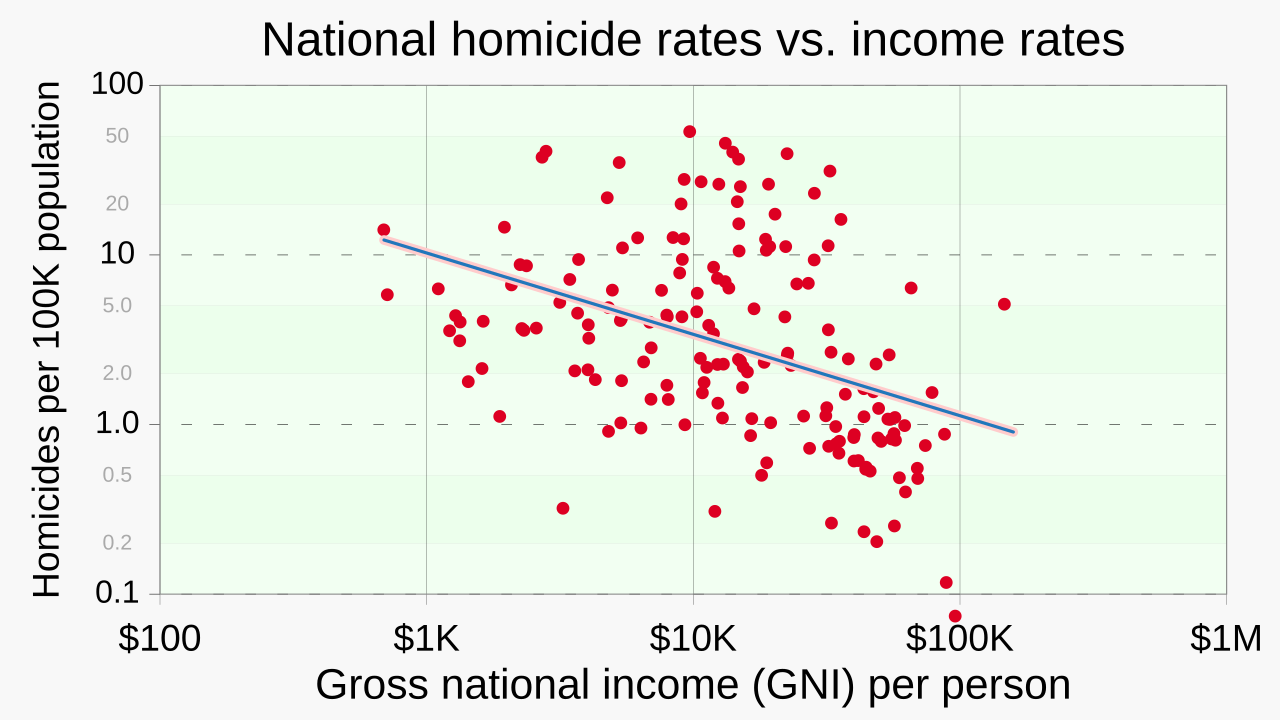
The flip side of rising incomes is income inequality — the extent to which income is spread unevenly across a population. Economists measure it with tools such as the Lorenz curve and the Gini coefficient. Some inequality is considered healthy because it rewards effort and innovation, but excessive inequality can create social and economic problems — which is why reducing inequality is one of the United Nations' Sustainable Development Goals.
The Bottom Line: Key Points to Remember
- Income is the money or value earned over a period of time, from wages, profits, interest, rent, or investments.
- Economists define income as consumption plus the change in net worth (Haig–Simons income).
- The IRS divides income into three types: earned (active), passive, and portfolio.
- Gross income is what you earn before deductions; net income is what remains after; discretionary income is what you can actually spend.
- Different income types are taxed differently — investment gains often receive lower tax rates than wages.