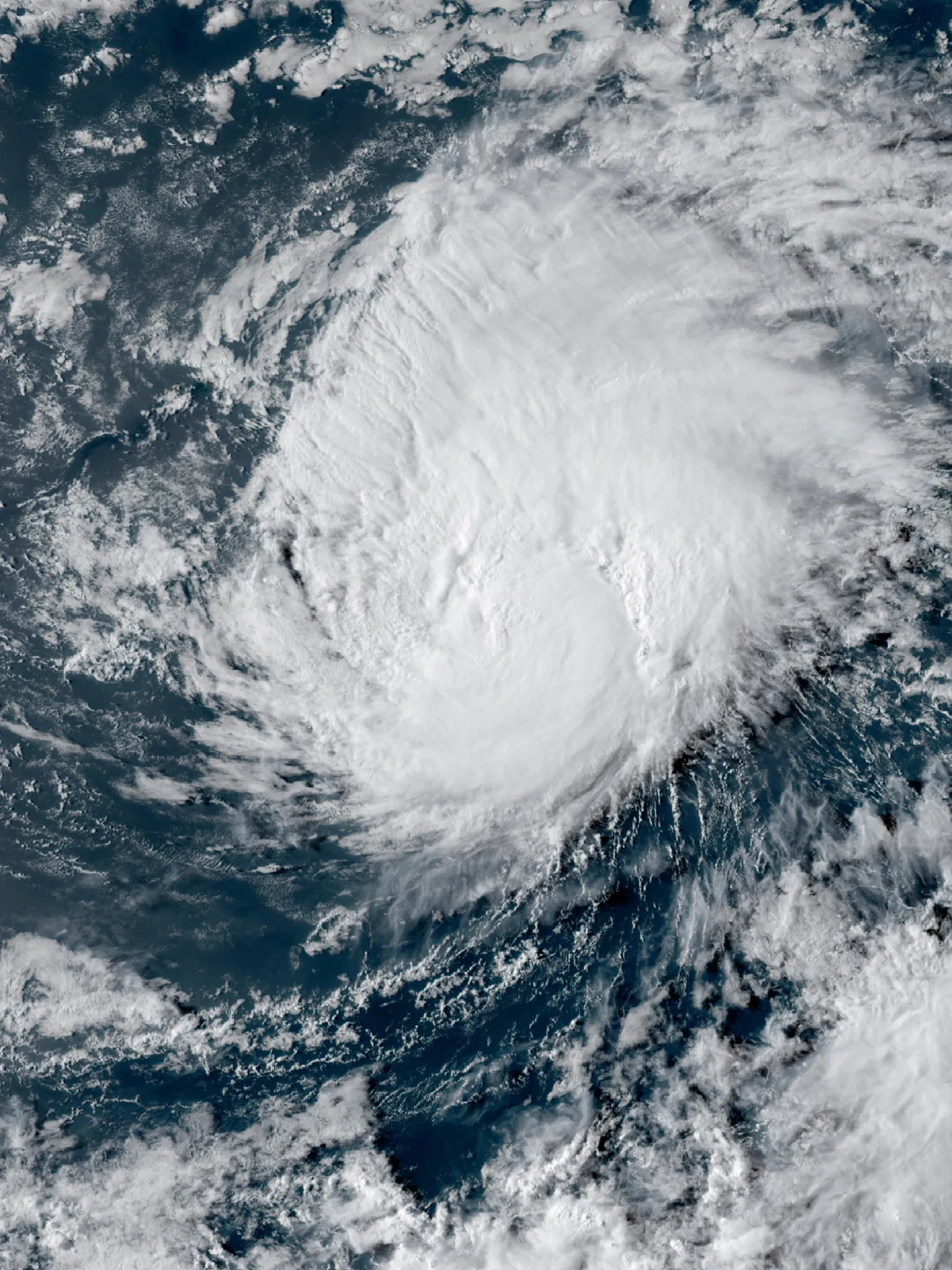
Hurricane Lala made history in August 2026 as the first hurricane to directly affect Hawaii's Big Island since an unnamed storm in 1871 — a striking reminder that even the Pacific's most storm-sheltered island chain can still face a rare, direct hit. The Hawaiian Islands sit in a region that produces roughly four to five tropical cyclones each year, yet only a handful ever reach the state as hurricanes. To understand both the science and the significance of storms like Lala, it helps to look at how hurricanes form in the first place, why Hawaii is so often spared, and what happens when one finally arrives.
How Hurricanes Form: The Six Ingredients of a Tropical Cyclone
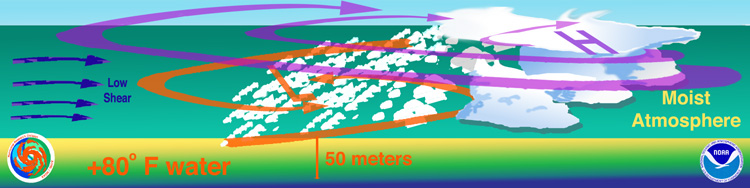
Every hurricane begins the same way: as a cluster of thunderstorms over warm ocean water that gradually organizes into a spinning system. According to the National Oceanic and Atmospheric Administration (NOAA), tropical cyclones require six specific conditions to develop.
First, the ocean surface must be warm — at least 26.5°C (80°F) — and that warmth has to extend deep enough, roughly 50 meters (150 feet), to keep fueling the storm. Second, the atmosphere must cool quickly with height so the air becomes unstable and thunderstorms can keep building. Third, the mid-level atmosphere, about 5 km up, needs to be relatively moist; dry air there can choke off a developing storm. Fourth, a storm has to form at least 500 km (about 300 miles) from the equator, because the Coriolis force — the effect of Earth's rotation — is what gives a cyclone its spin. Fifth, there must already be a pre-existing disturbance, a weak area of spin and low pressure, for the storm to organize around. Finally, vertical wind shear — the change in wind speed and direction with height — must be low, below about 10 m/s, because strong shear can tear a growing storm apart.
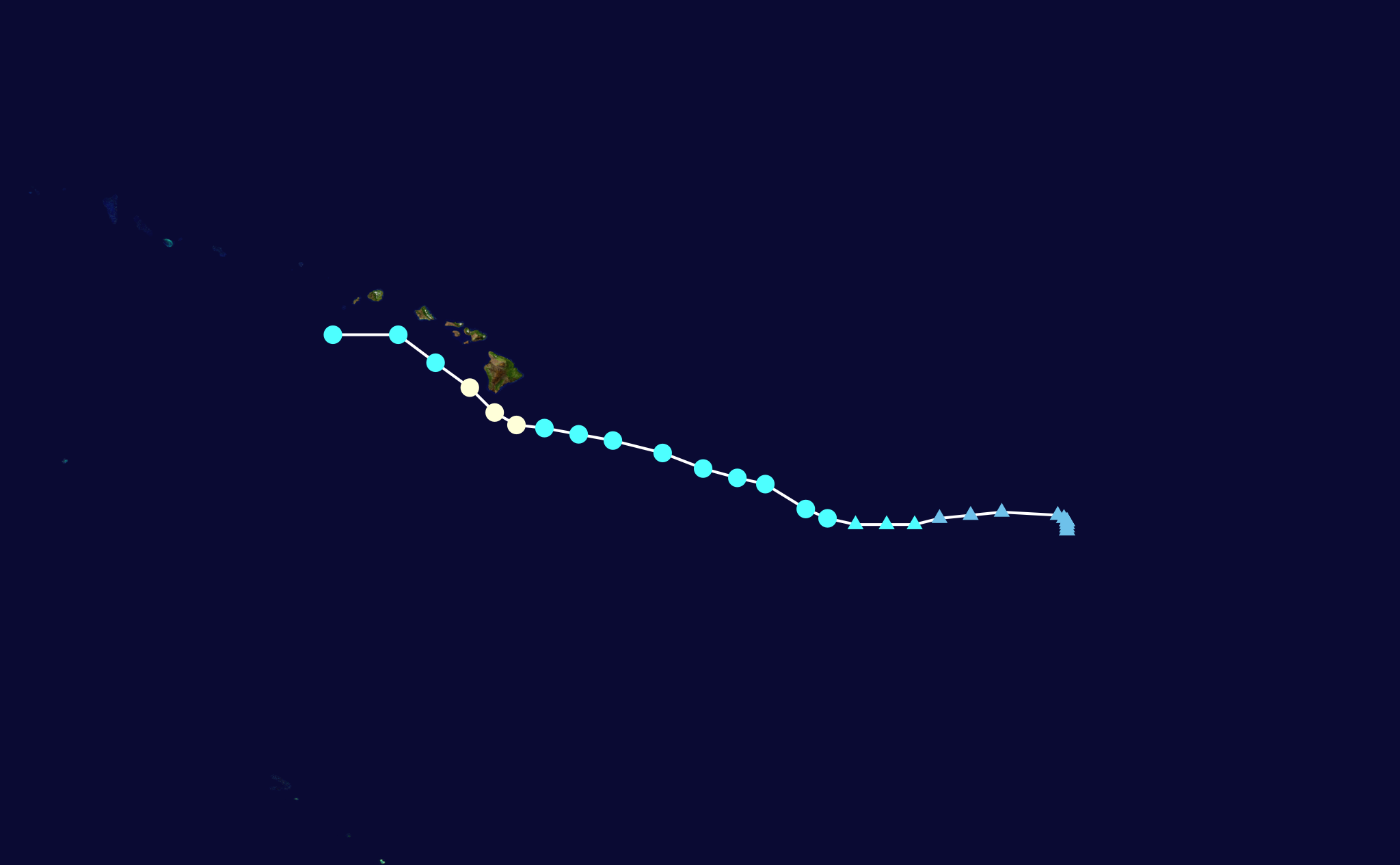
Hurricane Lala followed this exact recipe. It formed from a tropical wave that the National Hurricane Center began tracking on August 4, 2026. The wave slowly organized into a low-pressure system on August 7, and by August 13 it had consolidated enough to be named Tropical Storm Lala — the ninth named storm of the 2026 Pacific hurricane season.
Why Hawaii Is Usually Spared
Given how many cyclones churn through the central Pacific, it is remarkable how rarely Hawaii takes a direct hit. The islands, with Kauai as the notable exception, have long been considered remarkably immune to direct hurricane strikes. The United States Geological Survey notes that near-misses that generate large swells and moderately high winds are far more common than landfalling storms.
There are several reasons for this. The ocean waters around Hawaii are typically only marginally warm enough to sustain a hurricane, so storms approaching from the east often weaken as they encounter cooler water and stronger upper-level winds, or vertical wind shear, from the subtropical jet stream. Hawaii is also an extremely small target — a few relatively small islands scattered across thousands of miles of open ocean — so the odds of a storm's center crossing land are low. Some researchers have even suggested that Hawaii's volcanic peaks help divert or disrupt approaching storms, though this remains a point of debate.
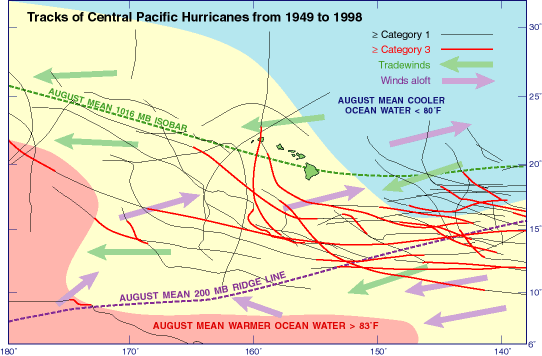
The historical record bears this out. Formal tropical cyclone records for Hawaii only begin in the 1950s, and in the decades since, very few storms have struck the islands at hurricane strength. Wind data from the Western Regional Climate Center show no hurricane-strength winds recorded on any Hawaiian island except Kauai, which sits farthest northwest and is most exposed to approaching storms.
A Short History of Hawaii's Rare Hurricane Hits
When hurricanes do reach Hawaii, they tend to leave an outsized mark. Hurricane Hiki in August 1950 passed north of the islands but still dumped 52 inches of rain on Kauai over four days. Hurricane Dot in 1959 entered the central Pacific as a Category 4 storm before weakening to a Category 1 at its Kauai landfall, snapping palm trees with gusts over 100 mph.
The two most damaging storms on record came in 1982 and 1992. Hurricane Iwa, though only a Category 1, caused about $250 million in damage as it swept just west of Kauai. A decade later, Hurricane Iniki struck Kauai as a Category 4 on September 11, 1992, causing $3.1 billion in damage — still the most powerful and costliest hurricane to hit the state. More recently, Hurricane Iselle made landfall on the Big Island as a tropical storm in 2014, and Hurricane Lane in 2018 peaked as a Category 5, one of only two recorded within 350 miles of Hawaii, before weakening and unleashing up to 52 inches of rain.
Hurricane Lala: What Happened in August 2026
Against that backdrop, Lala was historic. After becoming a hurricane on August 15, 2026, it made its closest approach to the Big Island early on August 16, with its eyewall grazing the island's southern coast — the first direct hurricane impact on the Big Island since 1871.
Even without a direct landfall, Lala's effects were severe. A record wind gust of 140 mph was recorded on the summit of Mauna Kea, and a gust of 74 mph was measured in Olowalu on Maui. About 200,000 customers across the state lost electricity, with 16 transmission lines on the Big Island damaged and 19 roofs torn off. Torrential rain triggered flash flood warnings and a flash flood emergency; rainfall peaked at 42.69 inches in Laupahoehoe. In an especially rare twist, snow fell on Mauna Kea during the storm. At least one person died and two were injured in a storm-related vehicle crash in Hawaiian Ocean View.
The storm also hammered Oahu and Kauai. Lifeguards in Honolulu performed 59 water rescues, Manoa Stream set a record flow of 14 feet, and Interstate H-1 flooded in downtown Honolulu. On Kauai, more than 7,500 customers lost power, the Hanalei Bridge closed, and Poipu saw roofs and trees damaged by tropical-storm-force winds.
How Hawaii Prepares — and What Comes Next
Because direct hits are so rare, a storm like Lala triggers a full-scale mobilization. Hawaii Governor Josh Green declared a statewide emergency on August 13, activating the Hawaii National Guard and emergency funds. Hurricane watches were upgraded to warnings for the Big Island, tropical storm warnings covered the other islands, and flood watches stretched across the state. Schools closed, flights into Hilo and Kona were cancelled, and shelters opened on multiple islands.
As Lala weakened back to a tropical storm on August 16 and moved away, attention turned to recovery: a brown water advisory warned of pollution in standing water, and crews began assessing damage. For forecasters, Lala reinforced the lesson that Hawaii's relative safety is never a guarantee — and that even a Category 1 hurricane, arriving at just the right angle, can become the most significant storm in nearly 150 years.
Key Takeaways
- Hurricanes need warm water (80°F or warmer), unstable moist air, Earth's spin (300+ miles from the equator), a pre-existing disturbance, and low wind shear to form.
- Hawaii is usually spared by cooler water, strong upper-level wind shear, and its tiny footprint in a vast ocean; Kauai is the most vulnerable island.
- Hurricane Iniki (1992) remains the most powerful and costliest hurricane to strike Hawaii, at $3.1 billion in damage.
- Hurricane Lala (August 2026) became the first hurricane to directly affect the Big Island since 1871, bringing a 140 mph gust, 42.69 inches of rain, and about 200,000 power outages.
- Hawaii's statewide emergency response — warnings, National Guard activation, shelters, and airport closures — shows how rare and serious a direct hurricane threat is for the islands.