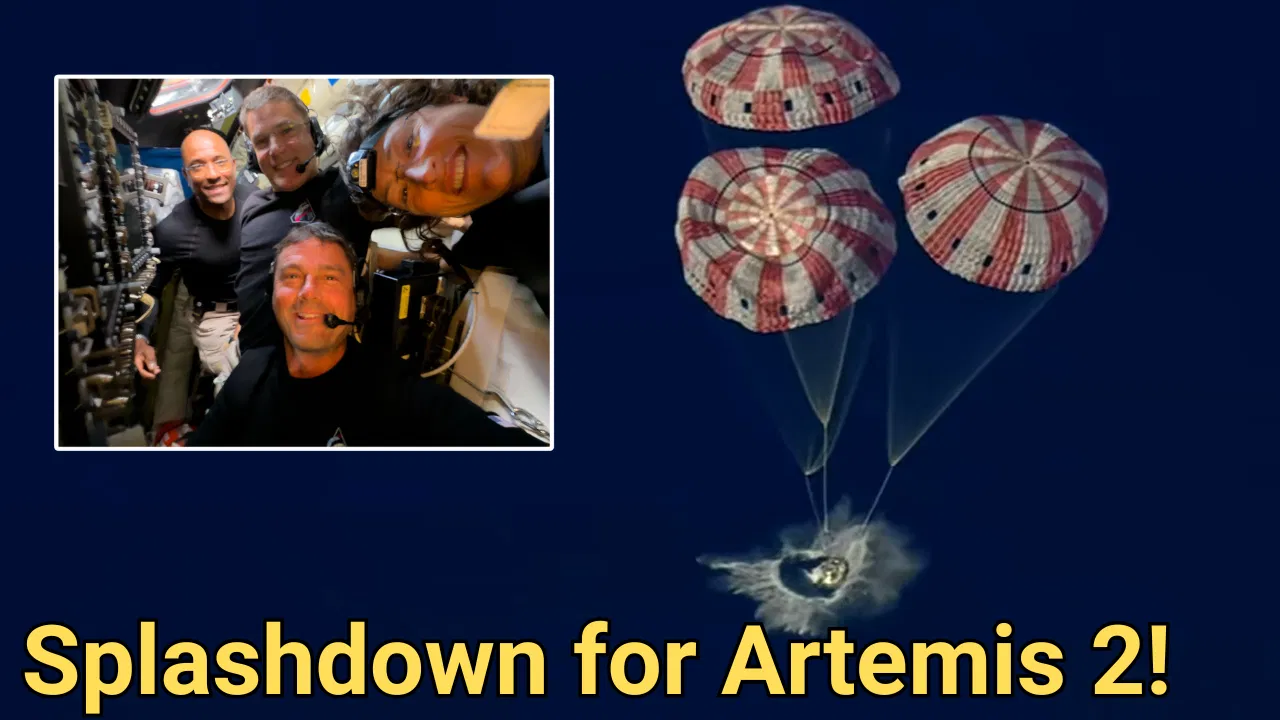
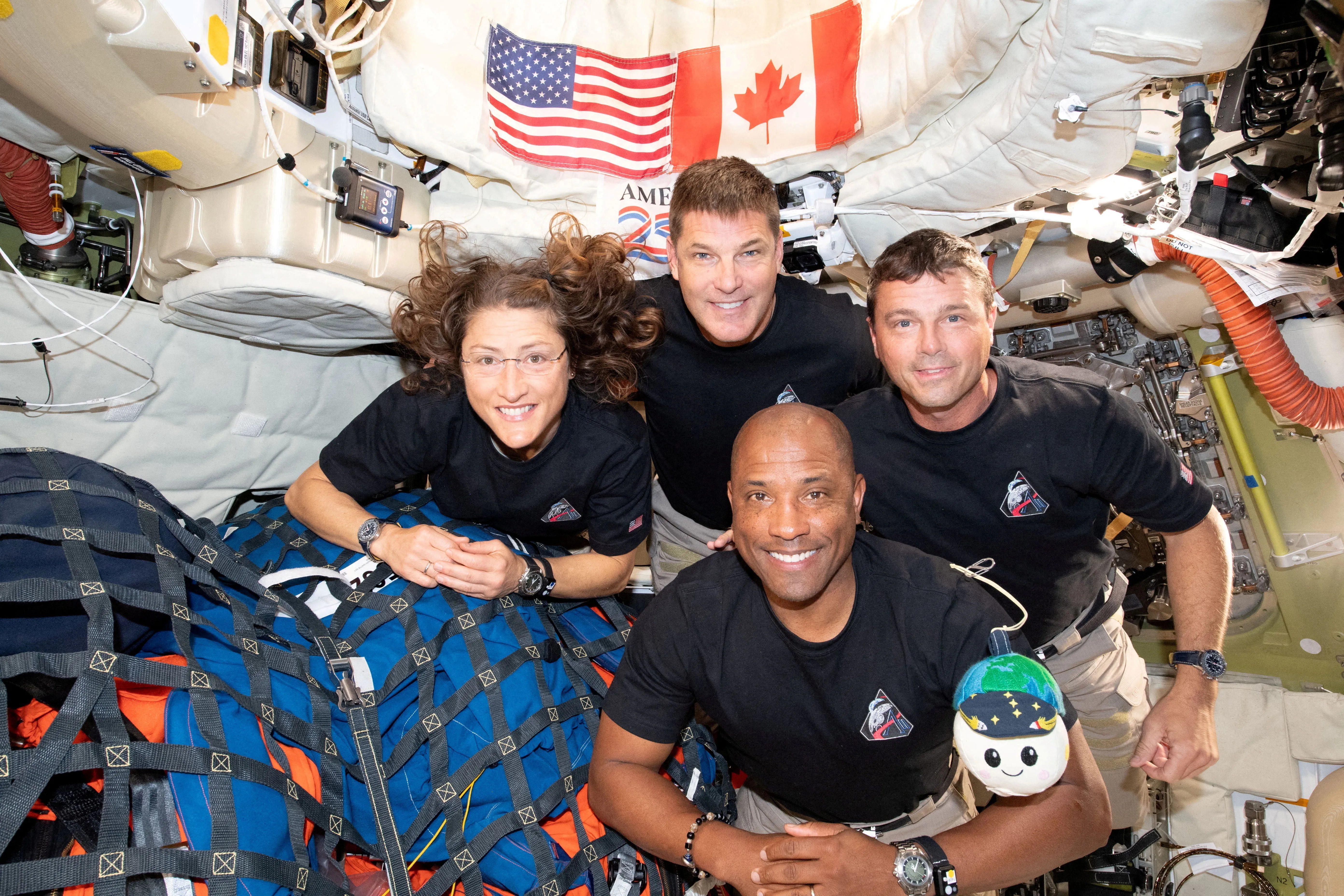
At precisely 8:07:27 p.m. Eastern Daylight Time on April 10, 2026, NASA's Orion spacecraft completed its historic journey around the moon with a perfectly timed splashdown in the Pacific Ocean. The Artemis 2 mission, carrying astronauts Reid Wiseman, Victor Glover, Christina Koch, and Jeremy Hansen, concluded after 9 days, 1 hour, 31 minutes, and 35 seconds in space, marking humanity's first crewed mission to lunar distance since 1972. But achieving this pinpoint accuracy—hitting a moving target from 240,000 miles away with timing precise to the second—represents one of the most complex engineering challenges in spaceflight history.
How Artemis 2's Historic Splashdown Unfolded
The final hours of the Artemis 2 mission were a meticulously choreographed sequence of events that began with the crew's wake-up call and ended with Navy divers opening the Orion capsule hatch. After a small final steering burn in space aimed the spacecraft at a targeted patch of ocean west of San Diego, the service module—the section containing solar arrays and the main engine—separated approximately 20 minutes before atmospheric entry. This critical separation left only the crew capsule to face the punishing heat of re-entry, with the service module destined to burn up harmlessly over the ocean.
Entry interface occurred at approximately 75 miles above Earth's surface, with Orion traveling at a staggering 25,000 miles per hour (40,000 km/h). As the capsule slammed into the atmosphere, air piling up in front of it heated to about 5,000 degrees Fahrenheit (2,760 degrees Celsius), creating a plasma sheath that briefly interrupted communications—a phenomenon known as the blackout period. Inside the capsule, the crew experienced approximately 3.9 Gs of force, meaning they felt nearly four times their normal body weight pressing them into their seats during the most intense deceleration phase.
Minute by Minute: The Final Hours Before Splashdown
The precision timing of splashdown didn't happen by chance—it was the result of months of planning and real-time adjustments by NASA's flight dynamics team. Beginning approximately four hours before splashdown, mission controllers executed a series of carefully calculated maneuvers:
- 4 hours before splashdown: Crew completed final systems checks and donned their pressure suits in preparation for re-entry
- 2 hours before splashdown: Orion performed its final trajectory correction burn, fine-tuning its approach angle to within fractions of a degree
- 20 minutes before entry: Service module separation occurred, followed by orientation of the crew module for optimal heat shield protection
- Entry interface (75 miles altitude): Orion began experiencing atmospheric drag, with temperatures on the heat shield beginning their rapid rise
- 10 minutes before splashdown: Peak heating phase occurred as the capsule descended through the densest part of the atmosphere
- 4 minutes before splashdown: Orion deployed its two drogue parachutes at approximately 25,000 feet to begin significant deceleration
- 2 minutes before splashdown: Three main parachutes deployed, slowing the capsule from 300 mph to just 17 mph
- Splashdown (8:07:27 p.m. EDT): Orion touched down gently in the Pacific Ocean, completing the mission with near-perfect timing
The Physics of Precision: How NASA Predicts Splashdown to the Second
Predicting splashdown timing with such accuracy involves solving complex equations that account for numerous variables, from atmospheric density fluctuations to spacecraft mass properties. NASA's flight dynamics team uses sophisticated computer models that simulate the spacecraft's behavior during re-entry, incorporating real-time telemetry data to make continuous adjustments. The key factors that enable this precision include:
Ballistic Coefficient: This value represents how easily the spacecraft moves through the atmosphere. By knowing Orion's exact mass, shape, and center of gravity, engineers can calculate exactly how atmospheric drag will slow it down at every altitude.
Atmospheric Modeling: Earth's atmosphere isn't uniform—it expands and contracts with solar activity, varies with weather patterns, and changes density with altitude. NASA uses advanced atmospheric models updated with real-time satellite data to predict exactly how much drag Orion will experience.
Entry Angle Precision: The angle at which Orion enters the atmosphere (approximately -6.5 degrees relative to horizontal) determines how deeply it penetrates and how quickly it slows down. A steeper angle means faster deceleration but higher heating; a shallower angle might skip off the atmosphere entirely.
Parachute Performance Modeling: Each parachute system has precisely characterized deployment altitudes, inflation times, and drag coefficients. These values are fed into the trajectory models to predict exactly when the capsule will reach the water.
"You know the speed of the capsule and angle of entry, and how fast they will slow down, and you can predict within a margin of error where the capsule will land," explained one aerospace engineer familiar with re-entry calculations. "For Artemis 2, that margin of error was reduced to just a few seconds through continuous tracking and minor course corrections."
Where Recovery Operations Stand After Historic Return
Within minutes of splashdown, the recovery operation shifted into high gear. Four Navy divers from the USS John P. Murtha jumped into the water and swam to the bobbing Orion capsule, their first task being to install an inflatable "front porch" raft around the hatch. This stabilization system prevented the capsule from rolling in the ocean swells while providing a secure platform for extracting the astronauts.
The recovery team followed a meticulously rehearsed sequence: first verifying the capsule was safe to approach, then attaching flotation collars, followed by opening the hatch and conducting initial medical checks. Each astronaut received one-on-one assistance from a specialized dive medical technician who helped them exit the capsule and transition to a waiting inflatable boat. From there, helicopters transported the crew to the USS John P. Murtha for more comprehensive medical evaluations and their first steps on a stable surface in over nine days.
"Training for this recovery operation took years," noted a Navy spokesperson. "We rehearsed every possible scenario, from nominal conditions to emergency situations, to ensure we could safely recover the crew regardless of what happened during splashdown."
The Road Ahead: What Artemis 2 Means for Future Moon Missions
The successful Artemis 2 splashdown represents far more than just the conclusion of a single mission—it validates critical technologies and procedures needed for NASA's ambitious lunar exploration plans. With this milestone achieved, the Artemis program moves closer to its ultimate goal: returning humans to the surface of the moon. The precision demonstrated during splashdown gives confidence for future missions that will require even more accurate landings, whether in ocean waters or eventually on lunar terrain.
Perhaps most importantly, Artemis 2's modified "lofted" re-entry profile—a change from the original "skip" entry used during Artemis I—successfully addressed heat shield concerns identified during the uncrewed test flight. Instead of performing a deep atmospheric bounce, Orion followed a gentler trajectory that reduced peak temperatures and pressure spikes while maintaining the precision needed for accurate splashdown. This engineering solution demonstrates NASA's ability to adapt and improve systems based on flight experience.
Looking forward, the lessons learned from Artemis 2's splashdown will inform the design of future spacecraft, including those that may one day return from Mars. The ability to predict landing times with second-level accuracy becomes increasingly important as missions travel greater distances and carry more complex payloads. Each successful splashdown builds the database of experience that makes the next mission safer and more predictable.
Key Takeaways from NASA's Precision Splashdown Achievement
- Timing Precision: NASA predicted splashdown to within seconds despite the spacecraft traveling at 25,000 mph, demonstrating remarkable trajectory calculation capabilities
- Safety Innovations: The modified "lofted" re-entry profile successfully addressed heat shield concerns while maintaining landing accuracy
- Recovery Readiness: Coordinated Navy and NASA teams executed a flawless recovery operation years in the making
- Technical Validation: Orion's systems performed exactly as designed under extreme re-entry conditions reaching 5,000°F
- Program Momentum: The successful mission keeps NASA on track for Artemis 3, planned to land astronauts on the lunar surface
The Artemis 2 splashdown wasn't just an ending—it was a demonstration of human ingenuity at its finest. From the physicists calculating trajectories with unimaginable precision to the divers waiting in the ocean to welcome astronauts home, every aspect of the operation showcased what's possible when science, engineering, and preparation converge. As the Orion capsule bobbing in the Pacific was secured and the astronauts began their journey home, humanity took another confident step toward becoming a multi-planetary species.