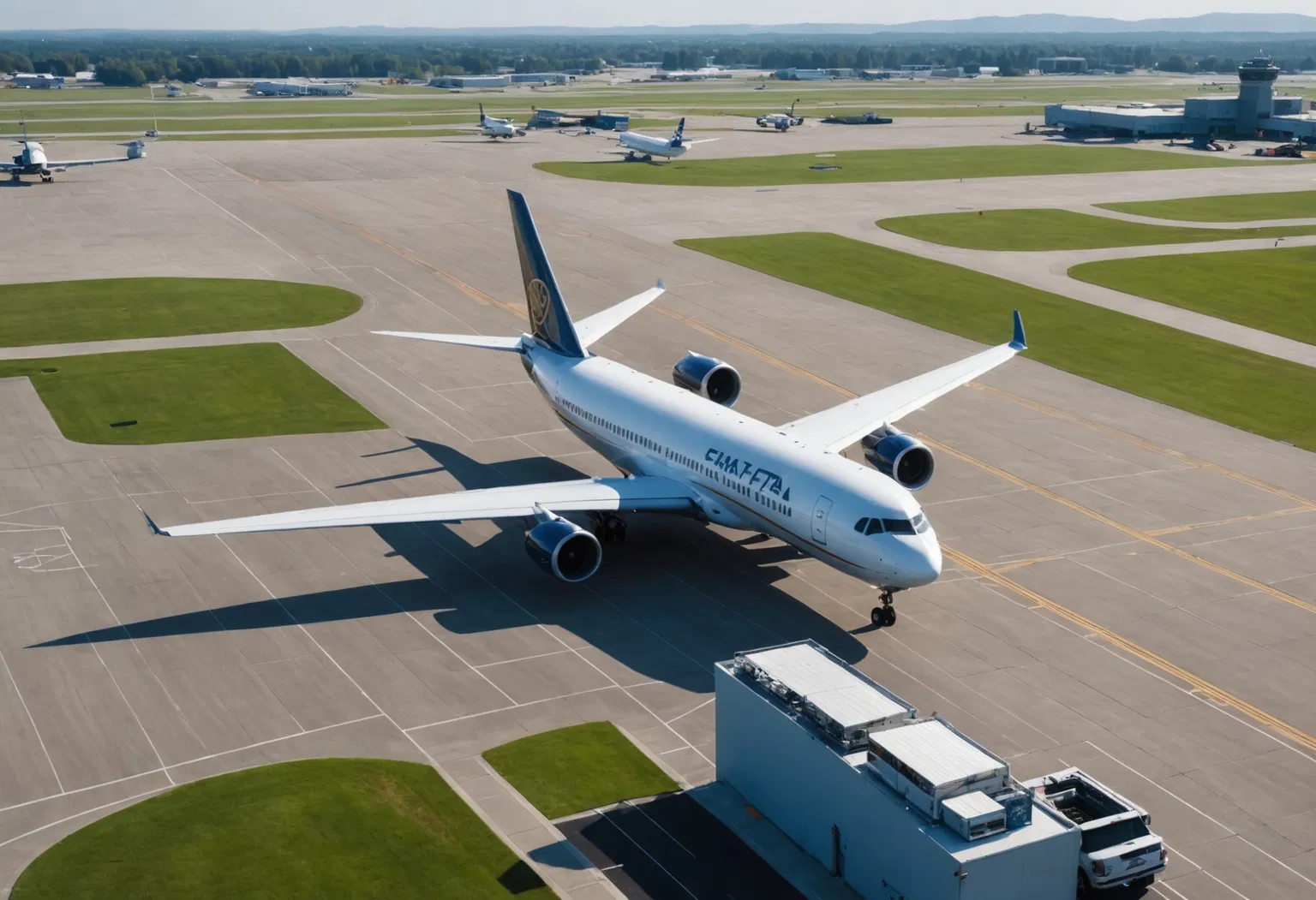
When every flight in a country is suddenly ordered to stay put, the Federal Aviation Administration (FAA) has almost certainly issued what it calls a ground stop. A ground stop is one of the most powerful tools air traffic controllers use to keep the national airspace safe, and it made headlines again in November 2026 when a communications failure halted U.S. departures for hours. But what exactly is a ground stop, how does it work, and why does the FAA order one? Here is a plain-English guide to one of aviation's most important and least understood safety measures.
What Exactly Is a Ground Stop?
In official terms, a ground stop is an air traffic control measure — formally a "traffic management initiative" (TMI) — that requires aircraft meeting certain criteria to remain on the ground at their departure airport. The FAA's own guidance is blunt: ground stops "override all other traffic management initiatives," and an aircraft must not be released from a stop without the approval of the controller who issued it.
In everyday terms, a ground stop keeps planes from taking off rather than letting them pile up in the air or at a crowded destination. The criteria that decide which flights are held can be airport-specific, airspace-specific, or even equipment-specific. A ground stop can apply to a single airport, to a region, or — in rare cases — to an entire country. Because it sits at the top of the hierarchy of traffic-management tools, nothing else can override it.
Ground Stop vs. Ground Delay: Two Very Different Tools
Travelers often confuse a ground stop with a ground delay program (GDP), but they work differently. A ground stop is absolute: aircraft bound for the affected airport are held at their origin and simply do not move until the stop is lifted. A ground delay program, by contrast, keeps flights moving but slows them down by assigning each flight a later, scheduled departure time.
The difference matters because the two measures are used for different problems. A ground stop is typically triggered by something that makes it unsafe or impossible to accept arriving traffic right now — severe weather, a runway closure, or an equipment failure. A ground delay program is usually a planning tool that manages predictable congestion by spreading departures out over time. Think of a ground stop as a full red light and a ground delay program as a long, slow queue.
Why the FAA Issues Ground Stops
Ground stops exist to prevent a problem from becoming a disaster. The most common triggers fall into a few clear categories:
- Weather: Thunderstorms, high winds, heavy snow, ice, and low visibility can make an airport unsafe or sharply reduce the number of flights it can handle. A ground stop keeps traffic on the ground until conditions improve.
- Airport capacity and congestion: If a runway closes or an airport becomes gridlocked, a ground stop prevents extended holding patterns in the sky and "sector saturation" that can overwhelm controllers.
- Equipment and system failures: When the technology that keeps flights safe goes down — a radar outage, a communications failure, or the Notice to Air Missions (NOTAM) system — the FAA may halt departures rather than operate blind.
- Security and safety: The first full nationwide ground stop in modern history came on September 11, 2001, when the FAA ordered every aircraft in U.S. airspace to land as a security precaution.
Whatever the trigger, the goal is the same: keep aircraft safely separated and avoid a situation where more planes are airborne than the system can safely manage.
How a Ground Stop Actually Works
A ground stop begins when a traffic management unit at the FAA or a major air traffic control center spots a problem. The controller issues a stop with specific instructions: which airport is affected, which flights are covered, and roughly how long the stop is expected to last. Airlines receive those instructions and hold the matching flights at the gate or on the taxiway.
Ground stops are usually scoped using a three-tier system. A Tier 1 stop affects the airports nearest the problem — those within the surrounding air route traffic control centers (ARTCCs). Tier 2 extends to the next layer of airports farther out, and Tier 3 reaches the outermost ring. Most ground stops never move beyond Tier 1. A nationwide ground stop is the extreme end of the scale, holding departures at essentially every U.S. airport.
One detail often surprises travelers: a ground stop prevents departures, but it does not automatically force planes that are already airborne to turn around. Aircraft already in flight generally continue to their destination and land when cleared, while new takeoffs are frozen in place. Once the problem clears, the stop is lifted gradually so that flights resume in a controlled, orderly fashion rather than all at once.
Three Times America's Flights Stood Still
Nationwide ground stops are extraordinarily rare. In modern aviation history, they have happened on only a handful of occasions:
- September 11, 2001: After the terror attacks, the FAA ordered all aircraft in U.S. airspace to land and halted all departures — the defining example of a security-driven nationwide stop.
- January 11, 2023: A failure in the NOTAM system, which alerts pilots to hazards and changes, grounded departures nationwide. The FAA later traced the outage to a damaged database file and said there was no evidence of a cyberattack.
- November 13, 2026: A communications failure at multiple air route traffic control centers triggered a nationwide stop "due to extraordinary circumstances and for reasons of safety." Officials attributed it to air traffic control routers that became overloaded during routine telecom upgrade work on aging infrastructure.
What the three events share is a reminder of how tightly modern aviation depends on systems that most travelers never see.
What a Ground Stop Means for Your Flight
If you are holding a boarding pass when a ground stop is issued, your flight cannot leave until the stop is lifted — and even then, recovery is slow. The immediate effect is delays and cancellations. During the November 2026 stop, FlightAware counted more than 8,500 delayed and roughly 8,000 canceled U.S. flights in a single day, with disruption rippling across the following weekend.
Because airlines schedule the same planes and crews across many routes, a few hours on the ground can knock a network out of alignment for days. A plane that never reaches its next city means a later flight there has no aircraft, and crews are left in the wrong place. That is why a short stop often produces a long tail of cancellations.
What are you owed? Under U.S. Department of Transportation rules, airlines are generally required to rebook you on the next available flight at no extra charge, or offer a full refund if you choose not to travel. Airlines are not usually required to pay additional compensation for delays caused by events such as a ground stop, though many voluntarily offer hotel and meal vouchers during major disruptions. Check your airline's app or website for your flight status and sign up for alerts. If you are at the airport, stay near your gate and listen for announcements, because the situation can change quickly once the stop is lifted.
Where Things Stand Now
As of mid-November 2026, flights were resuming after the latest nationwide stop was lifted, though airlines continued to work through the backlog. The FAA said there was no sign of a cyberattack and ruled out the newer automated traffic systems as the cause, pointing instead to overloaded routers tied to an aging copper-wire telecommunications system.
The episode has renewed scrutiny of the FAA's underlying infrastructure. The agency's own questions-and-answers page emphasized that standard safety procedures remained in place throughout the disruption and that controllers kept using established radio and fallback protocols.
What Happens Next
Expect two things in the days after any major ground stop: a slow operational recovery and a round of hard questions. Airlines reposition planes and crews, often taking several days to fully restore schedules, while investigators and lawmakers examine what failed and whether the system needs modernizing.
For travelers, the practical lesson is simple. Ground stops are rare, but their effects can last far longer than the stop itself. Booking earlier flights, allowing connection time, and monitoring your airline's alerts are the most reliable ways to protect a trip when the system suddenly halts.
The Bottom Line
- A ground stop is an air traffic control order that keeps qualifying aircraft on the ground at their departure airport.
- It overrides all other traffic-management measures and is lifted only with controller approval.
- Ground stops differ from ground delay programs: stops halt departures entirely, while delays merely push them later.
- The FAA issues stops for weather, congestion, equipment failures, and security — and only rarely nationwide.
- Planes already airborne usually continue, but the ripple effect on schedules can last for days.